Grand Bassin is the sacred lake of Mauritius.
If you are looking How to visit the sacred lake in Mauritius (also called Grand Bassin Or Ganga TalaoThis guide explains the essentials: why the site is sacred, what to see there, when to come (including during the pilgrimage), how to behave in this place of worship and how to plan your itinerary in the South.
Grand Bassin (Ganga Talao): Why is this lake sacred?
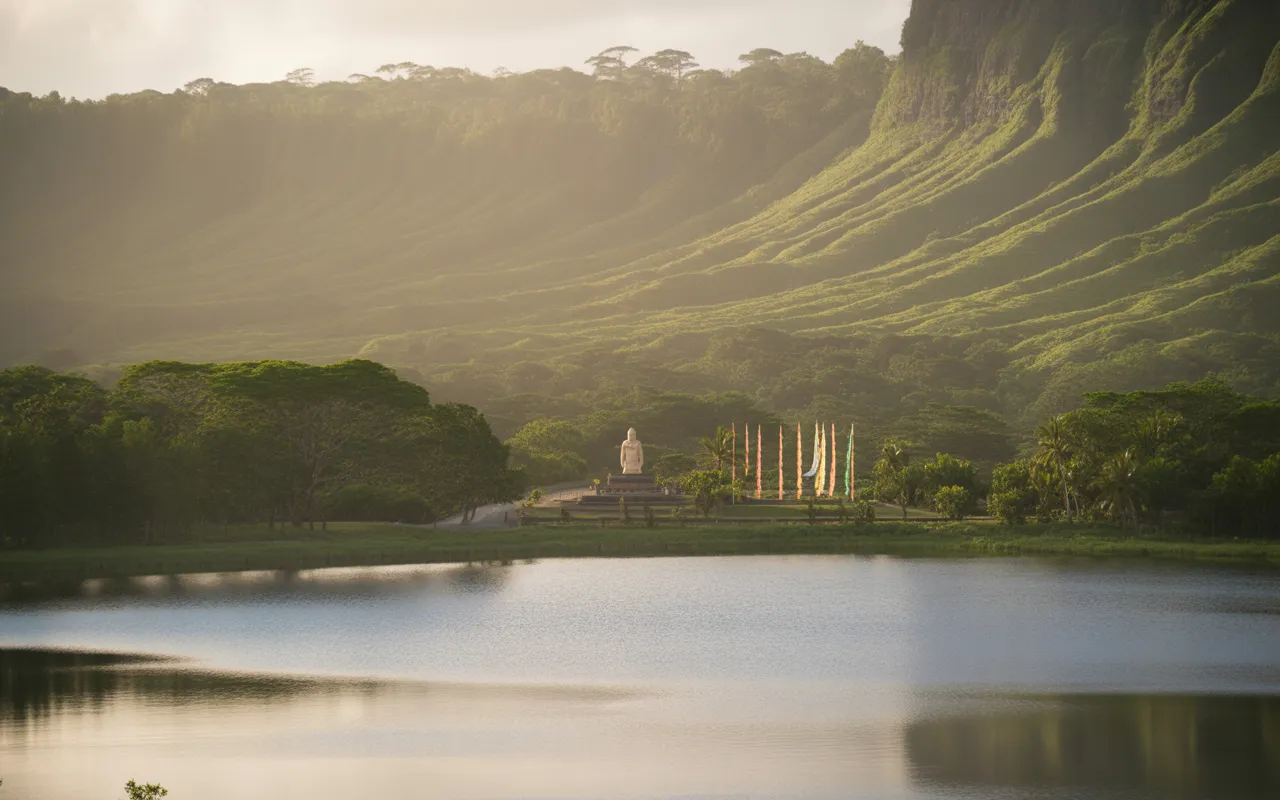
Grand Bassin, known as Ganga Talao, Lake Mekong is a crater lake located in the heart of the Mauritian highlands, and it is considered the the most sacred site of Hinduism in Mauritius.
Every year, thousands of worshippers visit, particularly on the occasion of Maha Shivaratree (the “Great Night of Shiva”), a festival recognized as public holiday In Mauritius: pilgrims come to collect holy water and perform rituals around the temples on the site.
Key points to remember: Even if you're visiting as a tourist, Grand Bassin isn't "just a photo spot." It's primarily a spiritual sanctuary for a large part of the Mauritian population.
Where is the sacred lake in Mauritius, and how do you get there?
THE sacred lake of Mauritius is located in the Savannah district, in a mountainous area. The site is located approximately 550 m altitude, This explains why the weather is often cooler, wetter and sometimes foggy than at the seaside.
Access: car, taxi, excursion
- By car : this is the simplest option (parking available near the site).
- By taxi / private hire vehicle : convenient if you are not driving; ask for a return ticket with waiting time.
- On an excursion : often combined with Chamarel, a tea plantation or a panorama of the South.
Tip: Allow extra time, as traffic can be heavier on weekends and especially during pilgrimage periods.
Practical information for organizing the visit (table)
| Key point | Practical advice |
|---|---|
| Duration on site | Count 1 to 2 hours for the tour of the lake, the temples and the statues (more if you take the time to observe the ceremonies). |
| Altitude & weather | At ~550 m, It may be cooler and foggy: take a light jacket. |
| Price | Access to the site is generally indicated as free ; Instead, budget for transportation/souvenirs. |
| Best time | Weekday mornings: calmer, better light, smoother visit. |
| Outfit | Outfit covering and respectful; one removes one's shoes before entering the temples. |
What to see in Grand Bassin: statues, temples and must-see places
The lake (Ganga Talao) and the rituals by the water
The heart of the site remains the lake itself: offerings, prayers, and acts of devotion are often seen there. Even outside of major festivals, the atmosphere is special: calm, contemplation, incense, bells, and the coming and going of the faithful between the different altars.
The statue of Shiva (Mangal Mahadev), symbol of the site
At the entrance to Grand Bassin stands Mangal Mahadev, a monumental statue of Shiva measuring approximately 33 meters, completed in 2007.
It has become one of the most well-known visual landmarks of the “sacred lake Mauritius”, and often marks the beginning of the visit (and photos… to be taken discreetly when there are rituals).
The temples and shrines around the lake
Several temples and altars dedicated to different Hindu deities surround the lake (including one Shiv Mandir dedicated to Shiva).
Depending on the area, you will also come across spaces dedicated to Ganesh, Hanuman or the goddess Ganga, with worshippers coming to leave flowers, fruit and incense sticks.
The "108 steps" staircase (if you like walking)
In some higher-altitude areas, an ascent (often referred to as 108 stepsThis allows access to a viewpoint and a sanctuary. It's a short, accessible walk, useful if you want to gain some elevation and observe the site as a whole.
Respecting the environment: how to behave at the sacred lake of Mauritius
- Dress modestly : shoulders and thighs covered if possible, especially if you are entering temples.
- Take off your shoes before entering the prayer areas.
- Photos : avoid close-ups of worshippers at prayer; if you wish to photograph a ceremony, ask for permission when possible.
- Silence and traffic : Give priority to the processions and do not block the passages.
- Cleanliness : do not leave anything behind (packaging, bottles, etc.).
When to visit Grand Bassin? Quiet periods vs. Maha Shivaratri pilgrimage
A "quiet" visit (outside of events)
For a first visit, opt for a weekday mornings. You will enjoy the site more, take better photos (without crowds) and be able to observe the temples without jostling.
Visiting during Maha Shivaratri: a unique experience, but one that requires preparation.
The pilgrimage to Maha Shivaratree attracts a very large crowd to Grand Bassin every year. The Mauritian press has mentioned estimates of around 500,000 people expected in certain years (e.g., estimate mentioned in 2023).
For 2026, Site development work has been announced as needing to be completed before the planned celebration on Sunday, February 15, 2026.
Security: what you need to know (and why it's important)
During large gatherings, security is a real issue. March 2024, A fire involving a “kanwar” (structure carried in procession) caused several casualties, according to reports picked up by the international press.
- Avoid overly dense areas if you are with young children.
- Do not approach large structures and keep a safe distance.
- Follow the instructions of the authorities on site (police, volunteers, religious organization).
Suggested itineraries around Grand Bassin (half-day or full-day)
Option 1: Half-day “culture & nature”
- Arrived early at Grand Bassin (visit to the lake, statues, temples).
- Tea/coffee break on the road (depending on your route) or photo stop at the viewpoints of the high plateaus.
- Return before the midday peak.
Option 2: Full day in the Southwest
- Grand Bassin in the morning (respectful visit, without rushing).
- Continue to Chamarel (land of seven colours, waterfalls) or a panorama of Le Morne depending on your program.
- End of the day on the coast (sunset on the west side if the weather is good).
This route logic works well, because Grand Bassin is in the highlands: starting inland and then going back down towards the coast makes the day more pleasant.
Helpful tips for expats and newcomers: understanding the site and local culture
Visiting the sacred lake of Mauritius is also an excellent way to better understand Mauritian culture: religious diversity, national holidays, traditions and community life.
If you are planning to move to the island (family, business project, investment), keep in mind that the public holidays And major events (like Maha Shivaratri) can influence traffic, economic activity, and the organization of daily life. Successful integration often hinges on these very concrete "details.".
To explore your life project further, you can consult:
- Living in Mauritius: turnkey expatriation and real estate
- Expatriation guides (procedures, settling in, advice)
- Contact Expat Mauritius (free assessment)
- Explore the installation steps using the guides
Reliable sources for further information (external links)
- Government of the Republic of Mauritius: cultural information and public holidays (Maha Shivaratree / Grand Bassin)
- Ministry of Arts and Culture (Govmu): mention of the “Ganga Talao Spiritual Sanctuary”
- L'Express (Mauritius): Construction information & announced date of Maha Shivratri 2026
- Le Mauricien: readership estimates (2023)
FAQ – Sacred Lake, Mauritius (Grand Bassin / Ganga Talao)
Is Grand Bassin free and open every day?
In practice, access to the site is generally presented as without an entry ticket, and visitors come all year round, including outside of festival periods. This remains a place of worship Some areas (temples, prayer spaces) can be more sensitive during ceremonies. For a comfortable visit, arrive in the morning, avoid peak hours, and dress appropriately. If you are visiting with a guide, ask them about the customs to observe in each area.
Is it possible to visit the sacred lake of Mauritius during Maha Shivaratri?
Yes, but you have to come with a different logic: during Maha Shivaratree, Grand Bassin becomes a huge gathering place, with processions, rituals, and very dense crowds. In some years, media estimates suggest hundreds of thousands of participants (e.g. estimate cited in 2023). If you go, adopt a respectful attitude of observation, avoid interfering with the processions, and follow the safety instructions. If you are looking for a more "touristy" visit, choose a day when there are no events.
What should I wear in Grand Bassin (Ganga Talao)?
Choose simple and respectful clothing: covered shoulders, longer lower body garments (trousers, a long dress, or long shorts), and shoes that are easy to remove. In temples, shoes are generally removed before entering. As the site is at a high altitude (approximately 550 m), you may also want to bring a light jacket, especially if the weather is foggy or cool. The idea is not to be “perfect”, but to show respect for a sacred place and the worshippers present.
How much time should I allow to visit Grand Bassin and the statues?
For a first visit, plan 1 to 2 hours On site: you will have time to tour the main areas, observe the temples and see the statues (including the statue of Shiva, Mangal Mahadev, approximately 33 m high). If you enjoy taking photos, observing rituals, or climbing to higher vantage points, allow extra time. During festive periods, pedestrian traffic slows down: it's best to add extra time and accept a more "collective" pace.
What to do around Grand Bassin on the same day?
Grand Bassin combines perfectly with a day trip to the Southwest: after visiting the sacred lake, you can continue on to Chamarel (landscapes, waterfalls) or head back down to the West Coast to end your day at a beach or watch the sunset. This itinerary makes sense because Grand Bassin is located in the highlands: starting early avoids fog and crowds, and you'll enjoy milder weather on your way down. If you're traveling with family, plan breaks and avoid trying to cram everything into weekends of major religious events.
And now ?
Are you discovering Mauritius and want to go beyond the must-see sights, by building a solid life project (settling in, administrative procedures, housing, investment)? Check out the page Expat Mauritius and the expatriation guides, Then contact the team for a free evaluation via the online form.