
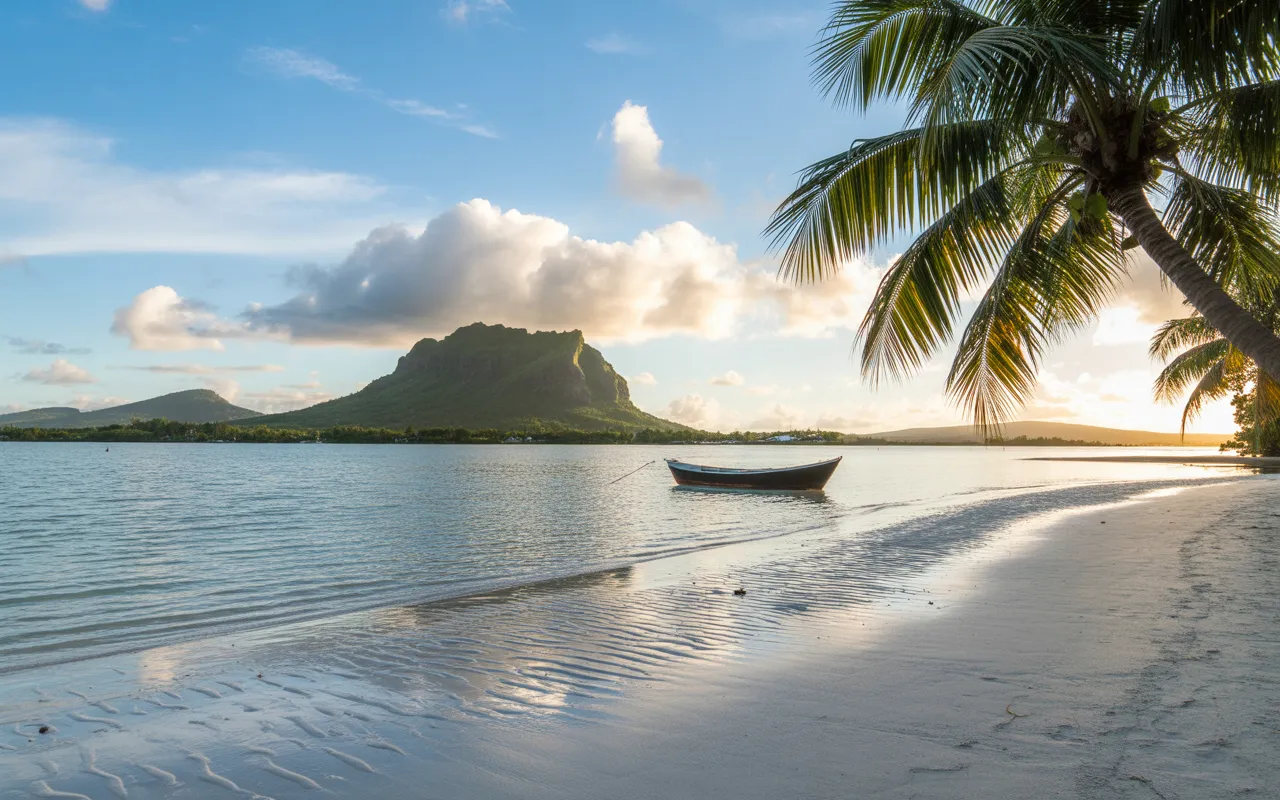
One goal only: to make the most of Mauritius in 7 days.
If you're looking for how visit Mauritius Without rushing around, this "turnkey" itinerary helps you balance lagoons, hikes, cultural discoveries and good addresses, with concrete advice (weather, formalities, travel) to organize your stay in 2026.
Before visiting Mauritius in 2026: the essentials (weather, formalities, pace)
When to go? Understanding the seasons (and choosing the right coast)
Mauritius has a tropical maritime climate, with two main seasons : a hot and humid summer (November to April) and a cooler, drier winter (June to September). The months of May and October are often considered transition months.metservice.intnet.mu)
Here are some official figures to help you understand the situation:
- Average temperature 24.7°C in summer and 20.4°C in winter (seasonal averages).metservice.intnet.mu)
- Rain The annual average (reference 1971–2000) is approximately 2010 mm, with wetter months in February–March and a generally drier month in october. (metservice.intnet.mu)
Simple advice If you want "beach + excursions" without too much heat and humidity, many travelers prefer the shoulder season (May/October). If you come during the southern winter, the east can be windier: it's ideal for certain activities (kitesurfing), but consider alternating with the more sheltered north/west.
Entry formalities: visa, length of stay, rules to double-check
For entry requirements (visa, exemptions, duration of stay), the most reliable source remains the Mauritian administration. Passport and Immigration Office It specifically recalls that final admission and the duration granted are decided upon arrival by the immigration officer, and details the visa categories (tourism, transit, medical, etc.).passport.govmu.org)
Important Conditions are changing. Before your departure in 2026, also check the official health/safety recommendations of your country (e.g., France): Travel advice – France Diplomacy. (diplomatie.gouv.fr)
Health: mosquitoes, vaccines, basic precautions
Without dramatizing: in Mauritius, most precautions are those of a tropical trip (hydration, sun, and especially mosquito protection). The CDC (international reference) particularly emphasizes the prevention of bites and lists travel vaccines to discuss depending on your situation (hepatitis A/B, typhoid, etc.).wwwnc.cdc.gov)
- Essential : repellent, covering clothing in the evening, and good mosquito-prevention habits.diplomatie.gouv.fr)
- Before departure Consult a healthcare professional if you are pregnant, immunocompromised, or travelling with a baby.wwwnc.cdc.gov)
Popularity: Mauritius remains very popular (and it shows).
To understand the dynamics of tourism, tourist arrivals have gone from 1,295,410 in 2023 à 1,382,177 in 2024 according to Statistics Mauritius.statsmauritius.govmu.org)
And, according to a statement reported by the African Travel & Tourism Association, Mauritius reportedly recorded 1,436,250 arrivals in 2025 (Announcement to be made during briefing on January 12, 2026).atta.travel)
Practical consequence Book your accommodation early if you are travelling during school holidays, and keep a plan B (alternative beach, alternative hike) to avoid crowded spots at certain times.
Where to sleep for 7 days: 2 strategies that work (without complicating things)
Option A (simple): 1 single, well-located accommodation
Choose a drop-off point North (Grand Baie / Pereybère / Trou aux Biches) or West (Flic-en-Flac / Tamarin). You can explore the area during the day: convenient, especially if you want to maximize your time at the beach.
Option B (more “road trip”): 2 bases
Do 4 nights in the north/west, Then 3 nights in the southwest (towards Le Morne / Rivière Noire). You reduce travel time and better enjoy sunrises/sunsets.
7-day itinerary for visiting Mauritius in 2026
This itinerary blends must-see attractions (Port Louis, Pamplemousses, lagoons) with more nature-focused experiences (gorges, viewpoints). Adjust the order according to the weather: if there's rain on the coast, the other side of the island might be more pleasant on the same day.
Summary table: your week at a glance
| Day | Area | “Stress-free” program” | Optimization advice |
|---|---|---|---|
| J1 | North or West | Arrival + first beach + sunset | Travel light: swimming & rest |
| J2 | Port Louis | Market + seafront + UNESCO World Heritage Site (Aapravasi Ghat) | Visit early to avoid the heat in the city |
| D3 | North | Pamplemousses Botanical Garden + North Beach | Combine nature and lagoon on the same day |
| J4 | East | Lagoon & boat trip (e.g., Île aux Cerfs) + relaxation | Choose a reputable operator (safety, weather) |
| J5 | South / Southwest | Grand Bassin (Ganga Talao) + Chamarel + viewpoints | Perfect when you want to “see something other than the beach” |
| J6 | National Park | Hiking in the Black River Gorges + viewpoints | Bring closed shoes and mosquito repellent. |
| J7 | Le Morne | UNESCO + beach + last Creole dinner | Leave a half-day buffer depending on your flight |
Day 1 — Arrival and warm-up (lagoon, Mauritian pace)
Objective : get into rhythm. Settle in, exchange some money, then head to the nearest beach. For a perfect first evening: a gentle swim, sunset, and a simple dinner (grilled fish, curry, dholl puri).
Day 2 — Port Louis: Market, culture and UNESCO heritage
In the morning, set off on an “urban” exploration: the market (for the atmosphere, the fruits, the spices) and the seafront.
Next, let's visit the UNESCO site. Aapravasi Ghat, In Port Louis: a major site in the history of indentured servitude. The site is 1,640 m² and symbolizes the starting point of a diaspora linked to contract labor in the 19th century.whc.unesco.org)
At the end of the day, return to the beach side (north/west) to recover.
Day 3 — Grapefruits: the Botanical Garden (a must-see) + beach
THE Sir Seewoosagur Ramgoolam Botanic Garden (Pamplemousses) is a perfect family outing: spacious, shaded, and very educational.ssrbg.govmu.org)
Official practical information (useful for planning):
- Schedules : every day, 8:30 a.m.–5:30 p.m.ssrbg.govmu.org)
- Price (non-residents) : 300 Rs Ages 5 and up (free for children under 5).ssrbg.govmu.org)
Afternoon: North beach (depending on your accommodation), quiet snorkeling and relaxation.
Day 4 — East Coast: lagoon and boat trip (postcard version)
The east is the "lagoon blue" day. If the sea is calm, a boat trip is often one of the best memories for those who come visit Mauritius for the first time.
- Plan A : lagoon + swimming + snorkeling.
- Plan B : if the wind picks up, choose a more sheltered beach, or switch your day to another day.
Tip: at sea, listen to safety briefings, protect yourself from the sun (UV-protective t-shirt) and avoid stepping on coral.
Day 5 — South & terrain: Grand Bassin (Ganga Talao), viewpoints, Chamarel
After 3–4 days exploring the lagoon, this day trip to the interior perfectly balances the journey. The south also offers the opportunity to discover another side of Mauritius: spirituality, forests, panoramic views, winding roads, and villages.
To be incorporated according to your tastes:
- Grand Basin / Ganga Talao (major spiritual site)
- Chamarel (landscapes, viewpoints, etc.)
- Photo stops and small local spots (fresh juice, pineapple, seasonal fruit)
Day 6 — Black River Gorges National Park: Nature Day
THE Black River Gorges National Park is a must-see if you enjoy walking. The park was proclaimed the June 15, 1994 and covers 6,574 hectares, with the country's highest point (Piton de la Rivière Noire) at 828 m. (npcs.govmu.org)
Note: microclimates are pronounced, and annual rainfall varies by approximately 1000 mm (drier areas) to 4000 mm (heights). (npcs.govmu.org)
- Morning : viewpoint(s) + accessible trail (depending on level).
- Noon : picnic (zero waste if possible).
- Afternoon : return to the west coast (Flic-en-Flac / Tamarin) for a recovery swim.
Day 7 — Le Morne (UNESCO): beach, panorama and “grand finale”
THE Le Morne Cultural Landscape It is a UNESCO World Heritage Site and symbolizes the history of runaway slaves: a powerful place, beyond the beauty of its setting.whc.unesco.org)
Depending on your fitness level and the weather:
- Sports option : leave early to enjoy the views (and avoid the intense heat).
- Chill option : large beach, lagoon, and final “postcard” photo session.
To close out the week: choose a Mauritian dinner (curry, rougaille, fish, chili cakes) and note your favorite spots… this helps a lot if you come back (or if you are considering a life project on the island).
Practical tips for a successful stay (without unpleasant surprises)
Getting around: car, taxi, bus… which to choose?
- Car : ideal if you want to follow the above itinerary with complete freedom (viewpoints, spontaneous stops, “mixed” days).
- Taxis Practical for "à la carte" day trips (beach + restaurant + return). Negotiate the price before leaving.
- Bus : economical and authentic, but slower if you visit sites in 7 days.
Sea, dolphins, whales: prioritize ethics
Mauritius is known for its boat trips. To ensure it remains a good memory (for you and for the wildlife), choose registered operators, avoid aggressive practices, and accept the idea that “see less but better” is often the best experience. Note: according to information relayed in January 2026, an inter-ministerial committee is to examine dolphin/whale watching practices.atta.travel)
Suitcase checklist (Mauritius special)
- Closed shoes (gorges, waterfalls, viewpoints)
- Mosquito protection (especially at sunrise/sunset)diplomatie.gouv.fr)
- Sunscreen + UV-protective top (at sea, the exposure is strong)
- Lightweight jacket (cooler evenings in southern winter / high plateaus)
- Mask and snorkel (if you enjoy snorkeling regularly)
FAQ – How to plan your trip to visit Mauritius
When is the best time to visit Mauritius in 2026?
It all depends on your priorities. For a good compromise between beach and excursions, many people aim for the drier and more pleasant periods: the southern winter (June to September) and the transitional months (May and October). Officially, Mauritius experiences a hotter and more humid summer (November to April) and a cooler and drier winter (June to September). Weather information (average seasonal temperatures, rainfall) can be easily found on the Mauritian weather website, which is useful for choosing your travel dates and coast.metservice.intnet.mu)
Is it possible to visit Mauritius without renting a car in 7 days?
Yes, but your itinerary should be more focused (fewer changes of scenery). In practice, combine taxis (or a driver for the day) for longer excursions (Port Louis, the south, the gorges) and buses for shorter trips. Without a car, avoid packing too many stops into one day: the island is easy to explore, but connections can lengthen travel time. To ensure a comfortable stay, choose well-located accommodation (north or west) and plan three days exploring further afield and four days exploring closer to home.
What to do in Mauritius when it rains?
Rain in Mauritius is often localized and can pass quickly: before changing your plans, check if another coast is drier. Otherwise, take the opportunity to enjoy some cultural activities: Port Louis (market, waterfront) and UNESCO sites like Aapravasi Ghat.whc.unesco.orgYou can also aim for "easy" visits like the Pamplemousses Botanical Garden, which remains pleasant even with a few showers (and its opening hours are generous).ssrbg.govmu.orgFinally, it's a good time for a break: Mauritian cuisine, rums/spices, or simply a relaxing afternoon.
Are 7 days enough to visit Mauritius?
Seven days is enough for a very satisfying first visit: beaches, a lagoon excursion, Port Louis, a UNESCO World Heritage Site, and a full day exploring nature (gorges). However, if you want to add Rodrigues, do more hiking, or take the time to truly experience each region, 10 to 14 days is more comfortable. The tip for a 7-day trip: limit your hotel changes and alternate between "big days" (south/gorges) and "relaxing days" (beach/snorkeling).
And now ?
If this trip is a scouting trip (or if you're already thinking you could live (Here), Expat Mauritius assists individuals and entrepreneurs with their relocation projects: visas and permits, real estate, settling in, and starting a business. You can begin by exploring our approach and requesting a free assessment via the page Live in Mauritius with Expat Mauritius, then delve deeper with the expatriation guides.


