Mauritius is generally a reassuring destination, but not “without risks”.
If you are planning to move abroad, the right question is not just “is it dangerous?” but rather: What are the concrete risks on a daily basis?, where they concentrate, And how to choose a suitable living area (family, single, entrepreneur) without falling into preconceived ideas.
This guide helps distinguish between perception and reality: recent official figures, recommendations from authorities, and field advice to live peacefully in Mauritius.
Security in Mauritius in 2026: what the figures say (official sources)
To assess a country's security, one must distinguish between:
- violent crime (rare but worth watching),
- "Opportunistic" crime“ (thefts, scams, burglaries), often the most frequent for expatriates,
- non-criminal risks (roads, weather, sea), very important in Mauritius.
According Statistics Mauritius (publication “Crime, Justice and Security – Year 2024”, published in 2025), we observe:
- Overall rate of offences (excluding fines) : 42.8 per 1,000 inhabitants in 2024 (compared to 46.6 in 2023).
- Voluntary homicides : 35 cases in 2024 (compared to 26 in 2023), representing a rate of 2.8 per 100,000 inhabitants in 2024 (2.1 in 2023).
- Flights : 10,719 events in 2024 (compared to 14,519 in 2023), with a decrease also in thefts in/from vehicles (from 730 to 481).
- Burglaries : 964 events in 2024 (compared to 1,136 in 2023).
- Robberies with violence : 591 events in 2024 (compared to 765 in 2023).
Key points to remember: The number of thefts/burglaries decreased between 2023 and 2024., but intentional homicides have increased. This does not mean that foreigners are targeted: several official sources indicate that incidents targeting visitors are often opportunists (thefts, snatchings, etc.).
To view the source: Statistics Mauritius – Crime, Justice and Security (Year 2024).
Real risks for expatriates: what happens most often (and where)
1) Opportunistic thefts (beaches, tourist areas, ATMs)
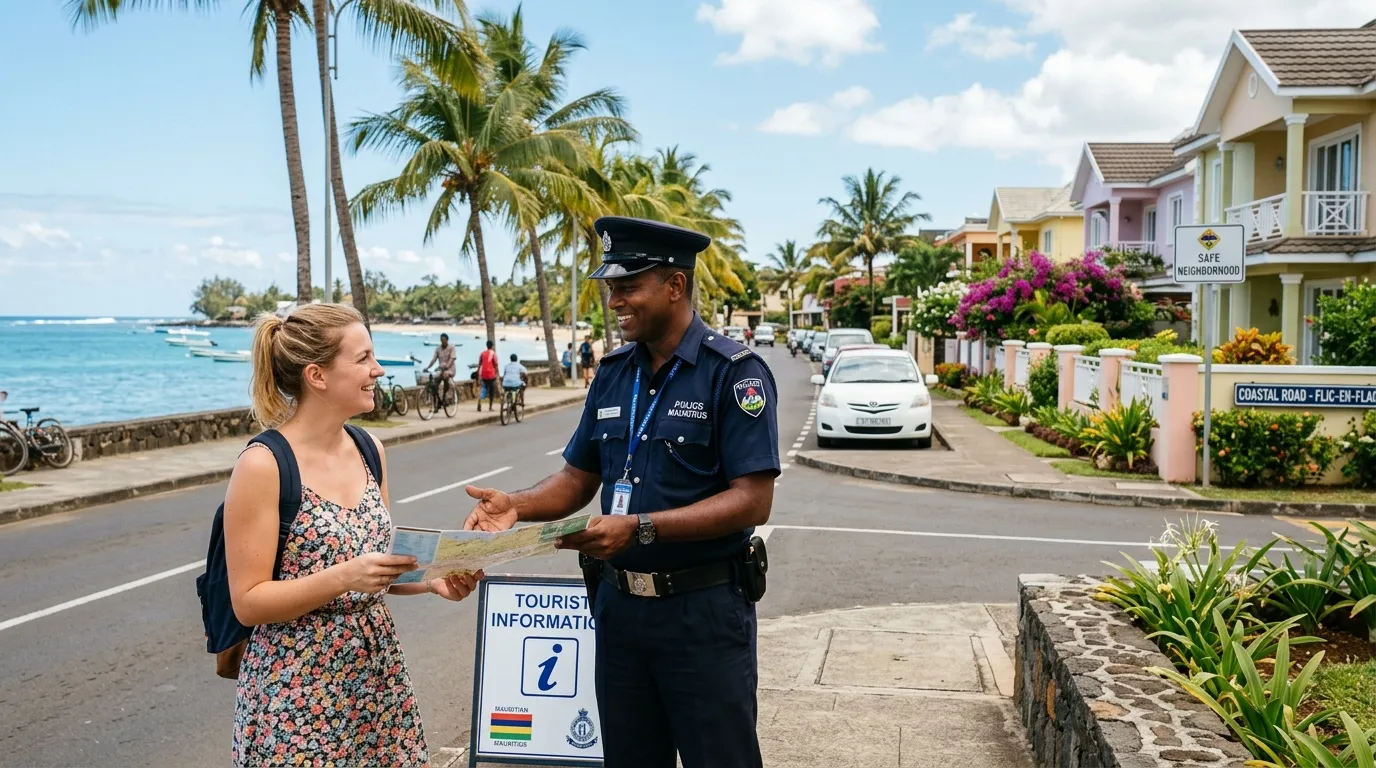
Travel authorities (Canada, Australia, United States) agree: in Mauritius, the most common incidents remain opportunistic flights (pickpocketing, bag snatching, phone theft, petty break-ins). They occur more frequently:
- in the busy areas (markets, shopping areas),
- on some beaches and tourist spots,
- near the distributors (cash withdrawals, inattention).
Useful sources: Travel advice – Government of Canada ; Smartraveller – Australia; ; US State Department – Travel Advisory (Mauritius).
2) Burglaries: especially when the dwelling is isolated or poorly secured
Burglaries exist (as everywhere) and affect more and more people:
- THE isolated dwellings (remote villa, easy access, no close neighbors),
- the items left visible (bag, computer, keys, passports),
- seasonal rentals without security measures.
The French ministry specifically recommends that’avoid staying in isolated places and to verify the safety of the accommodation. Source: France Diplomacy – Travel Advice (Mauritius).
3) Taxi scams (especially at the airport) and unregistered journeys
Cases of scams and thefts have been reported when travelers board unregistered vehicles. The simplest recommendation: use only registered taxis, ideally booked through the hotel or a reliable contact, and agree on the price before going up. Source: Smartraveller – “Taxi scams” section.
4) Road safety: a major point underestimated by newcomers
For many expatriates, the number one risk is not crime, but the road (condition of certain roads, local driving, motorcycles, pedestrians, animals, variable lighting).
- According Statistics Mauritius, the number of road fatalities is 134 in 2024 (compared to 138 in 2023). Source: Road Transport and Road Traffic Accident Statistics – Year 2024.
- The UN in Mauritius recalls an order of magnitude of approximately 10 road deaths per 100,000 inhabitants (Institutional communication). Source: United Nations in Mauritius – Road safety.
5) Weather and sea: cyclones, heavy swells and changing conditions
Mauritius may experience cyclone alerts (classes) and episodes of heavy swells. Best practice: follow official bulletins and avoid going out to sea when conditions deteriorate.
- Official system: Mauritius Meteorological Services – Cyclone Warning System
- Risk of rough seas/high waves: NDRRMC – High Waves Warning
Summary table: risks, typical locations and prevention measures
| Risk | Where this happens most often | Simple (and effective) prevention |
|---|---|---|
| Pickpocketing / snatch | Markets, city centers, tourist areas, busy beaches | Shoulder bag on the inside, phone not visible, avoid walking alone late at night |
| ATM theft / after withdrawal | Street vending machines, high-traffic areas | Prefer using ATMs in banks/shopping centers, withdraw cash during the day, and remain vigilant. |
| Burglary | Isolated dwellings, easy access, lack of lighting | Outdoor lighting, gates/locks, alarm, safes, neighbors/guardian, not "showing" your habits |
| Taxi scam / unregistered vehicle | Airport, tourist areas, solicitations "on the way out"“ | Registered taxi, fixed fare in advance, booking via hotel or reliable contact |
| Road accident | Night, poorly lit secondary roads, areas with pedestrians/animals | Defensive driving, reduced speed, avoid late-night journeys initially, and be vigilant with motorcyclists. |
| Dangerous sea (swell / currents) | Some unsupervised beaches, on days of heavy swell | Follow official alerts, avoid swimming/lagoons when flags/advisories are displayed, and favor supervised areas. |
“Safe” neighborhoods in Mauritius: how to reason without making a mistake
There is no official, fixed list of “safe neighborhoods”: safety often depends on the scale of a street, of a housing estate or a residence (access, neighborhood, lighting, security), more so than on the scale of an entire city.
The concrete criteria that make the difference
- Street lighting and nighttime visibility (lit streets, no deserted areas around).
- Controlled access : residence with gate, caretaker, camera, or very busy neighborhood.
- Proximity to services : shops, schools, road links (less isolation, more traffic).
- Parking : secure parking, no vehicles “on the road” with visible effects.
- Build quality : shutters/locks, grilles, fencing, alarms possible.
Areas popular with expats: advantages and things to be aware of
Without generalizing, certain areas are often chosen for their quality of life, infrastructure, and ease of settling in:
- North (e.g., Grand Baie, Pereybère and surrounding areas): very convenient (restaurants, services) but more touristy → Increased vigilance regarding opportunistic flights, especially in the evening (recommendations also mentioned by some travel authorities).
- West (e.g. Flic en Flac, Tamarin / Rivière Noire): attractive for the beach and an “outdoor” lifestyle; same logic: tourist areas = beware of visible objects and parked cars.
- Central plateau (e.g., Moka, Quatre Bornes, Floréal, Ebène): sought after for schools, access to work and a more “residential” daily life.
- East & South : quieter and sometimes more isolated → often ideal for nature lovers, but you have to anticipate (car, lighting, distances, home security).
Good reflex: Visit a property at two times (daytime + evening), test the "return home" journey after 7-8pm, and observe the actual atmosphere (traffic, lighting, open shops, etc.).
Daily safety tips: the expat checklist
Securing your home (villa or apartment)
- Close systematically (doors, windows) even for a short absence.
- Outdoor lighting with detection + gate lighting (simple deterrent effect).
- Put away the “tempting” items” (PC, bags, keys, passports) out of sight.
- Choose a residence/housing estate with controlled access if you leave often or if the house is isolated.
- Create a “discreet” routine” (avoid displaying signs of wealth, vary habits when possible).
Getting around without stress (car, taxi, on foot)
- Defensive driving Keep your distance, anticipate two-wheelers, slow down at night.
- Avoid leaving belongings visible in a parked car (beach, public parking lot, city center).
- Taxi : favour registered, identifiable taxis, and agree on the fare before the journey (recommended by Smartraveller).
- On foot : as several authorities remind us, avoid isolated and poorly lit areas at night, especially when alone.
Beaches, hiking and water sports: “local” caution”
- Beach : do not leave phone/papers on the napkin, not even “2 minutes”.
- Nautical operators : choose supervised service providers, ensure the equipment and safety rules (France Diplomatie warns about unscrupulous salespeople).
- Sea : follow official advice in case of swell; some days can be visually misleading.
Useful numbers and quick answers in case of a problem
Record the emergency numbers as soon as you arrive:
- Police : 999 (mentioned by the Mauritian Police and the US State Department)
- Emergency Medical Service (SAMU) / Ambulance: 114
- Firefighters / Fire & Rescue: 115
Sources: Mauritius Police Force ; US State Department – Mauritius.
If you are a victim of theft/incident:
- Get to safety and do not resist in case of aggression (common recommendation from the authorities).
- Call the police and request a report (useful for insurance purposes).
- File an objection (bank) if card/phone stolen, change your passwords.
- Notify your insurance company (accommodation, travel, health as appropriate).
Settling in well: security isn't just about a "neighborhood", it's a strategy
Most problems can be solved with a simple approach: choose a sector that aligns with your lifestyle (schools, work, outings), then securing everyday life (housing, mobility, routines).
At EXPAT MAURITIUS, the goal is to help you settle in peacefully by minimizing unpleasant surprises: understanding living areas, assistance with administrative procedures, and connecting you with the right contacts (housing, schools, banks, insurance, etc.). To learn more about our comprehensive support, please visit: Living in Mauritius: turnkey expatriation and real estate.
And if you like practical content before making a decision, here is the resources page: Expatriation guides – Expat Mauritius.
Finally, to contact the team (phone, WhatsApp, email or form) and request a free evaluation, Visit the website: EXPAT MAURITIUS.
FAQ – Safety in Mauritius: Frequently asked questions from expats
Which are the safest areas in Mauritius for a family?
There is no official "safe neighborhood" ranking, as safety varies considerably from street to street. For a family, the most reliable approach is to choose a well-connected area (schools, shops, main roads), with a lively residential environment and a properly secured property (access, lighting, fencing, parking). The central plateau (close to schools and services) is often sought after, while highly touristic coastal areas may require greater vigilance regarding opportunistic theft. Ideally, you should visit the property both during the day and at night before signing anything.
Are there any areas to avoid in the evening in Port Louis or in tourist areas?
Travel authorities' recommendations emphasize one simple rule: avoid isolated and poorly lit places at night (deserted beaches, parks, quiet streets), and remain vigilant in busy areas. In Port Louis, vigilance is generally higher in the evening (less activity, emptying streets) and near densely populated areas (transportation, shopping areas at the end of the day). In tourist resorts, the main risk remains opportunistic theft: visible bags/items, parked cars, cash withdrawals.
How to reduce the risk of burglary when living in a villa in Mauritius?
Prevention rests on three pillars: deterrence, delay, and limiting the gain. Deterrence: motion-activated outdoor lighting, a closed gate, and a discreet routine. Delay: strong locks, appropriate grilles/shutters, and possibly an alarm system. Limit the gain: do not leave valuables visible, use a safe, and avoid keeping all important documents in one place. Finally, the choice of location matters: a very isolated villa is more exposed than a residential area with foot traffic and close neighbors. A simple home inspection before moving in often makes a real difference.
What numbers should I call in case of an emergency in Mauritius?
In practice, save these numbers in your phone as soon as you arrive: 999 for the police (number commonly cited by official sources), 114 for the ambulance/SAMU, and 115 For the fire department: If you witness or are involved in an incident, call immediately, provide a precise location (known landmark, road name, point of interest), and then request a report when relevant (theft, accident), which is useful for insurance claims. Also, keep a digital copy of your documents (passport, driver's license, insurance) separate from the originals.
And now ?
Do you want to settle in Mauritius while minimizing risks (housing, travel, administrative procedures) and saving time? EXPAT MAURITIUS supports you with local expertise and comprehensive assistance (visas/permits, real estate, relocation, business creation). Request your free evaluation and contact the team via the channels available on the official website: expat-mauritius.com.