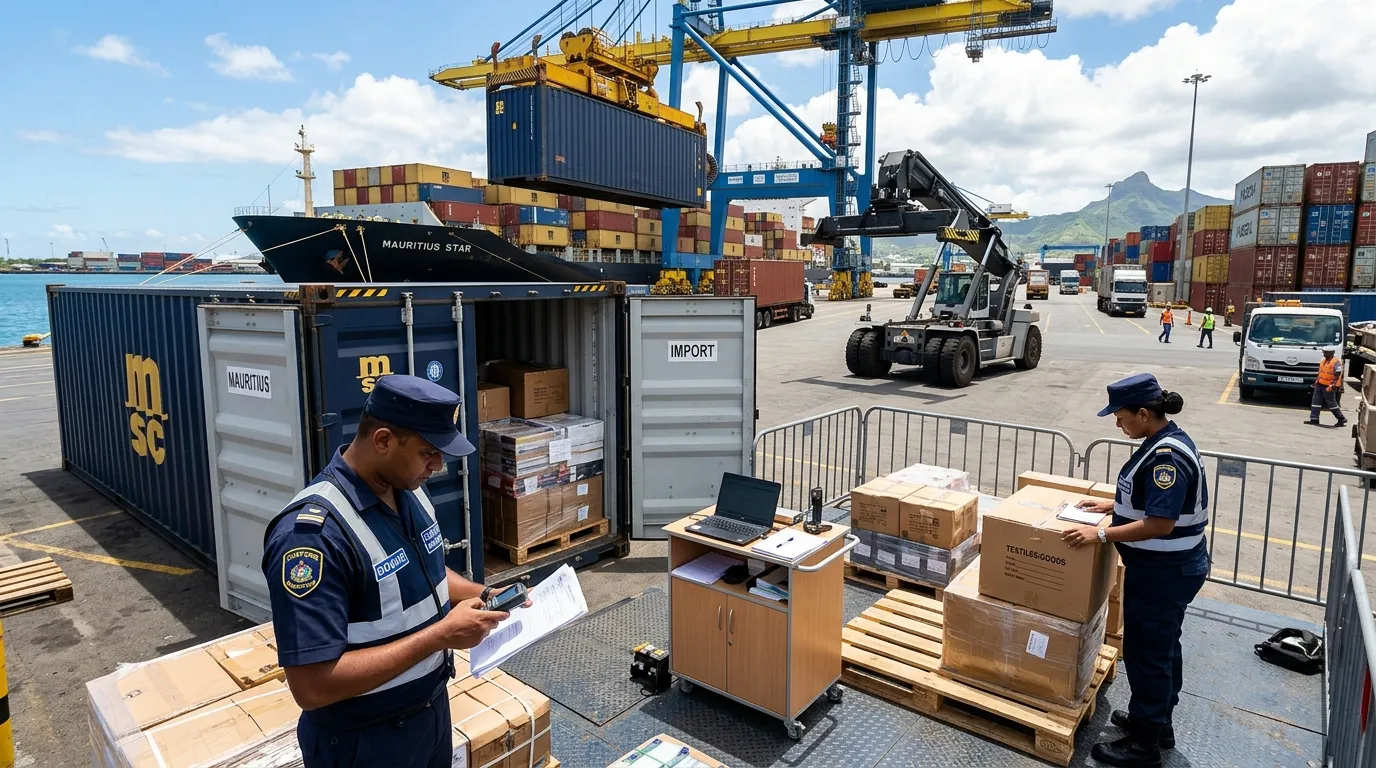

Repatriating capital from Mauritius is simple, but not tax-neutral. Since the abolition of exchange controls in July 1994, the issue is no longer the authorization to leave the country, but the classification of the flow, its traceability, and its tax treatment in the country of residence.bom.mu)
In other words, a distinction must be made between personal savings, dividends, capital gains, and foreign income. In Mauritius, a resident is generally taxed on their Mauritian income and, for certain foreign-sourced income, on that remittance to Mauritius; in France, tax residency and the Franco-Mauritian tax treaty can also change the situation.mra.mu)
Exchange controls in Mauritius: what you need to understand
The fundamental rule is clear: Mauritius no longer operates with administrative exchange controls. The Bank of Mauritius indicates that exchange controls were abolished in July 1994 and that the rupee exchange rate is now determined by the market.
«Exchange control was abolished in July 1994.»
In practice, this means that international transfers are processed through authorized banks or currency exchange offices, with standard compliance checks. These institutions must apply due diligence rules, particularly regarding the origin of funds, the beneficial owner, and the economic viability of the transaction.
If you are preparing your installation, the practical guides for expatriation to Mauritius They can help you plan ahead for banking, housing, schools, and residency formalities. It's not a banking formality per se, but a genuine step in structuring your assets.
What capital can be repatriated without any unpleasant tax surprises?
The right approach is to consider the nature of the income, not just the bank transaction. An outgoing transfer may be legally straightforward, but its tax implications can vary depending on whether it involves existing capital, a dividend, a capital gain, or foreign income.
Table of the most frequent cases
| Nature of the flow | Tax reading in Mauritius | Practical point of vigilance |
|---|---|---|
| Personal savings or capital already accumulated | The transfer itself is not the tax issue; it is the origin of the funds that must be demonstrable and consistent.financialservices.govmu.org) | Keep bank statements, contribution history and any document showing that the money comes from a previously justified flow. |
| Dividends from a Mauritian company | Dividends paid by a resident company are exempt from income tax in the hands of shareholders, while the company remains subject to tax on its profits. | Keep the distribution minutes, the dividend decision and the bank statement of payment. |
| Capital gains on shares or other securities | Mauritius does not, in principle, levy a general tax on capital gains from the sale of securities; however, gains of a commercial nature remain taxable.mra.mu) | The classification of the gain is crucial: private assets or trading activity do not yield the same result. |
| Foreign income of a Mauritian resident | A Mauritian resident is taxed on foreign-source income to the extent that it is remitted to Mauritius. | A tax residence certificate and proof of taxation abroad can be useful to avoid ambiguities. |
For real estate acquired under an approved scheme, the EDB specifies that there are no restrictions on the repatriation of funds or income from the sale or rental of the property. This is an important point for an investor considering a future exit or rental.edbmauritius.org)
Residence, ownership and thresholds 2026
The threshold for a real estate investor remains USD 375,000. The EDB indicates that a non-citizen can obtain a residence permit through the purchase of residential property at this amount, and that this permit remains valid as long as the property is owned.
For illustrative purposes, at the USD/MUR exchange rate published by the Bank of Mauritius on July 22, 2026, USD 375,000 represents approximately Rs 17.41 million. The exact amount in rupees varies depending on the exchange rate of the day and the bank used for the transaction.
From a tax perspective, Mauritius remains competitive: the “classic” company is taxed at 15% by default, while the 2026-2027 Budget introduced, for individuals, a new tier of 20% on the portion between Rs 1 million and Rs 12 million, then 35% above Rs 12 million from July 1, 2026.mra.mu)
Finally, to determine if you are a tax resident in Mauritius, the reference point remains the rule of 183 or 270 days over two years, with the possibility of requesting a tax residency certificate from the tax authorities. This is a key point before any repatriation of foreign income.
Practical procedure for safely repatriating money
- Start by identifying the exact nature of the funds: personal capital, dividends, salary, rental income, proceeds from the sale of securities, or proceeds from the sale of real estate. This classification determines the tax implications and the supporting documents required.
- Prepare a complete banking file: identification documents, beneficiary's contact information, proof of origin of funds, bank statements, dividend distribution minutes, and, as applicable, a transfer agreement or notarized deed. KYC/CDD requirements and the disclosure of originator and beneficiary information are compliance standards in Mauritius.
- Check Mauritian tax laws before ordering the transfer. A Mauritian resident may be taxed on certain foreign-source income if it is remitted to Mauritius, whereas a non-resident is only taxed on Mauritian-source income.
- Also check the tax situation in your country of residence. If you are still a French tax resident, France will generally tax you on your French-source income and, if you are a resident there, on your French and foreign income, subject to international agreements.impots.gouv.fr)
- Keep all evidence of the money transfer process. When it comes to repatriating assets, documentary consistency is often more important than the transfer order itself.
Why do banks ask for so much documentation?
Because formal currency transfers are monitored as part of anti-money laundering and counter-terrorist financing measures. The Bank of Mauritius reiterates that banks are regulated and supervised, and Mauritian authorities emphasize that KYC/CDD information, regarding the origin and destination of funds, is an integral part of the system.
For this reason, a complete file saves time: it often avoids back-and-forth communication, temporary delays, and requests for additional information. This is especially true when repatriation involves a large sum, a recurring dividend, or the sale of real estate.
French residents: key points to be aware of
If you remain a French tax resident, the fact that your funds are in Mauritius is not sufficient to neutralize French tax. The French tax authorities remind you that a French tax resident is taxable on their income from both French and foreign sources, subject to international tax treaties.
The tax treaty between France and Mauritius exists and serves precisely to allocate the right to tax according to the nature of the income. In practice, this may, depending on the circumstances, entitle the taxpayer to a tax credit or a mechanism for eliminating double taxation, but it is always necessary to examine the exact category of income concerned.impots.gouv.fr)
The key point is simple: a dividend, capital gain, or rental income repatriated from Mauritius is not automatically treated the same in France. For a French resident, the correct approach is to verify their tax residency, the source of the income, the applicable tax treaty, and proof of taxes already paid in Mauritius.impots.gouv.fr)
To understand who operates the site and what legal framework it falls under, you can also consult the website legal notices.
FAQ: Repatriating capital from Mauritius
How to repatriate capital from Mauritius: what procedures and documents are required?
The procedure generally involves a bank or an authorized currency exchange, with a complete KYC/CDD file. In practice, it is necessary to be able to prove the origin of the funds, the ultimate beneficiary, and the nature of the transaction: bank statements, deed of sale, dividend resolution, proof of salary, or liquidation documents if the money comes from a company. Banks may request additional information if the file is inconsistent. In Mauritius, exchange controls no longer exist, but compliance remains essential.
Is the repatriation of profits and dividends from Mauritius subject to exchange controls or is it unrestricted?
Regarding foreign exchange, Mauritius abolished exchange controls in July 1994. Repatriation is therefore, in principle, unrestricted through the formal banking system. However, the tax issue remains: dividends paid by a resident company are generally exempt from income tax in Mauritius for the shareholder, while the company remains taxed on its profits. The investor's country of residence may then tax these amounts according to its own regulations.
How to determine if income repatriated from Mauritius is taxable in the country of residence?
You must start from your tax residence, not the location where the money is held. In many countries, a tax resident is taxed on their worldwide income, even if that income was generated abroad. The applicable tax treaty may then limit the tax or provide a tax credit. The safest method is to classify the income, check the treaty, and then compare the tax already paid in Mauritius with the rules of the country where you actually live.
What are the specific tax implications for French residents repatriating capital from Mauritius?
A French tax resident remains taxable in France on both their French and foreign income, subject to the Franco-Mauritian tax treaty. This means that a transfer from Mauritius should never be analyzed in isolation: it is essential to determine whether it constitutes a dividend, a capital gain, rental income, or simply a return of capital. Depending on the category, the treaty may allocate taxation between the two countries and prevent double taxation through a tax credit or an allocation rule.
What are the conditions and limits for the repatriation of capital and capital gains realized in Mauritius to abroad?
For securities, Mauritius does not apply a general capital gains tax: capital gains on shares and other securities are exempt from income tax, while trading gains remain taxable. For real estate acquired through approved schemes, the EDB indicates that there are no restrictions on the repatriation of funds or income derived from the sale or rental of the property. The key issue, therefore, is the classification of the asset and the gain.
And now ?
If you are planning a wealth relocation, a real estate investment, or the structuring of a company in Mauritius, the most effective approach is to anticipate the tax implications before the transfer. You can start with a free assessment and then discuss the best strategy for your situation via [link/contact information]. support from EXPAT MAURITIUS. This article is for informational purposes only and does not replace personalized tax or legal advice.