Mauritius is as much a place to taste as it is a place to visit.
If you are looking for a clear list of typical Mauritian dishes To discover more, you're in the right place: here 12 must-try specialties (street food, family dishes, Creole, Indian and Sino-Mauritian influences), with practical advice on how to know what to order, where to find them And how to appreciate them from your very first days on the island.
And if you are preparing your installation, the team at Expat Mauritius supports individuals and entrepreneurs in Mauritius (visas/permits, real estate, relocation, business creation) with local expertise and global support.
Why is Mauritian cuisine so unique?
Mauritian cuisine is a vibrant blend of influences. Creoles, Indian women, Chinese And European. In a single day, one can eat a dholl puri on the go, a upside-down bowl at lunchtime, then a curry house in the evening.
This is not a minor detail: the island also welcomes a large number of travelers each year (for example 1,382,177 tourist arrivals in 2024, compared to 1,295,410 in 2023, according to Statistics MauritiusThis diversity is strongly reflected in the culinary offerings, from markets to small neighborhood eateries.
Ordering well (and avoiding surprises): a useful mini-glossary
- “"Pepper"” It can sting quite a bit. If you are sensitive: say “not pima” (Creole, for “not spicy”).
- Rougaille = Mauritian-style tomato sauce (often garlic, onion, thyme, ginger), served with fish, sausage, etc.
- Satini = chutney (often coconut, tomato, coriander), fresh and fragrant.
- Achard = seasoned vegetables (often mustard/vinegar/turmeric), tangy and crunchy.
- Snack = small local address (street food, fast food).
Summary table: 12 typical Mauritian dishes, when to try them and where to find them
| Speciality | Kind | Best time | Where to find it easily |
|---|---|---|---|
| Dholl puri | Street food | Morning / midday | Markets, snacks, stalls |
| Farata (hot roast) | Street food | Lunch / Evening | Roti stands, snacks |
| Chili Cake | Snack | Morning / afternoon snack | Markets, street vendors |
| Meatballs | Snack / light meal | Late morning / evening | Chinatown (Port Louis), markets |
| Fried noodles | Quick meal | Noon | Takeaway, small canteens |
| Upside-down bowl | Flat | Lunch / Evening | Chinese-Mauritian restaurants and snack bars |
| Mauritian Briyani | (Festive) dish | Weekends / holidays | Caterers, restaurants, "pot-style" sales“ |
| Mauritian curry | Homemade dish“ | Lunch / Evening | Tables d'hôtes, traditional restaurants |
| Rougaille (sausage/fish/prawn) | Flat | Lunch / Evening | Home-style cooking, Creole restaurants |
| Vindaye (fish or vegetables) | Dish/condiment | Lunch (with rice) | Mauritian tables, markets |
| Seven curries (7 curries) | Vegetarian assortment | Occasions, traditions | Events, some restaurants |
| Sweet potato cake | Dessert / street food | To taste | Markets, bakeries/snacks |
12 typical Mauritian dishes to try (with practical tips)
1) Dholl puri (dhal puri): the essential street food
Often presented as the “darling” of street food, the dholl puri is a thin, flexible pancake, stuffed with yellow split peas, served with various garnishes: large pea curry (beans), rougaille, satini, achards and chili pepper. Popular travelogues highlight its historical roots and status as a local favorite (e.g., article by The Guardian).
- To be tested : “classic” version with large polka dots + coconut satin.
- Advice : start with “not pima”, then adjust.
2) Farata / hot roti: the more “generous” cousin”
THE farata (often sold as “hot roast”) is a thicker, sometimes flaky, rolled-up flatbread with vegetable baskets (potatoes, eggplant, beans…) or meat. It's practical, nutritious, and ideal when you want a complete meal to take away.
- To be tested : farata bringelles + tomato satini.
- Trick : ask for a mix of 2 curries to discover more flavors.
3) Chili cake: crispy, simple, addictive
A small savory fritter made from split peas (and often chili pepper), the chili cake It can be eaten on its own, with a sauce, or even in bread and butter. It's a classic at markets and for quick snacks (it can also be found in many Mauritian cookbooks, for example). The Foodie's Avenue).
- To be tested : in a baguette with butter (very local).
- Advice : excellent “plan B” if you’re not ready for anything too spicy.
4) Dumplings: the Sino-Mauritian soul in broth
THE meatballs (Derived from dumplings) are served in broth or with sauce, often garnished with chives and chili. They come in fish, chicken, pork, or vegetable (chayote) varieties. They are a must-try in Port Louis, especially in Chinatown (travel guides like Kuoni regularly highlight this specialty).
- To be tested : chouchou meatball + piping hot broth.
- Advice : add the chili pepper gradually (in small touches).
5) Fried noodles: stir-fried noodles “Mauritian style”
THE fried noodles (Stir-fried noodles) is a staple of quick lunches: crunchy vegetables, egg, chicken/prawns depending on the version, soy sauce… It is a simple dish, very widespread, and perfect for discovering the Chinese influence on a daily basis.
- To be tested : Fried noodles with egg + a touch of chili cracker if you like it spicy.
- Advice : ask for a “less fatty” version if you are sensitive (some snacks can be adapted).
6) Upside-down bowl: the “signature” dish of Sino-Mauritian tables
THE upside-down bowl (An "upside-down bowl" is a dish consisting of rice, a stir-fry of meat/shrimp and vegetables, often bound with a sauce, and topped with an egg. The whole thing is arranged in a bowl and then inverted onto a plate. Visually simple, but very comforting.
- To be tested : chicken or seafood version.
- Advice : a good choice if you want a complete meal, not too spicy.
7) Mauritian biryani: fragrant, festive, and “nourishing”
THE Mauritian Briyani (often written “briani”) is a fragrant rice dish, frequently prepared at gatherings. It is often distinguished by the presence of potatoes and an aromatic richness (spices, fried onions, herbs), with chicken, beef, mutton or a vegetarian version.
- To be tested : chicken biryani with raita (when available) or achards.
- Advice : perfect to share if you are eating in a group.
8) Mauritian curry (chicken, fish, shrimp…): the heart of family cooking
In Mauritius, “curry”"Slow-cooked" refers to a large family of dishes simmered with spices (turmeric, cumin, coriander, etc.), served with rice, grains (lentils/beans) and condiments. It forms the basis of many everyday meals, and is an excellent way to understand "home cooking".
- To be tested : chicken curry, or fish curry if you like seafood flavors.
- Advice : taste the sauce first, then add chili and pickles at your own pace.
9) Rougaille: the Creole tomato sauce that goes with everything
There rougaille is a preparation based on tomato, aromatics and herbs, which often accompanies the sausage, THE fish or the shrimp. It's a benchmark for "Mauritian taste": simple, straightforward, and very fragrant. For a general overview of Mauritian cuisine and its signature dishes (including rougaille), you can also consult the summary page on Mauritian cuisine (useful for identifying the great classics).
- To be tested : sausage rougaille with rice + grains + pickles.
- Advice : ask about the level of spice (some rougailles are very spicy).
10) Vindaye (often with fish): tangy, mustardy, unforgettable
THE vindaye (or “vinnday”) is typically prepared with fish, mustard seeds, turmeric, and a touch of vinegar/lemon. The result: a dish drier It's a curry, very fragrant, often served with rice and side dishes. It's an excellent option if you like bold flavors.
- To be tested : fish vindaye (kingfish/tuna depending on season and availability).
- Advice : ideal for “meal prep”: it holds its shape well and remains tasty.
11) Seven Curries (7 cari): the traditional vegetarian dish
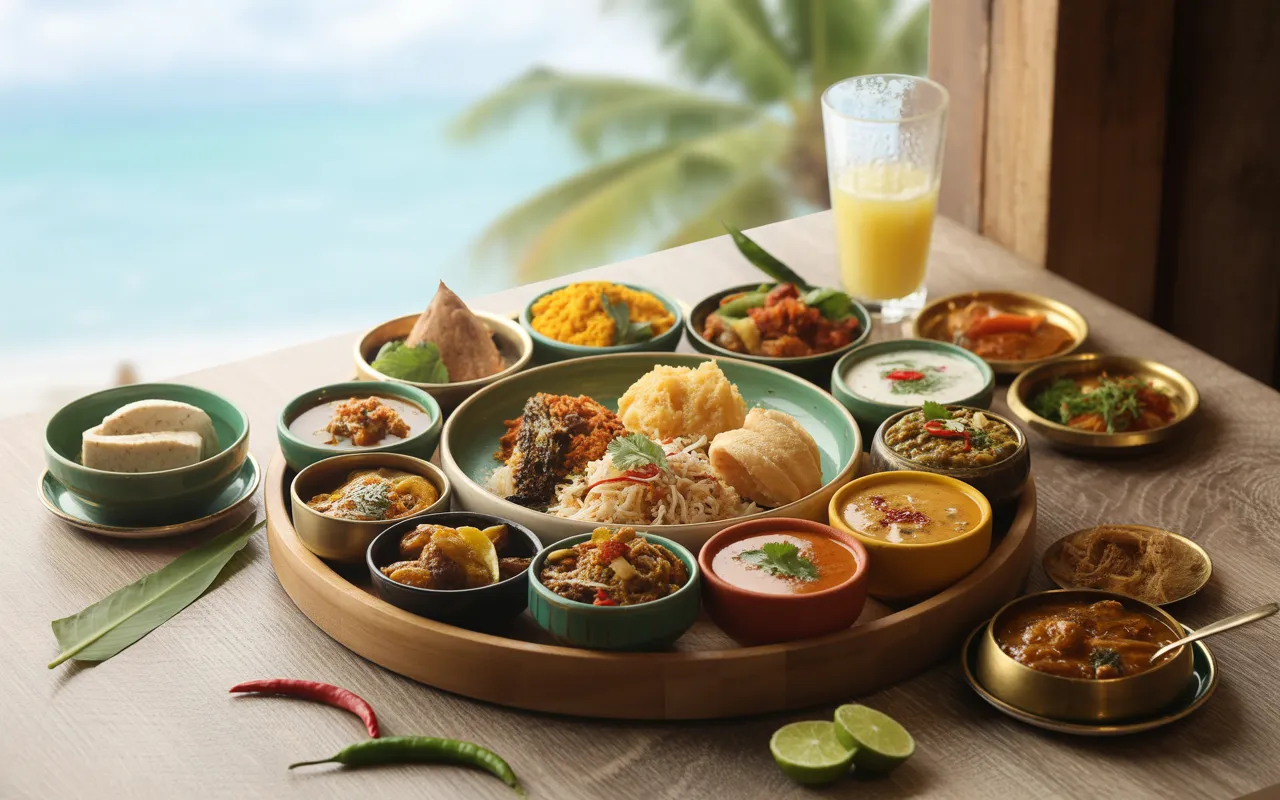
THE seven curries (or “7 cari”) is an assortment of several vegetarian preparations: different vegetable curries, grains, chutneys, pickles, sometimes served “thali” style. It is a perfect entry point for exploring Mauritian cuisine without meat/fish, while discovering the variety of spices and textures.
- To be tested : a 7 curry with a good coconut satini.
- Advice : if you are a beginner, this is the best way to taste a wide variety of foods in one meal.
12) Sweet potato cake: the Mauritian treat that really fills you up
THE potato cake It's a sweet potato-based treat, often flavored, sometimes filled with coconut. You can find it in markets and some bakeries/snack bars. It's sweet, dense, and ideal for a late morning or afternoon snack.
- To be tested : warm sweet potato cake, if possible.
- Advice : bring a small bottle of water if you eat it on a walk (it's rich).
Practical advice: where to eat Mauritian food without making a mistake (as a newcomer)
- Aim for the places that turn : at markets and snack bars, good rotation = freshness.
- Start "softly"“ Upside-down bowl, fried noodles, dumplings (chili on the side) are often more accessible.
- Increase power then a well-garnished dholl puri, rougaille, vindaye…
- Budget Prices vary depending on the area and period. As a macroeconomic benchmark, the 2024 annual inflation rate in Mauritius was published at 3,6% by Statistics Mauritius (CPI), which can influence the cost of snacks and meals over time.
To learn more about the installation, procedures and daily life, you can also consult the expatriation guides Expat Mauritius.
FAQ – Typical Mauritian dishes: frequently asked questions
Which typical Mauritian dishes are most suitable for vegetarians?
Vegetarian options are plentiful in Mauritius. The easiest to order are the dholl puri (often “pure veg”), the farata/hot roti with vegetable curries (potatoes, eggplants, beans), and especially the seven curries (7 curries) which allows you to taste several dishes on one plate. Also consider... vegetable meatballs (darling) and to satini (chutneys). To avoid surprises, ask if the sauce contains dried fish/dried prawns, sometimes used for added flavor.
What is the difference between dholl puri, roti and farata in Mauritius?
THE dholl puri It is generally a thin pancake stuffed with yellow split peas, served with large peas, rougaille, satini, and achards. hot roast and the farata These are thicker flatbreads (farata is often more flaky), used as wraps for curries. In practice, people often order according to their mood: dholl puri for a light and very typical option, farata/roti when they want a more substantial and generously filled meal.
Where can you taste the best Mauritian dishes when you arrive (without knowing the island)?
The easiest way is to start with the markets and the snacks For a more relaxed experience, choose the places where locals eat daily: Port Louis (the central market and food districts), the city markets, and the small eateries near the bus stations. Opt for stalls with a steady flow of customers and freshly prepared dishes (dholl puri, hot dumplings, fried noodles). For a more comfortable introduction, alternate street food at lunchtime with traditional restaurants in the evening.
How can you ask for less spice when ordering a typical Mauritian dish?
In Mauritius, chili pepper can be added to the dish or served separately. To reduce the heat, simply say “not pima” (Creole, “not chili”) or “without chili.” Also ask if the chili is in the sauce or separate (often in paste form, like chili crazer). With dholl puri, start without chili, then add a small pinch. For rougaille and vindaye, ask the same question: some versions are naturally spicier than others.
And now ?
Discovering typical Mauritian dishes is also an excellent way to immerse yourself in daily life on the island: markets, local customs, neighborhoods, and the pace of life. If you are preparing for an expatriation (or an investment/business project), Expat Mauritius can assist you with local expertise (team based in Azuri Village) and comprehensive support: procedures, installation and implementation of your life project in Mauritius.