Importing a dog or cat to Mauritius requires months of preparation.
The Mauritian authorities impose a Import Permit, of the tests (including rabies antibody titer), A transport by cargo manifest and one quarantine in Réduit. In this guide, you will find a clear method, a reverse timeline, the official costs announced, and the points that most often cause problems — to arrive calmly with your pet.
If your project involves a more comprehensive setup (visa, housing, schools, banking, etc.), you can also rely on Expat Mauritius to structure your expatriation and avoid administrative oversights.
Why are the rules strict in Mauritius?
Mauritius applies a very strict health policy regarding the entry of animals (framework of the’Animal Disease Act 1925) and systematically organizes a quarantine period for farts upon arrival.
In the context of the health situation, the official portal of the Government of Mauritius explicitly states: «No Rabies in Mauritius». This situation explains the level of requirements for rabies vaccination, rabies titer testing (RNAT/RNATT) and mandatory waiting periods before boarding.
The essential rules for importing a dog or cat
1) Import Permit (mandatory) + official documents
To enter Mauritius, your pet must be covered by:
- A Import Permit issued by the Division of Veterinary Services (DVS) ;
- A International Veterinary Certificate issued by the competent authority of the exporting country; ;
- of the proof of vaccination, sterilization (except for animals intended for breeding), and test reports (including the rabies titration), depending on the species.
The DVS makes available guidelines and one application form via the SPS Portal (Sanitary and Phytosanitary Portal).
2) Transport: “manifest CARGO ONLY”
Mauritian guidelines specify that farts destined for Mauritius must arrive in cargo manifest only (SO not in the cabin, and not such as “excess baggage”). In practice, this almost always involves going through a cargo chain (airline + transit + declaration) and, on the Mauritian side, providing the contact details of a broker / representative for airport formalities.
3) Quarantine upon arrival at Réduit
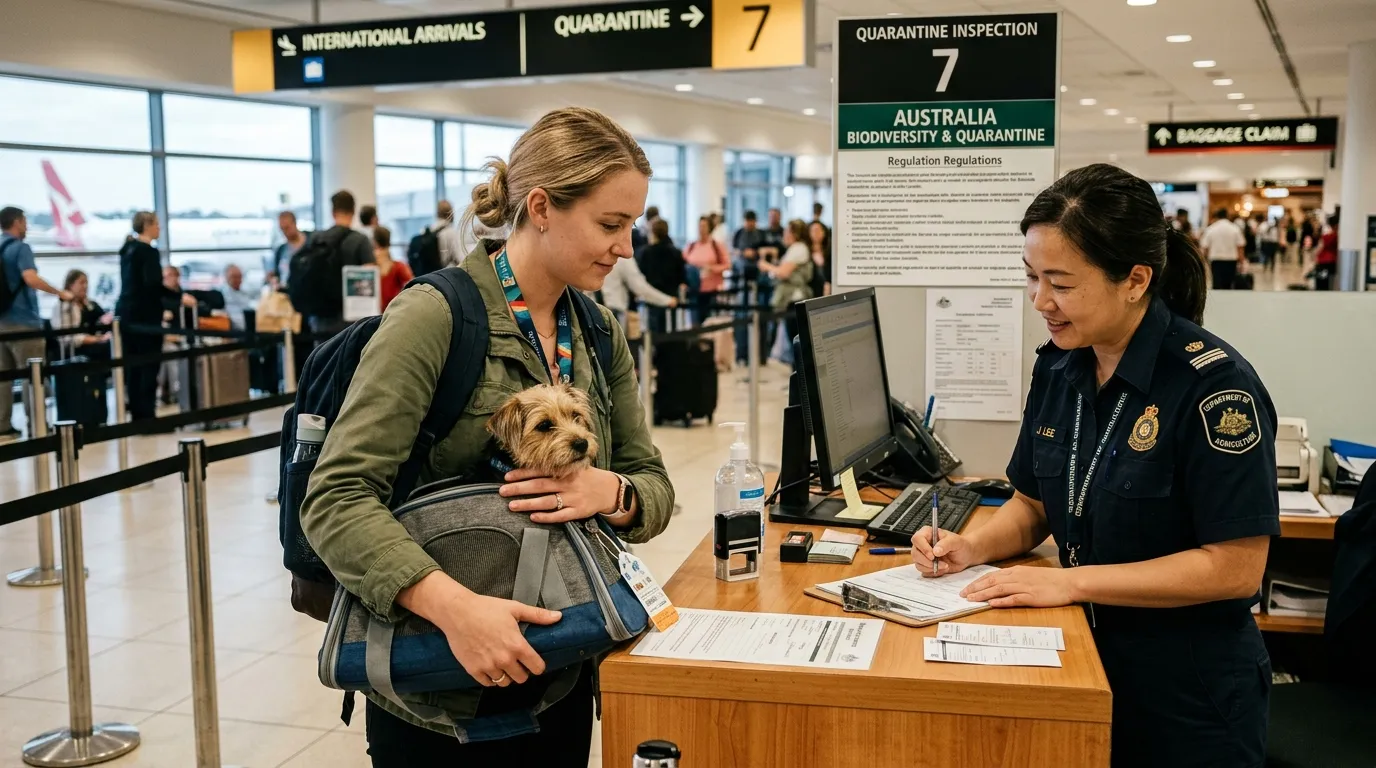
Upon arrival, your pet is transferred to Quarantine Facility at Reduced Price for a minimum quarantine of 5 days. Depending on the country of origin, it can be extended up to 30 days.
Step-by-step approach (with reverse planning)
Typical reverse planning: when to start?
| Stage | What the texts/guidelines require | When to do it (practical recommendation) |
|---|---|---|
| Prepare the Import Permit application | Application form + cover letter + supporting documents (vaccinations, identity, etc.) | As soon as possible (often 3–6 months (before departure, depending on your situation) |
| Rabies vaccine + RNAT/RNATT | To wait for 4 weeks between rabies vaccination and RNAT blood test; titer ≥ 0.5 IU/ml | Start early to allow for a margin of error (insufficient result = revaccination + new test) |
| Waiting time after RNAT | To wait for at least 3 months after the date of collection before travelling | Plan your flight > 3 months after the RNAT sample |
| Dog-specific tests (according to guidelines) | Ehrlichia canis (IFAT negative, window indicated) + Brucella canis (negative) | To wedge into the 45 days before departure for Ehrlichia (and according to the lab) |
| Inform the DVS before arrival | Notify the DVS at least 4 days before (time + flight number) | As soon as your cargo booking is confirmed |
Detailed steps (dog & cat)
-
Read the official guideline corresponding to your pet (dog or cat) and download the application form (SPS Portal).
-
Prepare the file : cover letter, copy of identity document, vaccination record, sterilization certificate (except for reproduction), and authorization if a representative is handling the formalities.
-
Rabies vaccination + RNAT/RNATT titer test :
- the veterinarian scans the chip and takes a blood sample; ;
- the lab must use a test FAVN Or RFFIT ;
- report in English ; acceptable result: ≥ 0.5 IU/ml ;
- respect the waiting period of at least 3 months after sampling before the trip.
-
Specific requirements :
- Dog tests Ehrlichia canis (IFAT) and Brucella canis + up-to-date vaccinations (Distemper, hepatitis, leptospirosis, parvovirus…) with a minimum window before departure.
- Cat : vaccines (enteritis, rhinotracheitis, calicivirus…) up to date, with the 14 days to 12 months window before export mentioned in the guideline.
-
Book cargo manifest transport (often via a freight forwarder/cargo service). Also check the company's rules and the acceptance of the crate (IATA standards).
-
Before arrival Send the arrival time and flight number to the DVS (email) at least 4 days in advance, and ensure that the broker is present at the airport on the day.
Quarantine at Réduit: procedure, visits, food, care
Duration, visits and logistics
After landing, your pet will be taken to the Quarantine Facility in Réduit for a minimum duration of 5 days. The visiting hours indicated in the guidelines are:
- Monday to Saturday 09:00–11:00 and 13:00–14:30
- Sundays & Public Holidays 09:00–12:00
Owners must usually provide food (and the litter (for cats).
Health: things to know before traveling
The guidelines specify that the DVS does not necessarily have a clinical veterinarian or medications to manage pre-existing conditions/chronic conditions; if necessary, a private veterinarian can intervene. at the importer's expense. This is an important point if your pet is undergoing treatment (diabetes, epilepsy, kidney failure, etc.): prepare a continuity plan (prescriptions, medications, instructions).
Official costs: what is displayed (and what varies)
The total budget depends heavily on the cargo transport (route, animal weight + crate, season, company). However, some official fees are published by the Mauritian authorities.
Indicative official fees (DVS / SPS Portal)
| Job | Amount displayed | Remarks |
|---|---|---|
| Veterinary clearance fee (by consignment) | Rs 500 | Upon arrival, mandatory |
| “Cats and dogs” fees (per animal) | Rs 500 | Upon arrival, according to the published scale |
| Quarantine fees (cats/dogs) | Rs 15 / day | Presented as quarantine fees/“rent of kennel/cattery” |
Not to be underestimated (variables, therefore to be calculated on a case-by-case basis): veterinary fees (vaccinations, tests), laboratory fees, IATA compliant crate, cargo freight, transit, and possible agent/broker fees in Mauritius.
Special cases and common errors
Dogs: prohibited breeds & “dangerous dogs”
The "dogs" guidelines list breeds not authorized for import (reference to the Fourth Schedule of the Animal Welfare Act 2013) and a specific framework for the dangerous dogs. If your dog is affected (or similar), plan ahead: the case may be more sensitive (proof of purebred status, local requirements, etc.).
“Can I bring my cat into the cabin?” (in most cases: no)
Maurice imposes the arrival of farts in cargo manifest (and not in the cabin). Even if some companies allow animals in the cabin on other destinations, the entry restriction in Mauritius remains decisive.
Missing document = risk of blockage (or even reshipment)
The authorities are asking for originals (or certified copies) of the documents, with endorsement by the competent authority of the exporting country, including the International Veterinary Certificate. If the representative/broker is not present on the day of arrival, the guidelines mention a risk of the animal being returned to port (at the owner's expense).
Useful official resources (direct links)
- SPS Portal – Imports (DVS): guidelines, forms and fee schedule
- Official guidelines: Bringing a dog to Mauritius (PDF)
- Official guidelines: Bringing a cat to Mauritius (PDF)
- Application form: Import Permit “Pet animals (Dogs/Cats)” (PDF)
- Air Mauritius: reminder of the rules (permit + quarantine in Réduit)
- Government of Mauritius: “No Rabies in Mauritius” (health page)
- IATA: Best practices and transport requirements (pets)
FAQ – Bringing your pet to Mauritius
How far in advance of departure should the procedures be started?
In practice, the goal should be several months. The most restrictive point is the rabies titration (RNAT/RNATT) The guideline requires waiting. 4 weeks after the rabies vaccination for the sample collection, then a a period of at least 3 months after the sample collection date before traveling. Add to that the time required to prepare the file, laboratory processing times, and cargo booking. Starting early also allows for managing an insufficient titer result (revaccination + new test).
Is quarantine mandatory even if my pet is vaccinated and tested?
Yes: official documents indicate a minimum quarantine of 5 days Reduced on arrival, even when the file is compliant. Depending on the origin, the duration may be prolonged (Up to 30 days is mentioned by institutional sources and airlines). It is therefore important to anticipate the logistics (presence of a representative, visits, food) and not to plan too tight a schedule (non-pet-friendly hotel, immediate move, etc.).
What are the official costs to expect upon arrival (excluding transport)?
The SPS Portal publishes a scale: a veterinary clearance fee of Rs 500 per deposit, a fee cats & dogs of Rs 500 per animal, and of quarantine fees announced at Rs 15/day (presented as “quarantine fees / rent of kennel/cattery”). Variable costs (broker, cargo, crate, veterinarian, laboratory) are additional. Always check the price list at the time of application, as conditions may change.
Do I need to go through an agent/broker in Mauritius?
The guidelines state that farts must arrive in manifest cargo and ask to provide Broker/representative contact details for clearance formalities. They also specify that, on the day of arrival, the representative must be present at the airport for customs formalities, otherwise the animal risks being sent back. In practice, going through a broker is very common (and often essential) because cargo procedures are not handled like regular passenger baggage.
What happens if my pet has a chronic illness (treatment, monitoring)?
The guidelines state that the quarantine facility does not guarantee clinical care (veterinarian, medication) for pre-existing conditions. If your pet is on medication (e.g., diabetes, severe dermatitis, heart failure), prepare a continuity of care medical records, prescriptions, sufficient quantities of medication, and the possibility of involving a private veterinarian if necessary (at your expense). The goal is to avoid an emergency during quarantine or just after release.
And now ?
Bringing your pet to Mauritius is a complex undertaking: health regulations, cargo, quarantine… and, simultaneously, visa/permits, accommodation, schools, banking, and settling in. To move forward in a structured way with your expatriation, also consult… Living in Mauritius: a turnkey expatriation solution and the expatriation guides Expat Mauritius in order to secure your entire arrival (and not just the “pet” part).