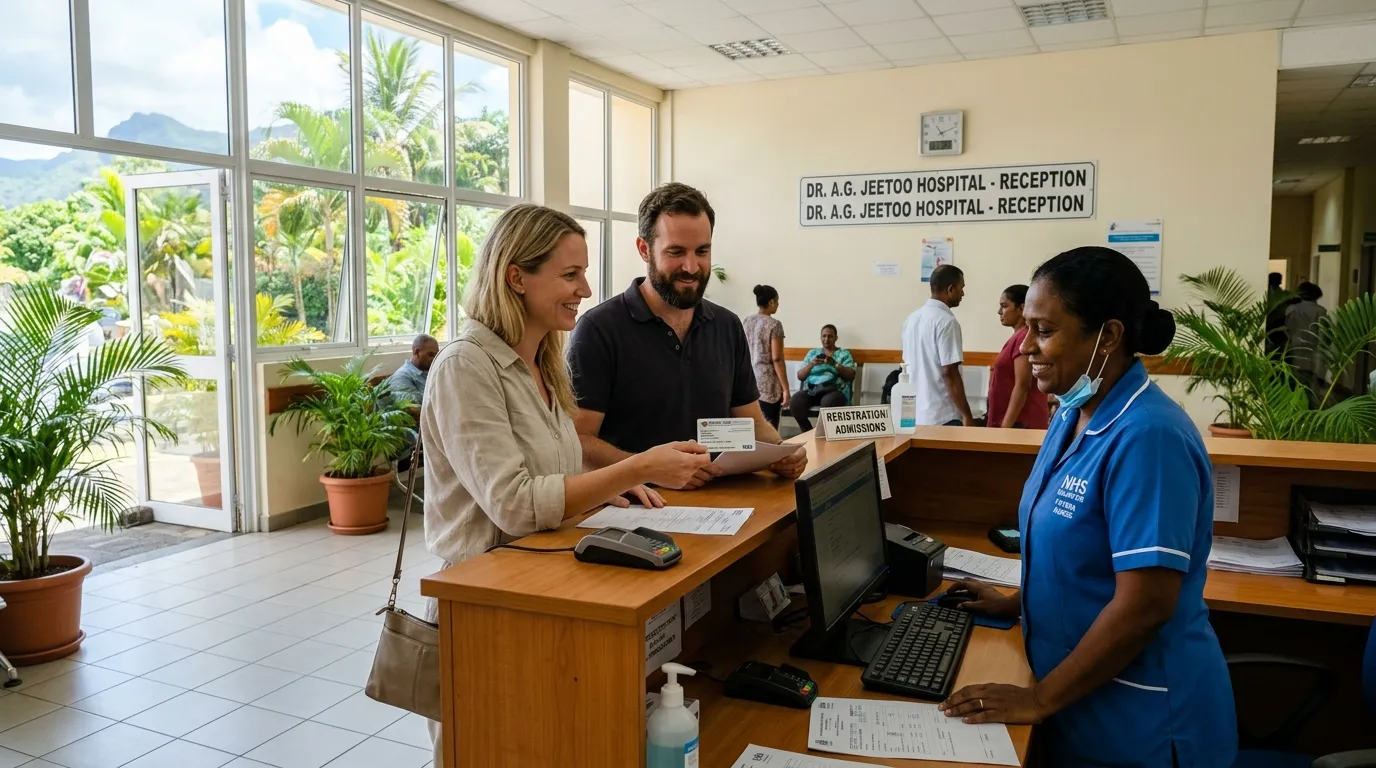

Buying in Mauritius, yes — but not just any old way.
If you are a non-citizen, access to property in Mauritius, in the vast majority of cases, requires... programs overseen and approved by the Economic Development Board (EDB) (PDS, Smart City, IRS, RES, etc.). These schemes determine Or you can buy, what type of good, how pay, and if you can get a residence permit thanks to your investment.
In this guide, EXPAT MAURITIUS helps you understand the differences between PDS, IRS, RES and Smart City, the thresholds (including the famous USD 375,000), costs, steps and points to watch out for — with up-to-date benchmarks (including the tax changes announced for July 1, 2026 and the evolution of Smart City rules since June 5, 2025). (mauritiusassembly.govmu.org)
1) The general framework: why these programs exist (and what this changes for you)
In Mauritius, property purchase by a non-citizen is regulated. In practice, this means that:
- you most often buy from a EDB diagram (PDS, Smart City, existing IRS/RES, Invest Hotel Scheme, etc.); (new.edbmauritius.com)
- or, in some cases, a apartment “G+2” (building of at least 2 stories above the ground floor), subject to price and approval conditions. (edbmauritius.org)
This framework has one major advantage: it secures the process (notary, permits, compliance) and can give you access to a residence permit if the property exceeds certain thresholds.
2) PDS, IRS, RES, Smart City: simple definitions (and what each scheme is used for)
PDS (Property Development Scheme): the benchmark for buying a “premium” residence”
THE PDS (introduced in 2015) is designed to develop and sell high-end residential properties (villas, apartments depending on the project), with standards and services (management, security, maintenance, etc.). A key point: the acquisition of an asset valued at over USD 375,000 may entitle you to residence permit as long as you own the property, and this permit can extend to the spouse and dependent children (often cited “under 24 years old” (according to EDB communications). (new.edbmauritius.com)
IRS (Integrated Resort Scheme): historical projects, still existing
L'’IRS is an older model, associated with integrated resorts and upscale residences. Even though many new launches now take place in PDS, there are still some IRS “existing” projects” in which a non-citizen can acquire property. (new.edbmauritius.com)
RES (Real Estate Scheme): the old scheme for smaller developments“
THE RES Historically, it was designed for more modest residential developments than the IRS. Like the IRS, it is mostly found in existing projects, while the PDS has become the standard for many new developments accessible to non-citizens.barnes-mauritius.com)
Smart City Scheme: living in a “mixed-use” city (housing + working + services)
A Smart City is a development mixed (Residential + offices + shops + schools/leisure facilities according to the master plan) based on the “live-work-play” concept. Non-citizens can purchase residential units there (villas, townhouses, apartments, penthouses, duplexes depending on the project). (new.edbmauritius.com)
Note (important for 2025/2026) The Smart City framework has been modified, notably with the introduction of a smart city fee for certain certificates issued from the June 5, 2025 and a redefinition of the “incentive package” applicable after that date.mauritiusassembly.govmu.org)
“G+2” apartments: an option outside the main schemes (but within a framework)
The device G+2 allows non-citizens to buy an apartment in a building of at least two levels above the ground floor, with prior approval and one minimum price mentioned by the EDB (e.g. WALL 6 million (in certain communications). One residence permit may be granted if the acquisition reaches USD 375,000 (or equivalent) and remains valid as long as you are the owner. (edbmauritius.org)
3) Clear comparison: which program to choose?
Comparative table PDS vs IRS vs RES vs Smart City vs G+2
| Program | Project type | Typical properties | Non-citizen access | Residence via purchase | Ideal if… |
|---|---|---|---|---|---|
| PDS | Premium residential with services | Villas, high-end residences | Yes (EDB diagram) | Often associated with the threshold USD 375,000 (residence as long as detention) | You want a secure primary/secondary residence + services |
| IRS | Integrated resorts (often historic) | Luxury villas/residences | Yes (existing projects) | Often cited with USD 375,000 for residence (according to EDB framework) | Are you looking for a resort/prestige environment, with a more “international” resale potential?” |
| RES | Smaller developments (old scheme) | Residential (depending on the project) | Yes (existing projects) | May be linked to the same threshold logic depending on projects/authorizations | You are aiming for a more "boutique" project (depending on available opportunities) |
| Smart City | Masterplan for mixed-use (living + working) | Apartments, villas, townhouses, penthouses… | Yes (EDB diagram) | The residence can be opened if the value/eligibility conditions are met. | You want an ecosystem (schools, offices, shops, mobility…) |
| G+2 | Condominium outside of major schemes, but within a framework | Apartments | Yes, with EDB approval + pricing conditions | Residence possible if USD 375,000 reached (valid as long as detained) | Are you looking for an apartment (often more geographically “flexible”)? |
Official benchmarks (EDB) on the residence at USD 375,000 and the G+2 framework: (new.edbmauritius.com)
4) Residence permits through real estate: what the EDB says (and what this allows)
In EDB schemes (notably PDS, and according to EDB communications also existing IRS/RES), the EDB indicates that a purchase exceeding USD 375,000 may allow a non-citizen to obtain a residence permit as long as he holds The property. The spouse and dependent children (often mentioned) up to 24 years old (in EDB information) may be included. (new.edbmauritius.com)
Another practical point often highlighted: holders of a residence permit through certain real estate schemes may, according to EDB indications, be exempt from work/occupation permit To invest and work in Mauritius (to be interpreted correctly according to your situation: salaried employment, self-employment, structuring, etc.). (new.edbmauritius.com)
Cautionary advice: “Permit of residence” does not mean citizenship, and the conditions (dependents, renewal, conformity of property, procedures) must be validated at the time of the application with the authorities and the notary.
5) The stages of a purchase (process): from selecting the item to registration
Here is the most common process for a purchase within a structured program (PDS / Smart City / existing IRS-RES / G+2), which EXPAT MAURITIUS can help you with orchestrate with the right contacts (developer, notary, bank, EDB, etc).
- Project qualification : status of the scheme (EDB), quality of the developer, co-ownership charges, rental rules, included services, schedule if buying off-plan.
- Reservation / Promise documents, filing, clauses (timetable, conditions precedent, penalties, etc.).
- KYC & Compliance passports, proof of address, proof of funds, origin of funds (bank), etc.
- Application for authorization Depending on the case, the developer and/or the notary submits the file via the administrative platforms (EDB/NELS frameworks mentioned in some guides).expat.com)
- Signing of the notarial deed : the notary drafts the deed and verifies the legal status of the property.
- Registration : payment of applicable duties/taxes and registration of the deed (Registrar-General).
- Post-purchase : connections, home insurance, rental management if needed, residency procedures if applicable.
Regarding the practice of “notary + registration + fees” (EDB and Registrar-General guidelines): (registrar.govmu.org)
6) Payment rules: the point that has surprised the most since December 2024
Since the entry into force of new requirements (often dated from December 13, 2024 (in market analyses), acquisitions of non-citizens under various schemes (IRS/RES/PDS/IHS/SCS) are associated with a payment logic where:
- 85% the price must be paid in Mauritian rupees (MUR) to the promoter; ;
- THE 15% Remaining amounts can be settled in currency (USD/EUR/…) or in MUR, depending on the circumstances and the structure.
These elements are widely reproduced in local publications and expatriate guides.expat.com)
And if the property exceeds certain amounts, additional financing rules may apply (for example, market publications mention a threshold of USD 750,000 with an initial payment due according to specific terms, followed by the possibility of local financing for the balance). (sothebysrealty.mu)
In practical terms, what does this change for you?
- you must anticipate the EUR/USD exchange → MUR (impact of exchange rate and timing); ;
- You need to synchronize bank / notary / developer to respect the installments; ;
- If you are buying off-plan, the payment schedule becomes a central issue (and must be consistent with your transfer plan).
7) Costs and taxation: registration fees, transfer taxes, notary fees (and what changes on July 1, 2026)
In Mauritius, the costs of acquiring a property generally include:
- Registration Duty (often indicated to 5% (in the general context); (registrar.govmu.org)
- Land Transfer Tax (often indicated to 5% and paid by the seller within the general framework); (registrar.govmu.org)
- notary fees (the EDB mentions a scale “up to a maximum of 2%”. (new.edbmauritius.com)
A major change to anticipate: starting from July 1, 2026, The legal framework provides for adjustments for transfers to non-citizens on goods falling under EDB schemes and/or similar categories. On the Land Transfer Tax, The Finance Act 2025 formalizes the introduction of a rate at 10% in a “Part III” added to the Seventh Schedule of the Land (Duties and Taxes) Act for transfers to non-citizens from the July 1, 2026. (mauritiusassembly.govmu.org)
On the Registration Duty, The Finance Act 2025 amends the Registration Duty Act by introducing a provision concerning transfers to non-citizens. effective July 1, 2026 for assets under EDB schemes (and related cases). Several professional summaries indicate an increase in 10% As of this date: to be confirmed on the file (registration date, nature of the property, exact diagram).mauritiusassembly.govmu.org)
Point of vigilance Some market analyses have also mentioned calculation mechanisms for resale (e.g., “10% or 30% of the capital gain, whichever is higher”), but this point must be verified against the consolidated texts applicable at the time of resale and the exact structure (non-citizen seller, first purchase under the scheme, resale to a non-citizen, etc.).pwc.com)
Table of typical costs (to be budgeted) — order of magnitude
| Job | Who pays? | Reference point (before July 1, 2026, general framework) | Developments to anticipate |
|---|---|---|---|
| Registration Duty | Buyer | Often indicated to 5% (general framework) | Measures targeting transfers to non-citizens July 1, 2026 (often synthesized at 10% (under EDB diagrams) |
| Land Transfer Tax | Seller | Often indicated to 5% (general framework) | 10% starting from July 1, 2026 for certain transfers to non-citizens (Finance Act 2025) |
| Notary fees | Buyer | Scale, the EDB mentions up to 2% max | Variable depending on price and complexity (and sometimes VAT depending on services) |
| Application/processing fees (according to schedule) | Buyer / developer (as applicable) | Some guides mention administrative fees (e.g., specific requests) | Depends on the scheme and procedure (EDB/platform) |
Reference sources (general framework 5%/5% + notary): (registrar.govmu.org). Legal basis for the Land Transfer Tax at 10% as of 1 July 2026 (Finance Act 2025): (mauritiusassembly.govmu.org)
8) Smart City: what has changed since June 5, 2025 (and why this can influence prices)
For a buyer, the issue is not only fiscal: changes in incentives and obligations can influence the developers' business model (therefore pricing, phasing and sometimes public services/equipment).
The Finance Act 2025 amends the Economic Development Board (Smart City Scheme) Regulations 2015 with specific treatment depending on the date (in particular June 5, 2025): introduction of a mechanism of smart city fee and adjustments to the incentives applicable after that date.mauritiusassembly.govmu.org)
In practice, when EXPAT MAURITIUS supports a Smart City purchase project, one of the key points is to clarify:
- there date and the Status of the Smart City certificate for the project; ;
- the possible impact on supply (infrastructure, equipment, services, delivery schedule); ;
- charges, governance (condominium/HOA) and rental rules.
9) Points to consider (what to check before signing)
- The exact diagram (PDS vs Smart City vs G+2) and non-citizen eligibility: it all starts there.
- The contract (as planned vs delivered): schedule, penalties, guarantees, conditions precedent, force majeure.
- The rental strategy : permitted or regulated? short-term restrictions? rental management and taxation.
- Financial flows Rule 85/15, currency, notary account, proof of funds, conversion timing.expat.com)
- The calendar : if you are aiming for rights before a date (e.g., before the July 1, 2026), it's the registration date and the administrative realities that matter (authorization deadlines, notary, etc.).mauritiusassembly.govmu.org)
10) The role of EXPAT MAURITIUS in your real estate project
EXPAT MAURITIUS is a company based in Mauritius, specializing in expatriation support: visas and permits, real estate investment, facility (housing, schools, banking, insurance) and business creation.
In a purchase project (PDS, IRS, RES, Smart City, G+2), the objective is not simply to “find a villa”: it is to align immigration status, overall budget, planning, compliance And actual use (residence, rental, resale, etc.).
To learn more about our approach and services, you can consult:
- the EXPAT MAURITIUS website (home page); ;
- Living in Mauritius: turnkey expatriation and real estate; ;
- Expatriation guides.
FAQ — Real Estate & EDB Schemes (with EXPAT MAURITIUS)
Can EXPAT MAURITIUS help me choose between PDS and Smart City?
Yes, because the “right” plan depends primarily on your objective: primary residence, rental investment, seeking an ecosystem (schools/offices/services), or prioritizing tranquility and residential amenities. EXPAT MAURITIUS helps you clarify the intended use, the all-inclusive budget (fees, notary, charges), and the constraints (payment terms, timeline, eligibility for a residence permit). The key is to secure your choice of development before signing a reservation agreement, and then to coordinate the various stakeholders (developer, notary, bank).
What budget should be planned (including fees) to buy in an EDB scheme in Mauritius in 2026?
Beyond the property price, factor in duties and taxes (registration duty, land transfer tax as applicable), notary fees (the EDB indicates a scale that can reach a maximum of 2%), and ancillary costs (application processing, bank fees, insurance, condominium fees/HOA). A crucial point: from July 1, 2026, measures are in place to raise certain rates applicable to transfers to non-citizens under EDB schemes (often summarized at 10%). For a reliable estimate, you must consider your registration date and the exact structure of the transaction. (new.edbmauritius.com)
Can I obtain a residence permit by purchasing property under a PDS (or equivalent) scheme?
EDB information indicates that a non-citizen can obtain a residency permit by purchasing an eligible property worth over USD 375,000 (or equivalent), with the permit generally remaining valid as long as the property is owned. Spouses and dependent children (often listed up to age 24 in EDB communications) can be included. Note: the permit is contingent upon the property's compliance, the scheme, and the documentation (KYC, funds, process). EXPAT MAURITIUS can assist you in properly linking real estate investment and residency strategy. (new.edbmauritius.com)
Does the rule “85% in MUR / 15% in foreign currency” apply to my purchase?
Many purchases by non-citizens under schemes (PDS/IRS/RES/IHS/Smart City) have been associated, since December 2024, with a payment structure where 85% of the price is paid in Mauritian rupees to the developer, and 15% can be settled in foreign currency or MUR, depending on the case. This implies anticipating the conversion, the installments, and the banking/notary timetable. As the exact application may vary depending on the scheme, type of purchase (off-plan/resale), and signing/registration date, the process must be validated with the professionals handling the case.expat.com)
How long does it take to finalize a purchase (authorization + deed + registration)?
The timeframe depends on the structure, the completeness of KYC (Know Your Customer) documentation, the bank (proof of funds and transfers), the notary's availability, and the processing times for authorizations and the platform. For a completed property, it's often faster than for an off-plan purchase (where the timeline is dictated by phases and progress). If you have a deadline (for example, before a tax change on July 1, 2026), you must work backward: authorization, deed preparation, transfers, and registration date. EXPAT MAURITIUS can help you structure a realistic timeline.
And now ?
If you are considering buying in Mauritius (PDS, existing IRS/RES, Smart City or G+2), the most profitable step is to secure the diagram, the total budget And the calendar before booking. EXPAT MAURITIUS can provide comprehensive support (real estate + permits + relocation). To get started, consult EXPAT MAURITIUS, Explore the guides, or discover the turnkey exatriation support.