Dressing well in Mauritius is mainly about anticipating the heat, humidity, wind… and a few showers.
If you are looking for a reliable guide on the clothing Mauritius, Remember this: the island is experiencing two great seasons (hot and humid southern summer, cooler and drier southern winter), with may And october as a transition month. The most important thing is not to take “a lot”, but to take just : breathable materials, serious sun protection and a light layer against air conditioning and cooler evenings (especially on the central plateau).
Understanding the Mauritian climate (to better choose your clothes)
Mauritius enjoys a tropical maritime climate. According to the Mauritius Meteorological Services, We can distinguish:
- A hot and humid summer of November to April ;
- A relatively cooler and drier winter of June to September ;
- may And october as transition month.
In the long term, the national weather service indicates in particular (climatological references 1971–2000):
- Average temperature : approximately 24.7°C in summer And 20.4°C in winter ;
- Average annual rainfall : approximately 2010 mm (with the majority of rainfall in summer); ;
- of the hours of sunshine often between 6,5 And 8+ hours/day depending on the area and the season.
Keep this in mind: Microclimates are real.. Wind, altitude (central plateau), and exposure (east/south coasts more exposed to trade winds) can change how hot or cold feels within a single day. The best clothing strategy is therefore: layer lightly.
About the cyclone season
The so-called “cyclone” period in Mauritius officially covers the November 1st to May 15th (period of heightened vigilance). Source: Government of Mauritius – NDRRMC (Cyclones FAQ). This does not mean "cyclone every day", but rather: More unstable weather risk and episodes of heavy rain/winds are possible.
What to wear in summer (November to April): heat, humidity and showers
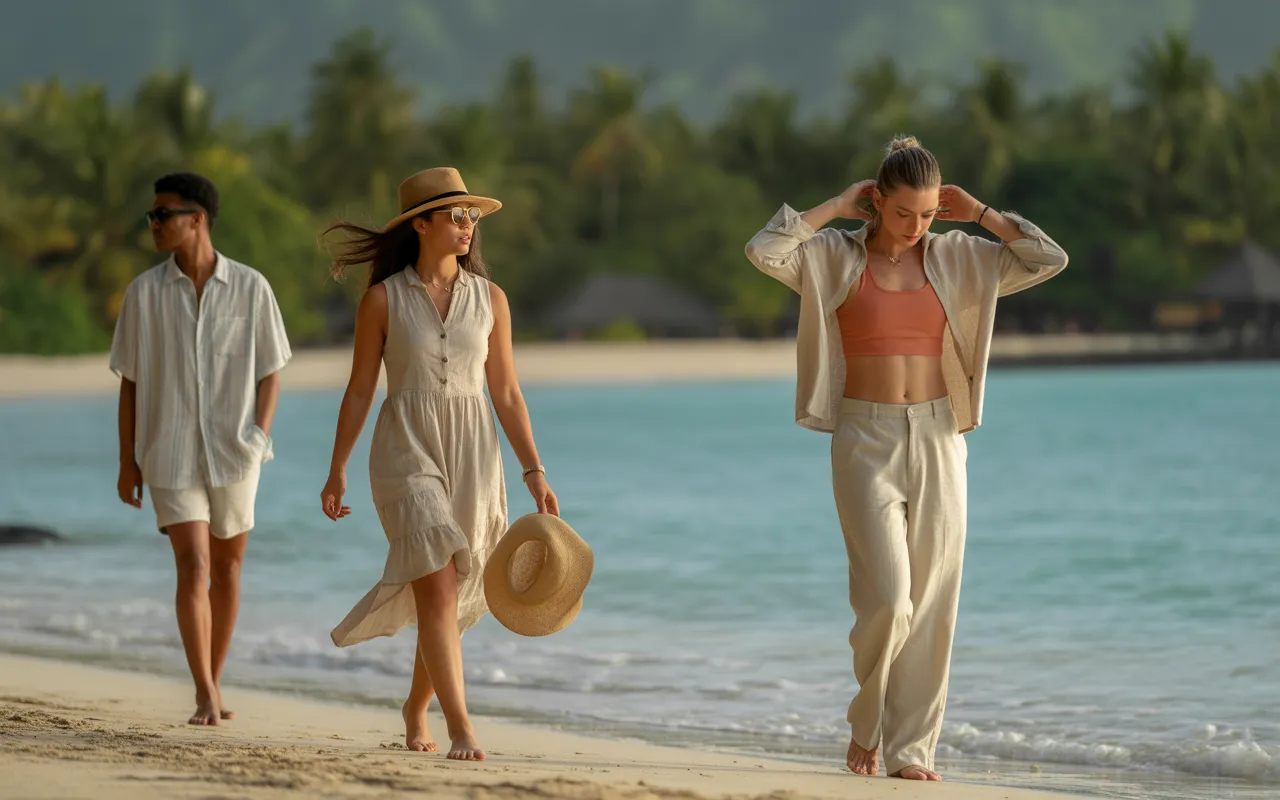
The southern summer is the time of year when we sweat the most: heat + humidity + sun. The goal is simple: stay cool, dry quickly, protect yourself from the sun.
Essential summer clothing
- T-shirts, tops and shirts made of lightweight cotton, linen or breathable technical fabrics.
- Shorts, skirts, light dresses (easy to wear every day).
- A very lightweight long-sleeved shirt (linen/UV): useful against the sun, on a boat, or in the evening.
- A compact rain jacket/poncho : showers can be intense but often short.
- Swimsuits + pareo or “cover-up” outfit (practical as soon as you leave the beach).
Recommended footwear (summer)
- Comfortable sandals (city/beach).
- Breathable sneakers (outings, driving, visits, variable weather).
- Closed shoes if you walk a lot (Port-Louis, markets, easy hikes).
Sun protection: something to take seriously
- : WHO – SunSmart Global UV App (
Simple tip take one wide-brimmed hat + one lightweight long-sleeved shirt. It's often more comfortable (and more sustainable) than relying solely on sunscreen.
What to wear in winter (June to September): drier, cooler, windier
Mauritian winters remain mild, but the effects are more noticeable:
- THE trade winds (especially on the east and south coasts); ;
- of the cooler evenings ;
- A temperature difference clearer on the central plateau.
Essential winter clothing
- Lightweight trousers (chino, canvas, thicker linen).
- Light vest/sweatshirt : useful in the morning, in the evening, and in air-conditioned places.
- Thin windproof jacket (very useful on the east/south side).
- A "diaper" outfit“ For indoors (air conditioning): t-shirt + overshirt/vest.
Recommended footwear (winter)
- Sneakers or comfortable closed shoes (versatile).
- Walking shoes if you are planning hikes (trails can be slippery after rain).
May and October (mid-season): the best “light layers” strategy”
According to climatological reports, may And october These are often transitional months. In practical terms: it can be very sunny for several days, then become damp/windy again. The most practical solution:
- of the breathable clothing (as in summer); ;
- + a layer (vest or overshirt); ;
- + a lightweight raincoat (compact in a bag).
Summary table: season, typical weather and recommended clothing
| Period | What to expect | Recommended clothing | Don't forget |
|---|---|---|---|
| Summer (Nov–Apr) | Hot, humid, possible showers. Cyclone season in this window (official: 1 Nov–15 May). | Linen-cotton T-shirts/shirts, shorts/dresses, light sun protection, compact poncho/rain jacket. | Hat, glasses, UV protection (ref. WHO), waterproof bag (rain/sea). |
| Winter (Jun–Sep) | Drier, cooler, sometimes windy (trade winds), cooler evenings (especially in the centre). | Lightweight trousers, vest/sweatshirt, thin windbreaker, layerable clothing. | Light jacket for the evening, comfortable sneakers. |
| Transition (May, Oct) | Variable: alternating sun / humidity / wind. | Summer mix + light layer (overshirt/vest) + compact raincoat. | Have a "plan B" weather forecast for excursions. |
Climate sources (seasons, average temperatures, long periods of rainfall): Mauritius Meteorological Services. Cyclones: NDRRMC (Government of Mauritius). UV & prevention: WHO.
Adapt your outfit according to the activities (beach, city, hiking, work)
Beach & lagoon: simple, but an essential cover-up
- Swimsuit + sarong/light dress (practical for snacks, markets, parking lots, etc.).
- Sandals or flip-flops + a pair of closed shoes in your bag if you're moving around afterwards.
- Hat, sunglasses, UV-protective t-shirt for long exposures.
City (Port Louis, shopping centers, administrative procedures): comfortable and well-maintained
In the city, the dress code is generally casual, but the "100% beach" look is often avoided. An effective combination:
- light top + "city" shorts or flowing trousers; ;
- comfortable shoes (walking, sidewalks, markets); ;
- A light vest: the air conditioning can be surprising.
Hiking (e.g., Le Morne, gorges, waterfalls): safety is the priority
For hiking, we recommend: closed shoes, breathable clothing, a hat/cap, and water. Many trails are exposed to the sun. (Example of "terrain" recommendations for Le Morne:) hiking tips Le Morne.)
- Technical t-shirt or lightweight linen, walking shorts or breathable leggings.
- Shoes with grip (avoid flip-flops/sandals on uneven terrain).
- A light windbreaker if going out early in the morning / windy areas.
Work attire (employee, entrepreneur): “smart casual” + air conditioning
At the office, the air conditioning can be strong. Many expats opt for a style smart casual :
- shirt/polo shirt or light blouse; ;
- chino trousers or "city" skirt/dress; ;
- light jacket or vest (to be left at the office).
"Culturally respectful" attire: temples, mosques and events
Mauritius is multicultural, and rules vary from place to place. As a precaution, plan your outfit accordingly. modest for religious sites:
- shoulders covered; ;
- knees covered (or at least a sarong/shawl to adjust); ;
- shoes that are easy to remove (often requested).
A practical (unofficial, but useful) resource outlines these practices: "Live like a local" tips (Voilà Hotel).
Suitcase checklist: what to pack (without overpacking)
“Essentials” capsule (10–15 days)
- 5–7 breathable tops (cotton/linen/technical)
- 2-3 bottoms (shorts/lightweight trousers/skirt)
- 1 dressier outfit (dinner, date, event)
- 1 light vest/sweatshirt + 1 thin windbreaker
- 1 compact poncho or raincoat
- 2 swimsuits + 1 sarong/cover-up
- 1 pair of comfortable sneakers + 1 pair of sandals
- Hat + sunglasses
Little "extras" that make all the difference
- Lightweight, water-repellent bag (or waterproof pouch) for rain showers
- Travel laundry/mini-rope: practical because you wash often (heat + humidity)
- Quick-drying clothes (especially in summer)
Common mistakes to avoid (and how to correct them)
- Packing too many warm clothes : 1–2 light layers are better than one unnecessary heavy coat.
- Plan everything “like you would at the beach” : maintain appropriate attire for the city and respectful dress (cultural sites).
- Underestimating the sun : prioritize hats, glasses and light covering clothing (see WHO recommendations).
- Ignore the wind (winter, east/south coast): a simple thin windbreaker makes all the difference.
FAQ – Clothing in Mauritius (common questions)
What clothing should I pack for a stay in Mauritius in July-August?
In July and August, the southern winter brings generally drier and cooler weather, with winds (trade winds) especially on exposed coasts. Pack light clothing for the daytime (t-shirt, thin trousers or shorts), but add a layer for the evening: a cardigan, light sweatshirt, or light jacket. A light windbreaker is very useful if you are staying in the east or south, or if you are going on boat trips. Comfortable sneakers are ideal for walking and sightseeing.
Is it acceptable to wear shorts and tank tops everywhere in Mauritius?
Yes, in most tourist areas, on the beach, and in casual settings, it's common. However, in cities, some restaurants, and especially at religious sites (temples, mosques), it's more respectful to cover your shoulders and knees. The simplest solution is to carry a sarong or shawl in your bag to quickly adjust your outfit. This avoids awkward situations and allows you to explore comfortably without having to go back to change.
How should I dress during the rainy season and cyclone season?
In Mauritius, rainfall often comes in the form of heavy downpours. During the southern summer, and more broadly during the official cyclone season (November 1st to May 15th), pack quick-drying clothing (breathable fabrics), a compact waterproof jacket or poncho, and closed shoes if you'll be moving around town. The idea isn't to come "storm-ready," but to be flexible: a water-repellent bag and a light rain layer are sufficient in most situations.
What should I wear for business meetings, appointments, or starting a business in Mauritius?
The most practical approach is a smart casual style: a shirt/polo or blouse, chinos or a dress/skirt, and clean, comfortable shoes. Also, consider the air conditioning: bring a cardigan or light jacket, especially if you'll be going to a series of offices, banks, and meetings. If you're an entrepreneur, a simple, neat outfit works perfectly well for everyday wear without overheating. Linen and lightweight cotton are your best allies for staying presentable despite the heat.
Do you need specific clothing if you live on the central plateau (Curepipe, Vacoas, etc.)?
Yes, slightly. The central plateau can be cooler and more humid than some coastal areas: a cardigan, light sweatshirt, or thin jacket is often more welcome in the evening, and sometimes early in the morning. The best approach is to maintain a layering system: a light base layer plus an additional layer. If you work indoors in air conditioning, this layer can also be worn at the office. Otherwise, breathable fabrics remain essential year-round.
And now ?
Choosing your clothes carefully is a first step… but successfully settling in Mauritius also requires having a good understanding of the process (accommodation, administrative procedures, schooling, banking, insurance, etc.). For more information, you can consult the resources of…’Expat Mauritius (support for expatriation and real estate in Mauritius) and browse the expatriation guides to prepare your arrival in a structured way. Expat Mauritius also offers a free evaluation and can be contacted by phone, WhatsApp, email or via online form.