Diving in Mauritius requires better preparation than improvisation.
If you are looking when to dive, How much does it cost? And what advice to follow (beginner or certified), this guide gives you a concrete overview: seasons, realistic budget in Mauritian rupees, must-see spots, safety, and tips for a short stay… or a long-term installation.
Why is diving in Mauritius so popular?
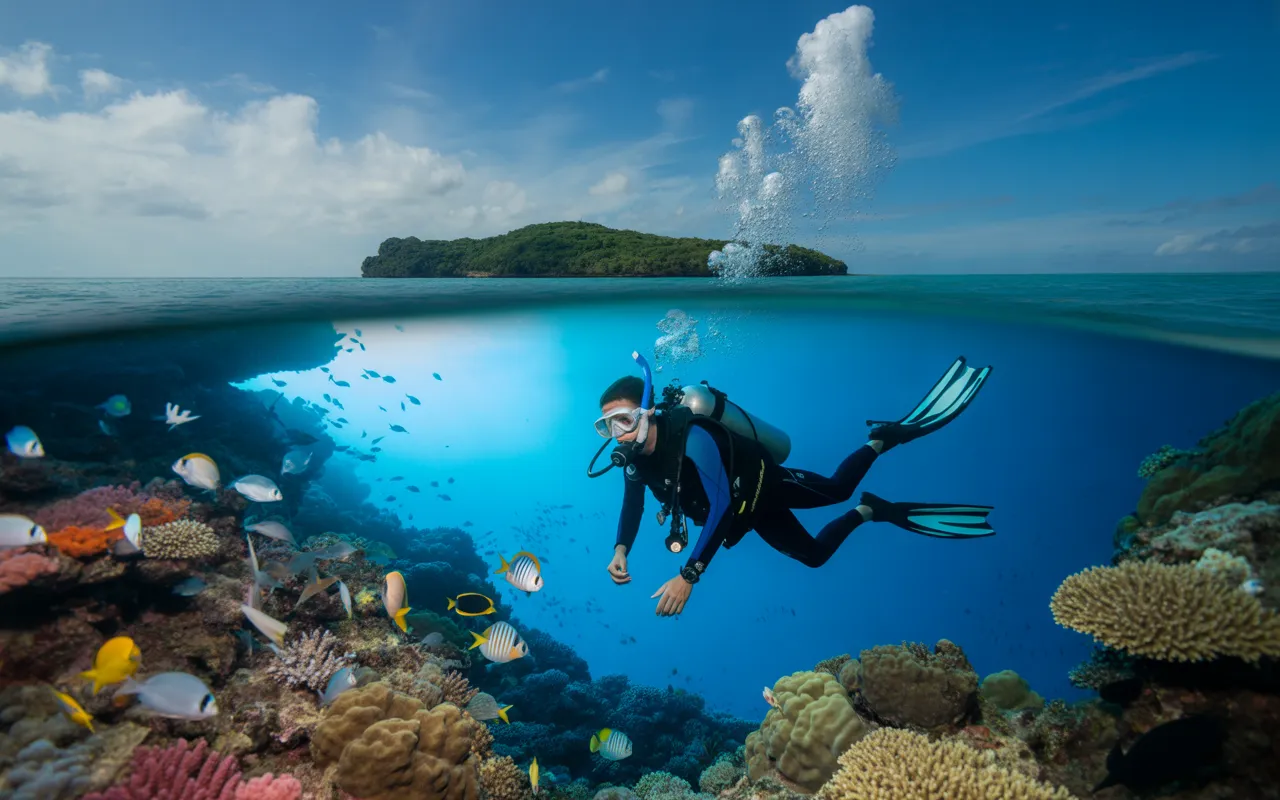
Surrounded by reefs and lagoons, the island combines accessible sites (baptisms in the lagoon, shallow dives) and more challenging dives (drop-offs, channels, wrecks). The offering is highly structured via the Mauritius Scuba Diving Association (MSDA), the national federation that oversees the activity and accreditation of centers (see here: MSDA – Mauritius Scuba Diving Association).
- Conditions are often favorable : warm water, sea generally navigable for a large part of the year (depending on local weather).
- Site diversity : reefs, coral heads, caves, shipwrecks (e.g. Djabeda (Coin de Mire) – PADI sheet).
- Wildlife Turtles, rays, moray eels, schools of fish, and depending on the season, sightings of large pelagic species (see also the "when to dive" information by region at [website address]). PADI – Trou aux Biches & Grand Baie).
When to dive in Mauritius: seasons, weather and visibility
You can dive all year round, but the weather decides. In Mauritius, the key point is the cyclone season: the official season extends from November 1st to May 15th (Official government source:) NDRRMC – Cyclone FAQsIn practical terms, in the event of alerts, boat trips and offshore activities may be suspended.
For indicative conditions and temperatures, the MSDA provides useful guidelines: 26–29°C in the southern summer (November–April) and 23–25°C in the austral winter (May–October), with visibility that can be excellent (source: MSDA).
Simple tip Choose your dates according to your tolerance for heat and wind, and keep a margin of flexibility between November and May due to weather events (cyclones, swell, heavy rain).
Summary table of seasons (useful for planning)
| Period | What to expect | Water temperature (order of magnitude) | For whom? |
|---|---|---|---|
| November → April | Warmer, more humid. Cyclone risk within the official window (November 1st → May 15th). Sea occasionally rough depending on the weather event. | ≈ 26–29°C (MSDA benchmarks) | Great if you like very hot water, but plan ahead. weather margin. |
| May → October | “Drier and more temperate. Trade winds (especially on some coasts), sometimes choppy sea surface. | ≈ 23–25°C (MSDA benchmarks) | Ideal for many divers (comfort on land, good visibility). |
| Focus 2025/2026 | At January 26, 2026, Mauritius is in the midst of cyclone season. Follow official bulletins and maritime advisories. | Variable | If you are travelling now, anticipate possible delays. |
For seasonal forecasts and trends, rely on local sources: Mauritius Meteorological Services – Seasonal Climate Forecast (published on November 3, 2025).
Diving prices in Mauritius: how much to expect (in 2025–2026)
Prices vary depending on the region, the dive center, equipment inclusion, the number of dives, and "safari" trips (2 dives + meal). To avoid misleading you, you will find below some price ranges based on price lists published online (accessed in January 2026) by several Mauritian centers.
Table of average prices observed (Rs / MUR)
| Benefit | Realistic range (Rs / MUR) | Examples of sources (price lists) | Remarks |
|---|---|---|---|
| Introductory dive / Discover Scuba Diving | 3,000 → 5,000 |
EcoDive, Islandive, Maritime Diving Centre, Bigorno (2025 Prices) |
Often 1 session + 1 dive in the sea/lagoon. Check the minimum age and medical requirements. |
| 1 “fun dive” (with equipment) | 1,800 → 3,000 |
Underwater Exploration (Flic en Flac), Dive Spirit, Bigorno (2025 Prices), Maritime Divers (general information) |
Often cheaper in a package. Beware of extras (nitrox, computer, etc.). |
| 10-dive package | 15,300 → 20,000 |
EcoDive, Dive Spirit, Islandive |
Often the best option if you are diving for 4–6 days. |
| PADI Open Water Course | 19,500 → 25,300 |
Underwater Exploration, Dive Spirit, Bigorno (2025 Prices), EcoDive |
Often included: eLearning + swimming pool + 4 dives. Read what is included (certification, card, etc.). |
| MSDA License / Formalities | ≈ 300 (example displayed) | Underwater Exploration (mention “MSDA license”) | The MSDA also indicates a federal form valid for 2 months and an annual resident license (see MSDA). |
Example budget (order of magnitude) : if you come for a week and aim for a 10-dive package, The published prices are around 15,300 to 20,000 Rs according to the center (sources: EcoDive; ; IslandiveAdd any extras (nitrox, "safari" trip, photos/video, etc.).
The best diving spots in Mauritius (by area)
The island offers many sites. To choose, think in terms of "logistics": where you are staying, boat time, And level. Here are the most convenient areas.
North (Grand Baie, Trou aux Biches, Coin de Mire)
The north is a classic: easy access, numerous facilities, and a variety of dive sites. Coin de Mire is renowned for its drop-offs and wrecks, including Djabeda (source : PADI – Djabeda).
- For beginners : sheltered and shallow sites depending on conditions.
- For certified : shipwrecks, reliefs, schools of fish.
- Useful seasonal information : PADI – When to dive (Trou aux Biches & Grand Baie).
West (Flic en Flac, Tamarin, Rivière Noire)
Highly appreciated for its climate (often drier) and generally pleasant sea. There are well-known dive centers, and excursions that sometimes combine diving with exploration of deeper areas, depending on the weather.
Southeast (Blue Bay Marine Park)
Blue Bay is iconic for its coral garden and its protected status. The park was declared a national park (1997), then a marine park (2000), and designated a Ramsar site. January 31, 2008 (sources: Government of Mauritius – Marine Conservation Division ; Ramsar – Blue Bay Marine Park).
- Interest : biodiversity, corals, lagoon fish, very photogenic site.
- Important point Management aims to limit the impact of diving (e.g., controlled access, certification required depending on the area) — see Ramsar details: Ramsar – RIS 1744.
East (Belle Mare and windward coast)
The coast may be stunning, but it's more exposed to the trade winds at certain times of the year. It's a good option if you're staying on the east coast and the day's conditions are favorable (the center will choose the sites accordingly).
Beginner, certified, or returning to training: which option should you choose?
You've never dived before: introductory dive (Discover Scuba Diving)
This is the simplest way to try it out: briefing + exercises + supervised immersion. Published prices are often around 3,000 to 5,000 Rs depending on the centers and what is included (examples: EcoDive; ; Islandive ; Bigorno).
You want to be self-sufficient: Open Water
If you stay longer (or return regularly), a Open Water quickly becomes profitable and practical. Published prices are around 19,500 to 25,300 Rs depending on the center and the content (eLearning, swimming pool, number of dives, certification, etc.). Examples: Underwater Exploration ; Dive Spirit ; Bigorno.
You are certified but haven't dived in a long time: “refresher”
Many centers offer refresher courses (review of techniques + diving). This can be requested after a long break (exact conditions vary depending on the center). Example: EcoDive – Refresh; ; Bigorno – Refresher.
Regulations & safety: points to know before diving
MSDA: Accredited centers and formalities
There MSDA presents itself as the national federation that regulates and manages diving activity in Mauritius, and emphasizes the importance of the accreditation displayed in the centers (source: MSDAIt also indicates a federal form valid for 2 months and the possibility of a annual license for residents (subject to conditions, including a medical certificate).
Medical certificate: when is it useful?
Practices vary depending on your situation (age, medical history, training). The MSDA indicates, in particular, that a medical certificate is recommended for training and mandatory in certain cases (e.g., minors, level 2) — see: MSDA – Diving in Mauritius. In terms of training, PADI relies on a medical questionnaire (Diver Medical Participant Questionnaire) to be completed before participating (source: PADI – Downloadable Forms).
Diving insurance: a real plus
Specialized insurance can prevent significant expenses in the event of a decompression accident (compression chamber, evacuation, etc.). To understand the logic behind "dive insurance vs. travel insurance," you can read the resources from DAN (Divers Alert Network): DAN – Dive Accident Insurance vs. Travel Insurance and the presentation of coverages: DAN – Dive Accident Insurance.
Flying after diving: recommended timeframes
To limit the risk of decompression sickness, DAN publishes "flying after diving" recommendations. As a guideline, DAN advises at least 12 hours after a no-decompression dive, and at least 18 hours after repeated dives over several days (source: DAN – Flying After Diving).
Equipment & practical advice (without overloading your suitcase)
- Combination In the austral winter, a thicker wetsuit can improve comfort (the MSDA suggests 5 mm, for example, when the water is cooler). Source: MSDA.
- Sunscreen Choose options that minimize impact on coral reefs. The Smithsonian reminds us that ingredients such as oxybenzone And octinoxate can be harmful to the health of corals (source: Smithsonian Ocean – Corals & Sunscreen).
- Dive computer : useful if you are doing several days in a row (some centers rent it out, sometimes as an extra charge — see price lists, e.g. Bigorno).
- Hydration & rest : crucial especially in the southern summer (humidity and heat).
- Do not touch No corals, no animals. The best photo is the one that doesn't degrade the site.
Plan your diving trip carefully (and your accommodation if you're staying overnight).
If you are coming "diving first", choose your base according to the areas: North regarding the density of centers and sites, West for a climate that is often pleasant, Southeast for Blue Bay, and East if you stay on this side and accept sometimes windier weather.
And if you plan to stay (or return often), think about practical matters: housing, schooling, banking, insurance, permits/visas. For more information on these topics, you can consult the resources of Expat Mauritius:
- Living in Mauritius: turnkey expatriation and real estate (Expat Mauritius)
- Expatriation guides – Expat Mauritius
FAQ – Diving in Mauritius
What is the best time for diving in Mauritius?
You can dive all year round, but the choice depends mainly on the weather. The official cyclone season runs from November 1st to May 15th, with outings sometimes cancelled depending on the alerts (official source: NDRRMCFrom May to October, the air is often milder. Regarding water, the MSDA indicates approximately 26–29°C in the southern summer and 23–25°C in the southern winter (source: MSDAThe best choice: aim for the period that gives you the right compromise between comfort and weather.
How much does a first scuba diving experience cost in Mauritius?
The price lists published by several centers generally indicate a Discover Scuba Diving experience for around 3,000 to 5,000 Mauritian rupees, depending on the package (pool + sea, 1 or 2 dives, equipment included, etc.). Examples: EcoDive (3,000 Rs), Islandive (4,000 Rs), Maritim Diving Center (Rs 5,000). Before booking, check the minimum age, medical requirements, and what is actually included.
Do you need an MSDA license to dive in Mauritius?
The MSDA regulates diving in Mauritius and specifies formalities (including a federal form valid for 2 months) as well as a possible annual license for residents, subject to conditions (source: MSDARegarding pricing, some centers display an “MSDA license” at 300 Rs (example : Underwater ExplorationThe terms and conditions may vary depending on your status (tourist/resident) and your type of diving: the most reliable way is to confirm when booking.
What are the best diving spots in Mauritius?
For a first visit, the North (Grand Baie, Trou aux Biches, Coin de Mire) is often the easiest to organize, with numerous sites and centers. If you like wreck diving, Djabeda near Coin de Mire is a referenced site (source: PADI – Djabeda). For a "postcard" look and a protected frame, Blue Bay Marine Park is essential (sources: Ramsar ; Govmu). The “best” spot depends mainly on the skill level and the weather on the day.
How long should I wait before flying after diving?
DAN (Divers Alert Network) publishes recommendations used as guidelines by many divers. As a guideline, DAN recommends a minimum surface interval of 12 hours after a single no-decompression dive, and 6 p.m. After repeated dives over several days (source: DAN – Flying After Diving). If you have done dives with mandatory decompression stops, a longer waiting period is generally considered prudent. If in doubt (or if you experience symptoms), do not fly and seek medical advice.
And now ?
Planning a diving trip… or even considering moving to Mauritius to enjoy the ocean year-round? Expat Mauritius supports expatriation (visas/permits, settling in, real estate, business creation). To get started, visit the page Living in Mauritius: turnkey expatriation and real estate and browse the expatriation guides to structure your project.