In an emergency, every minute counts.
In Mauritius, it's important to know which service to contact, as emergency care is organized around the SAMU (Emergency Medical Service) and hospital emergency departments, while the Republic of Mauritius also centralizes official hotlines for the police and rescue services. The SAMU intervenes particularly in road accidents, cardiac arrests, drownings, and critical emergencies.gis.govmu.org)
Access, transfer and evacuation procedures may change, so it is prudent to check official information before traveling or settling in.
The first steps to take
If the person is conscious and able to be transported, have their identity, medications, allergies, and a summary of symptoms readily available, then go to the most appropriate service. British advice reminds us that ambulance response times can vary and that it may sometimes be faster to go directly to the hospital if transport is safe.
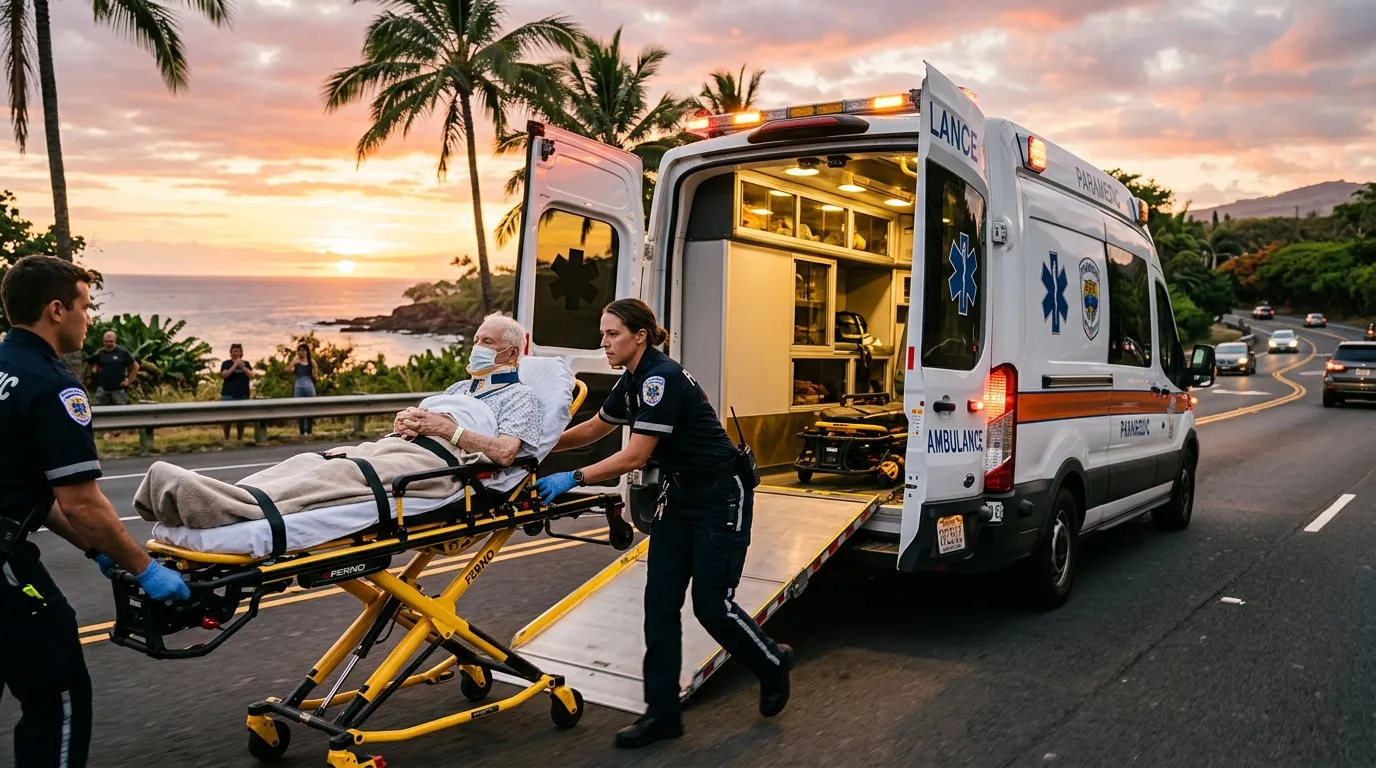
The SAMU (Emergency Medical Service) dispatch center operates 24/7, 365 days a year, and manages the pre-hospital phase, inter-hospital transfers, and air ambulance transfers. The service also works with the police and fire department when coordination is necessary.health.govmu.org)
Emergency services to remember
The Republic of Mauritius has compiled its official hotlines on a single page. As contact details and procedures may change, this is a source to verify before any trip, and then save to your favorites. the official page of Mauritian hotlines.
Useful points to remember
| Situation | Reflex | Practical reading |
|---|---|---|
| Life-threatening emergency | Activate the public emergency service and aim for the nearest public hospital if transfer is possible. | The SAMU manages the pre-hospital phase, and hospital emergency departments receive urgent cases. |
| Non-life-threatening but urgent emergency | Choose the most accessible establishment and take insurance into account. | The Mauritian system combines public and private services, and private clinics can be expensive. |
| Specialized transfer or evacuation | Involve the doctor, the insurer and, if necessary, civil aviation. | The SAMU also carries out inter-hospital and air-medical transfers, and a medical evacuation by plane requires prior authorization. |
The Ministry of Health also indicates that the country has five regional hospitals, two district hospitals, and several specialized hospitals, complemented by a network of primary healthcare centers. To visualize their distribution, the ministerial description of public hospitals and the SAMU (Emergency Medical Service) remains a good foundation.
Where to go depending on the severity
The official portal reminds us that Mauritius has a state-run public healthcare system, supplemented by numerous private facilities. It also clarifies that public hospitals are presented as offering free care, while private clinics can be more expensive. To understand this structure before choosing insurance or a healthcare provider, the official portal for health centers in Mauritius is useful, just like our guide to the Mauritian public and private healthcare system.
If you compare several structures, our complete guide to hospitals and clinics in Mauritius can also help you locate facilities based on your area of residence. British advice also notes that the private sector exists, that some complex cases may require evacuation to Réunion or South Africa, and that ambulance speeds can vary.
In practice, the best approach is to combine accessibility, the severity of the case, and insurance coverage. For a serious or uncertain emergency, the public hospital remains the preferred option. For a stable, well-understood, and covered situation, a private clinic can be useful, but it's essential to anticipate the costs and any upfront payments required.
When medical evacuation becomes necessary
A medical evacuation becomes necessary when local medical facilities are insufficient, for example, for a CT scan, MRI, complex cardiac care, or transfer to a more specialized team. The Mauritian Ministry of Health indicates that the SAMU (Emergency Medical Service) also performs inter-hospital and air ambulance transfers.
If the person is on another island or in a remote area, transfer to the main island may become necessary. Official US advice also indicates that visitors to other islands may need transfer to Mauritius for urgent medical care.travel.state.gov)
From an administrative standpoint, an operator wishing to conduct a medical evacuation or rescue flight must apply for authorization from the Mauritian Civil Aviation Authority. With a complete application, the request can be processed through an expedited procedure, but the flight must not depart without clearance. the flight clearance procedure for medical evacuation. (civil-aviation.govmu.org)
For insurance, the rule is simple: check that it covers local treatment, unscheduled medical evacuation, and, if possible, repatriation. British and American advice supports this, and the US State Department also reminds us that medical care may require available funds or advance payments. health advice from the British Foreign Office.
This is especially important if you are pregnant or undergoing chronic treatment. For pregnancy, also plan ahead for the healthcare setting and associated coverage, as explained in our guide to childbirth in Mauritius.
Some useful preventative measures
Medication and travel should not be taken lightly. American advice recommends traveling with a copy of the prescription, bringing enough medication for the entire trip plus a few extra days, and checking local regulations for sensitive treatments.travel.state.gov)
- Keep the doctor's letter and original prescriptions with you if you are taking chronic medication.
- Check that your insurance covers local treatment and medical evacuation.
- Watch for fevers and rapidly worsening symptoms, as British advice lists dengue fever and chikungunya among the risks in Mauritius. For everyday prevention, our guide to dengue fever and chikungunya in Mauritius complements this guide well.
FAQ
Which services should I contact first in case of a medical emergency in Mauritius?
First, contact the appropriate public emergency service, then transfer the patient to the nearest public hospital if their condition allows. The official Mauritian website lists the police, the SAMU (Emergency Medical Service), and the fire department, and the Ministry of Health specifies that the SAMU manages the pre-hospital phase, transfers, and stabilization. The most important thing is to avoid wasting time between the decision and the transfer, especially in cases of serious illness, loss of consciousness, or respiratory distress.
Is health insurance required for a medical evacuation in Mauritius?
Yes, and it's best to check it before you leave. British advice recommends coverage for local treatment and unplanned medical evacuation, while American advice points out that treatment may require available funds or advances. This is even more important if you are pregnant, have a chronic illness, or are traveling with high-risk activities. A good policy should specify medical transport, repatriation, and the conditions of coverage.
Is it better to go to a public hospital or a private clinic?
It all depends on the severity of the situation, the travel time, and your insurance coverage. The official website shows a public system supplemented by private facilities, with clinics often more expensive but accessible. For a serious or uncertain emergency, the public hospital remains the standard. For a stable situation, a private clinic can be convenient if it is nearby and well-covered by insurance. British authorities also remind us that response times can vary, so the safest route is often the simplest.
What documents should I prepare before a medical transfer or air ambulance flight?
Prepare a medical summary, your prescriptions, a copy of your insurance policy, and, if possible, a letter from your doctor explaining your condition and medications. American guidelines also recommend transporting medications in their original packaging and keeping copies of your prescriptions. If an evacuation flight is being considered, your file must also include the documents required by Mauritian Civil Aviation, as prior authorization is mandatory.
Can a medical evacuation be organised from Mauritius to a foreign country?
Yes, if the medical team deems a transfer out of Mauritius necessary and if the insurance policy covers it. British advice indicates that complex cases may require evacuation to Réunion or South Africa, highlighting the importance of comprehensive coverage. The key remains coordination between the doctor, the insurer, the airport, and the airline, as a medical evacuation is never a simple logistical operation.
And now ?
If you are preparing for your arrival or wish to ensure a smooth healthcare journey, start by The EXPAT MAURITIUS homepage to help you prepare for your move, then browse our guide to the Mauritian public and private healthcare system to choose your landmarks before departure.