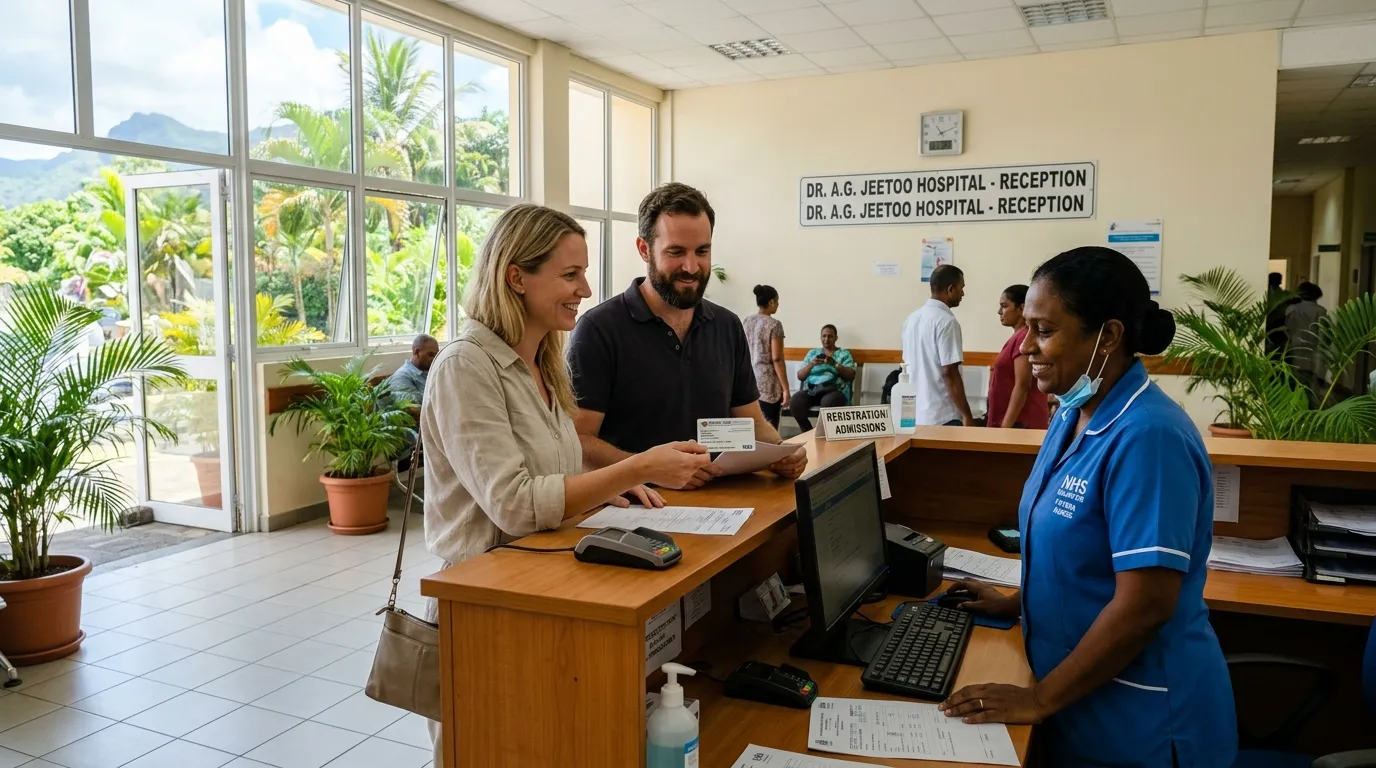
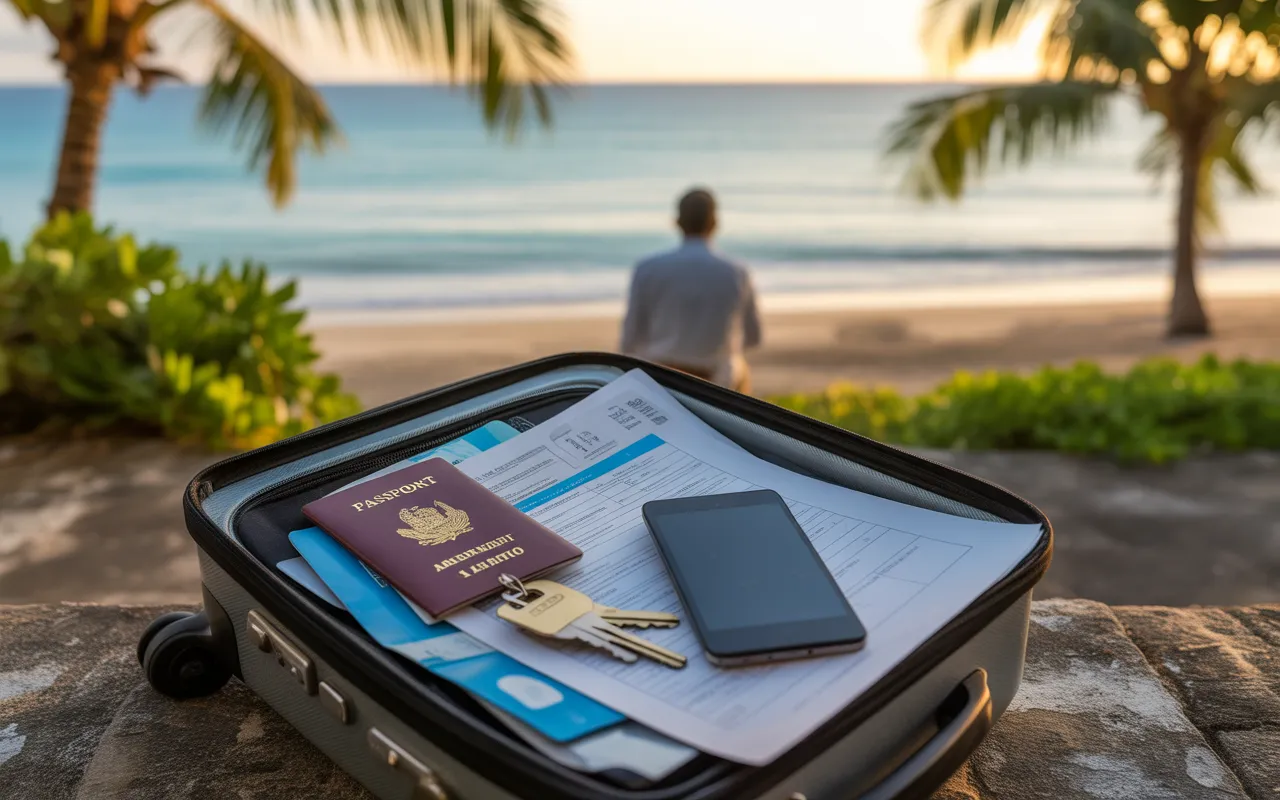
Moving to Mauritius is exciting… but a timing error or a permit mistake can complicate everything.
If you are preparing for your expatriation (alone, with your family, or to start a business), this article lists 15 common mistakes observed in the field — and especially how to avoid them Thanks to a simple method and reliable resources. The goal: to help you settle in faster, more calmly, and without unpleasant surprises.
And if you are looking for a local partner to coordinate everything (permits/visas, real estate, relocation, business creation), EXPAT MAURITIUS has been supporting individuals and entrepreneurs since Azuri Village with personalized follow-up and a free evaluation. Discover EXPAT MAURITIUS.
Before you begin: remember these 3 golden rules
- Rule #1: Your “status” (tourist, Premium Visa, residence permit, Occupation Permit, etc.) conditions almost everything: banking, lease, schooling, taxation, activity.
- Rule #2: In Mauritius, the administration can be very efficient… if the file is complete And consistent from the start.
- Rule #3: Real estate and permits are linked in some cases: understanding them well permitted schemes avoid dead ends.
Field advice: Before booking tickets, school, a container, or buying property, do a "consistency review": purpose of stay + duration + income + activities + budget + spouse's status + children. This is often where mistakes are spotted.
The 15 common mistakes (and how to avoid them)
1) Choosing the wrong status (or the wrong permit) for your project
A classic mistake: arriving thinking "we'll see when we get there", then discovering that what is permitted as a tourist is not if you wish to work, invoice, create a company or educate in the long term.
How to avoid: Define your main scenario (employee, investor, retiree, entrepreneur, remote, family) and check the official conditions (e.g., short-stay visas and general conditions on the government portal).
Useful resource: Residence Permit and Visa (GovMU).
2) Thinking that a “tourist” visa allows you to work (even remotely) without a clear framework
For short-stay visas, the commitment is generally to not to engage in any locally paid activity during the tourist/visitor stay.
How to avoid: If you work remotely, document your situation precisely (employer/clients abroad, income, insurance, accommodation) and check the options suitable for a long stay, such as the Premium Visa (1 year, renewable) announced by the Passport & Immigration Office.
Useful resource: Premium Visa (Passport & Immigration Office).
3) Underestimating the impact of reforms and changes in rules
Eligibility requirements (thresholds, checks, durations, supporting documents) may change, particularly regarding permit schemes. In 2025, specialized stakeholders reported a tightening/adjustment of certain conditions (e.g., intermediate checks, stricter criteria) for specific permit categories.
How to avoid: Have your strategy validated on time, and keep a plan B (e.g., deadlines, housing alternatives, school calendar). With local support, you reduce the risk of putting together an "old-fashioned" application.
4) Arriving without a realistic schedule (and doing everything in the wrong order)
Many expats initially tackle the "symbols" (tickets, rental, car), then discover that the real roadblocks were: Status, evidence (income/funds), insurance, long-term housing, bank.
How to avoid: Plan in 3 phases:
- Preparing the file (supporting documents, translations, consistency),
- Installation (housing, banking, insurance, schools),
- Stabilization (taxation, long-term permits, real estate/business).
5) Confusing “immigration” residence and “tax” residence”
In Mauritius, the tax residence is based in particular on criteria of presence (e.g. 183 days on the fiscal year, or 270 days over the fiscal year + 2 previous years, etc). The Mauritius Revenue Authority's e-filing recalls this definition of “Resident”.
How to avoid: Before moving, run a simulation: days spent there, country of origin, tax treaties, income (salary, dividends, rent, remote work). And keep proof (stamps, tickets, contracts).
Useful resource: Definition of “Resident” (MRA eServices).
6) Discovering the new income tax structure (and the “Fair Share Contribution”) too late
Since the income year beginning the July 1, 2025, The MRA presents slices: 0% on the first Rs 500,000, 10% on the following Rs 500,000, Then 20% on the rest.
The MRA also mentions a Fair Share Contribution beyond a threshold of Rs 12 million (in addition to income tax).
How to avoid: anticipate taxation Before to choose your income structure (salary, dividends, invoicing) and the Mauritian tax year (July → June).
Useful resource: PAYROLL & installments (Mauritius Revenue Authority).
7) Forget about VAT and invoicing obligations if you undertake
The VAT (VAT) in Mauritius is indicated at 15% on the Mauritius Revenue Authority website.
How to avoid: If you are starting a business, clarify from the outset: thresholds, registrations, invoicing, and document discipline (contracts, invoices, proofs of payment).
Useful resource: VAT (MRA).
8) Buying an "out-of-the-ordinary" property thinking you will automatically obtain a permit
Non-citizens can purchase under regulated schemes (IRS/RES/PDS, etc.) and the EDB indicates a minimum investment of USD 375,000 Under certain schemes (IRS/RES/PDS) makes the buyer (and their dependents) eligible for a residence permit as long as they own the property.
The EDB also mentions the framework for apartments in “G+2” (conditions and thresholds in MUR).
How to avoid: check the diagram, the project's compliance, the EDB/notary steps, and align the purchase with your stay strategy.
Useful resource: Real Estate & Hospitality (EDB Mauritius).
9) Signing a lease or paying a large deposit without checking the “expat” clauses”
A poorly structured lease can create losses (deposit, penalties), especially if your permit schedule changes.
How to avoid: Secure: duration, early exit, inventory, repairs, indexation clauses, condition report, and consistency with your administrative address.
10) Neglecting health insurance (or taking out inadequate coverage)
For long stays, insurance is often a key part of the application and a matter of personal security.
How to avoid: Choose a policy that actually covers: hospitalization, evacuation/repatriation, continuity of care, and that corresponds to the length of stay (and any renewals).
11) Enrolling children “at the last minute” (and having to deal with waiting lists)
In families, school is often the real “bottleneck”: schedule, places, journeys, language of instruction, activities, budget.
How to avoid: Start early: shortlist of schools, visits, required documents (report cards, passports, vaccinations if required, etc.), and daily transport plan.
12) Underestimating the overall budget (and forgetting about hidden costs)
Beyond rent: guarantees, internet, car/transport, insurance, school fees, deposits, administrative procedures, translations, travel, “flexible” tickets.
Macro reference point (useful but not sufficient): The Bank of Mauritius reports inflation at 3.7% in 2025 and a screening around 3.6% in 2026.
How to avoid: Create a budget in 2 columns: installation (one-off) + monthly recurring, with one reservation.
13) Forgetting the impact of interest rates and the local financial context
If you are considering financing, or if your budget depends on returns/exchange rates, monitor the indicators. The Bank of Mauritius has maintained the Key Rate at 4.50% during his decision of February 11, 2026.
How to avoid: Discuss “bank + exchange + cash flow” before arrival: accounts, supporting documents, transfers, safety margin.
14) Setting up a company without clarifying its “substance”, role, remuneration and compliance
Starting a business is an excellent option for some profiles, but it requires discipline: document maintenance, contracts, tax compliance, and consistency between immigration and business activity.
How to avoid: Put it in writing: actual activity, clients, invoicing, where the work is carried out, who signs, how you are paid, and what supporting documents you keep.
15) Trying to manage everything remotely without a local contact person (and wasting time)
The most frequent cost of a poorly managed expatriation is not a missing document: it is time (back and forth trips, files to be redone, missed appointments, decisions made too late).
How to avoid: Delegate coordination to a single local actor when possible: permits/visas, real estate, housing, schools, banking, insurance, business creation.
For an overview of the steps, you can also consult the “turnkey” content: Living in Mauritius: turnkey expatriation and real estate and the expatriation guides.
Summary table: errors, risks, solutions
Quick “anti-error” checklist (to be reviewed before booking)
| Error | Risk | How to avoid it (concrete action) | Reliable resource |
|---|---|---|---|
| Bad status/permit | Obstacles (bank, school, activity) | Define scenario + check eligibility | GovMU |
| Working “like a tourist” | Non-compliance | Choose a setting suitable for a long stay | PIO |
| Ignoring taxation | Additional costs, adjustments | Simulate tax residence + income | MRA |
| Forget about VAT | Incorrect billing | Structure compliance from day 1 | MRA VAT |
| Buying property outside the standard scheme | Permit not obtained / purchase impossible | Check EDB diagrams + thresholds | EDB |
| Budget too tight | Stress, forced decisions | Distinguishing between installation and monthly payments + reserve | Bank of Mauritius |
How EXPAT MAURITIUS helps you avoid these pitfalls
A well-structured support system is not for "looks pretty": it is for reduce delays, securing decisions And avoid inconsistencies between permits, housing, banking, schooling and work.
- Visas & permits: helps to choose the right path and to prepare a coherent case.
- Real estate : support for real estate investment (in compliance with applicable regulations).
- Facility : housing, schools, banking, insurance (overall coordination).
- Entrepreneurs: support for business creation and operational setup.
For an overview of the services and initial guidance, you can visit the homepage: EXPAT MAURITIUS.
FAQ – Frequently asked questions about expatriation with EXPAT MAURITIUS
Can EXPAT MAURITIUS help me choose the right visa or permit for Mauritius?
Yes: the benefit of coaching is to connect your objective (living, starting a business, investing, coming with family, working remotely) to administrative options Relevant information must be gathered, and the application must be thoroughly reviewed to ensure its consistency (supporting documents, timeline, dependents, accommodation, insurance). The goal is not simply to "obtain a document," but to avoid a domino effect: a lease signed too early, enrollment in school without a clear status, or an activity incompatible with the type of stay. The objective is to build a realistic and compliant plan, step by step.
How does EXPAT MAURITIUS's "turnkey" support save time?
Time is wasted primarily on back-and-forth trips: incomplete documents, poor translations, inconsistencies between declarations, or a suboptimal order of procedures. A local partner helps to to prioritize (what's really blocking it), at standardize the file (checklists, expected evidence) and to coordinate The setup (housing, schools, bank, insurance) is coordinated around a single schedule. The result: less improvisation, fewer unnecessary appointments, and decisions made at the right time.
Can I obtain a residence permit by purchasing real estate in Mauritius?
In some cases, yes, but it all depends on the legal framework and of the project type. The Economic Development Board (EDB) specifies that acquisition by a non-citizen under approved schemes (IRS/RES/PDS) with a minimum investment of USD 375,000 It can grant access to a residence permit as long as the property is owned (with rules for dependents). There are also specific rules for certain apartments (e.g., "G+2"). The key point: buying "outside the scheme" does not produce the same result.
What taxes should you anticipate when moving to Mauritius (without making any mistakes)?
The first step is to distinguish tax residence And immigration residence. Regarding tax residence, the MRA notably recalls criteria of presence (e.g. 183 days on the fiscal year, or 270 days (on the current tax year + two previous ones). Next, you need to understand the income tax structure (brackets starting from the July 1, 2025) and the existence of a Fair Share Contribution beyond a certain threshold. Finally, if you are starting a business, VAT is indicated at 15%. Best practice: simulate before arriving, then document.
And now ?
If you want to avoid costly mistakes (unsuitable permit, unregulated property purchase, unrealistic timeline, poorly anticipated taxation), the simplest thing is to get guidance from the start. EXPAT MAURITIUS proposes a free evaluation and comprehensive support (visas/permits, real estate, relocation, business creation). Visit us at expat-mauritius.com to contact the team (phone, WhatsApp, email or form) and turn your expatriation project into a concrete action plan.