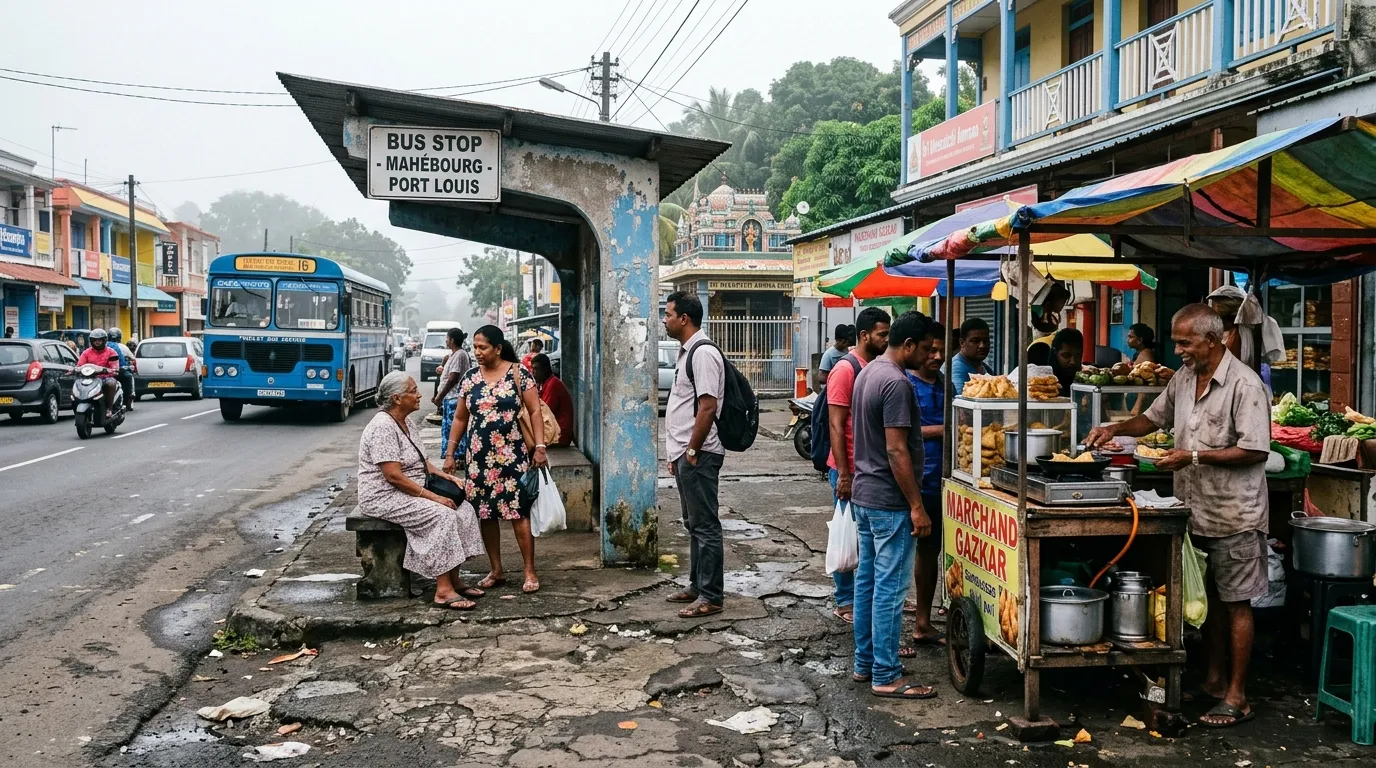
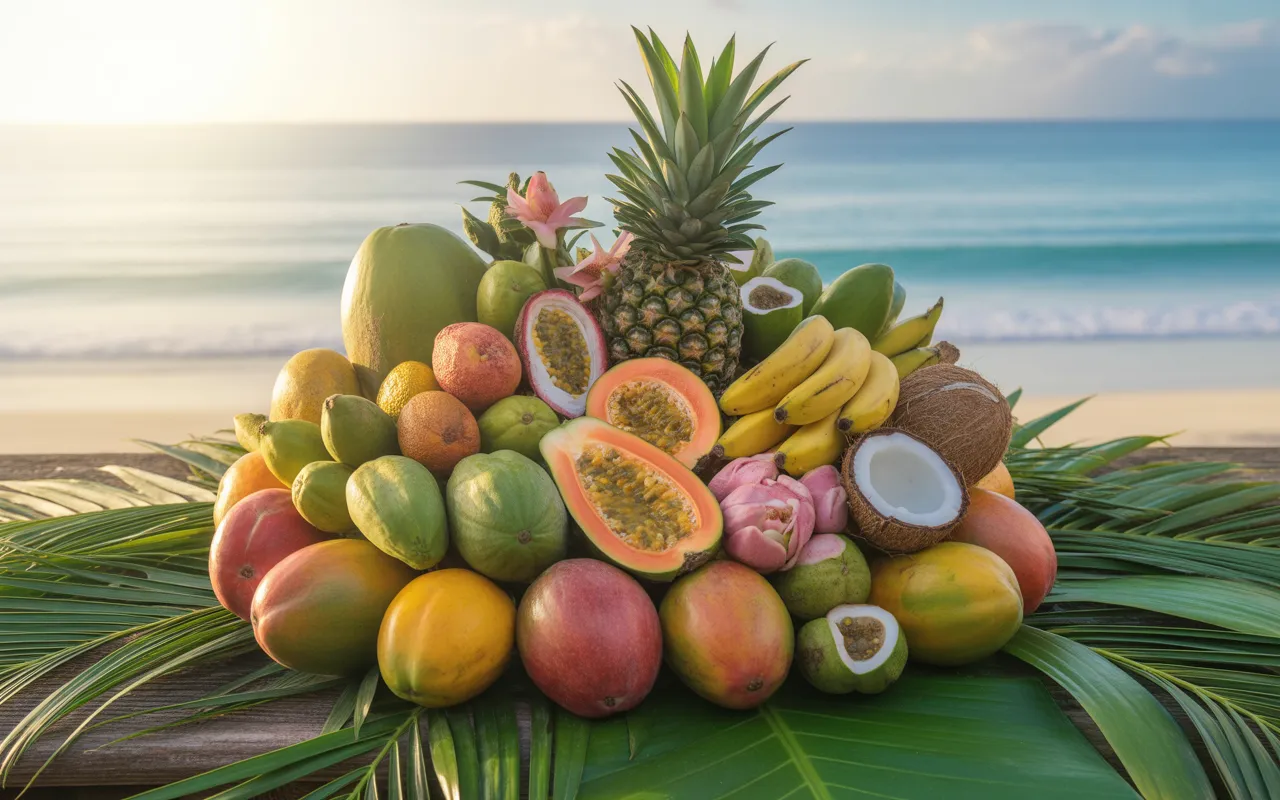
To taste Maurice is to begin with his fruits.
If you are looking for a clear fruit calendar in Mauritius, Here's the gist: the island is experiencing two great seasons (wet southern summer and drier southern winter), and fruit deliveries vary accordingly. You will find below a calendar of seasons (including peak periods), advice on buying at the best value for money, and concrete guidelines for organizing your shopping... or your move.
Understanding fruit seasonality in Mauritius (in 2 minutes)
Two seasons, microclimates, and harvests that shift
In Mauritius, people mainly talk about:
- Southern summer (November to April) Warmer and more humid, this is the most generous period for many tropical fruits (mangoes, lychees, longans…).
- Southern Hemisphere winter (May to October) : drier and a little cooler, with fruit still present, but different peaks depending on the varieties and regions.
The terrain also creates microclimates It can be cooler on the central plateau, drier and warmer in the North/West, and windier and more humid in the East/South. As a result, the same fruit can ripen earlier or last longer depending on the growing area.
Useful weather indicators (to anticipate the sweetest fruits)
Climate data (Plaisance station) shows average maximum temperatures around 30.1°C in January-February and about 24.6°C in July. The month of FEBRUARY is also described as the wettest (approximately 253 mm of rain on average).
Fruit calendar in Mauritius: seasons and peak periods“
This calendar is intentionally practical : it gives you the most frequent periods observed on the island (with a notion of peak). Dates may vary from year to year (weather, microclimate, variety, altitude).
Table: Fruits of Mauritius and seasons (simple guidelines)
| Fruit | Most frequent period in Mauritius | Peak period (often the best quality) | Tasting/buying tip |
|---|---|---|---|
| Letchi (lychee) | Late Oct. → Dec. (sometimes until Jan.) | Nov. → Dec. | Buy in bright red bunches, not dried out (short season). |
| Longan | Jan. → Mar. | Jan. → Feb. | Light brown skin, firm fruit, light fragrance (often best when very fresh). |
| Mango | Oct. → Feb. (depending on variety) | Nov. → Dec. (often) | Ask for "tree ripe" if possible: more fragrant, more delicate. |
| Pineapples (including Victoria) | Year-round (depending on the routes) / seasonal peaks | Oct. → Apr. (often cited) | Very good sliced with chili/salt, or in a salad with tamarind. |
| Papaya | All year round | Oct. → March (more abundant harvests) | When ripe: skin turns yellow, flesh is soft (avoid very green if you want it sweet). |
| Passion fruit (maracudja) | All year round | Nov. → Apr. (often) | The more wrinkled the skin, the more fragrant it is (for the juice). |
| Guava | April → May (often mentioned) / variations depending on the area | April → May | Perfect as juice, jam, or plain (depending on the more/less acidic varieties). |
| Starfruit | Feb. → July (often mentioned) | Feb. → July. | Choose the golden yellow one (sweeter) rather than the green-yellow one (more acidic). |
| Breadfruit | Oct. → June (often) | According to local preparations | To be eaten cooked (roasted, in curry, as homemade “fries”). |
Note: Some fruits are available "all year round" thanks to microclimates, small producers, and sometimes imports. However, the taste is rarely the same out of season.
A closer look at the "star" fruits not to be missed, depending on your arrival month.
November–December: the peak season (lychees + mangoes)
If you are in Mauritius november Or December, This is often the most anticipated moment: the lychees are top-notch, and the mangoes become very common depending on the variety. It is also a period when the’pineapple is particularly highlighted in the kitchen (fresh, grilled, in desserts, with tamarind/chili).
January–March: longans, end of mango season, summer well underway
In the middle of the southern summer, the longans take over (January to March). Mangoes may still be available (depending on the variety), and fruit juices/salads become a daily habit with the heat.
April–July: guavas and starfruits (more “fresh”, very fragrant)
When the season changes, you will see more of guavas (often cited around April–May) and of starfruit (frequently mentioned from February to July). This is an excellent time if you like more tart fruits, perfect for juice.
August–October: the off-season (and the gradual return of mangoes)
Late winter/early summer: the stalls may seem less “spectacular” than in November-December, but you can still find everyday fruits (papaya, bananas, imported/local citrus fruits depending on availability), and the first mangoes sometimes reappear as October approaches.
Where to buy fruit in Mauritius (without making a mistake)
Markets (“bazaars”) vs. supermarkets: what really changes
For the local fruits, THE markets Supermarkets often remain the best choice: rapid turnover, variety, and the possibility of discussing ripeness (“for today” vs. “for in 2 days”). Supermarkets are convenient, but some highly seasonal fruits (like lychees) circulate widely through more “direct” channels (small producers, roadside stalls, markets).
Practical tips for paying the right price
- Come early : better choice, fresher fruit (and less “heated” by the sun).
- Compare 2–3 stands before buying in bulk (prices fluctuate a lot depending on availability).
- Request a tasting when possible (mango, pineapple).
- At the end of the season, quality sometimes drops and prices can rise (especially for lychees).
Some figures (2023) to situate the fruit sector in Mauritius
Without getting bogged down in statistics, here are some useful benchmarks:
- There fruit production in Mauritius is indicated at 23,606 tonnes in 2023 (data attributed to FAOSTAT in country data compilations).
- THE total fruit exports are indicated at 2,523 tonnes in 2023 (same source/attribution).
- Regarding international trade, the WITS database (World Bank, Comtrade data) provides an example: Mauritian exports of “Other fruit, fresh, nes” poster 292,392 kg And 1,973.47 k$ in 2023, with France among the major destinations.
Why is this interesting to you? Because these figures remind us of a simple point: seasonality is not just a matter of taste — it also structures volumes, prices and availability in stores.
Choosing, storing and consuming well (quick tips)
Choose the maturity according to the intended use
- To eat right away : favor fruits that are already fragrant (mango) and slightly soft (papaya).
- For 2–3 days : take a little firmer, especially if you don't have an air-conditioned kitchen.
- For the juices : well “wrinkled” passion fruit, very ripe guava, very fragrant pineapple.
Conservation (Mauritian climate = vigilance)
- Avoid direct sunlight : a bag left in the car can “cook” the fruit in an hour.
- Fridge : useful for longans/lychees (to keep them crisp), less ideal for some very fragrant mangoes (they sometimes lose their aroma).
- Cutting : if you cut, consume quickly (heat + humidity = rapid oxidation).
Mini guide “fruits & culture”: how Mauritians like them
In Mauritius, a fruit is rarely eaten "only plain": it is found in juice, in pickles (green mango), with chili/salt, or in dessert.
Easy examples to test:
- Green mango : sliced with salt/chili, or as pickles/achards (depending on families and recipes).
- Pineapple plain, or with a touch of tamarind/chili (very common on stalls and snacks).
- Breadfruit cooked (roasted, boiled, curry) rather than raw.
FAQ – Fruits in Mauritius (Frequently Asked Questions)
What fruits are in season in November in Mauritius?
November often marks the big return of "wow" fruits: lychees (often with a very sharp increase), mangoes (depending on the variety), and a frequent emphasis on the’pineapple in the kitchen and at the markets. It's also a time when the stalls become more abundant thanks to the southern summer (warmer and more humid), which promotes sweeter fruits. If you arrive in Mauritius in November, plan to buy fruit quickly and regularly: ripening can change rapidly in the heat.
When does the lychee season start and end in Mauritius?
The season of lychee (lychee) is relatively short. Local and tourist sources often place it between end of October And December, with a “peak” in November–December ; some mention possible availability until January depending on the year and the area. In practical terms: if you want to enjoy it at the best level (taste + price + abundance), aim for November and December, and buy from markets/bazaars where the stock is quickly replenished.
Where to buy cheap local fruit in Mauritius?
For local fruits (mangoes, lychees, longans, etc.), the markets The first instinct is often to look at markets (or "bazaars"): variety, rotation, and the possibility of choosing ripeness. Roadside vendors can also be a good option, but prices can vary (and sometimes rise in very touristy areas or at the end of the season). A simple method: compare 2-3 stalls, buy early in the morning, and adjust your quantities to your consumption rate (heat = faster ripening).
Are passion fruits and papaya available all year round in Mauritius?
Yes, they are often described as available all year round In Mauritius, there are periods when they are more abundant. For example, papaya is frequently described as being available year-round, with higher production during the warmer, more humid months. Passion fruit is also presented as being available year-round, with a main season often associated with the southern summer. In reality, you will generally find them easily, but the quality (sugar content/flavors) can vary depending on the weather and origin.
Why is the Victoria pineapple so sought after in Mauritius?
The “Victoria” pineapple is renowned for its rather small size, her scent and its sweet flavor. In Mauritius, some farms promote this variety as emblematic, with production destined for both the local market and export (in volumes announced by private companies). For the consumer, this translates primarily into a highly aromatic fruit, delicious eaten fresh, juiced, or used in desserts. Tip: rely first on the aroma (a fragrant pineapple is a good sign) and the freshness of the cut.
And now ?
Discover the fruits from Mauritius, This is often the start of a larger project: improving daily life, choosing the right region based on climate, schools, work… or preparing for a smooth transition. If you are considering moving to the island, Expat Mauritius can support you with a comprehensive approach (visas/permits, real estate, relocation, and administrative procedures). Start on the page Living in Mauritius: a turnkey expatriation solution, then explore the practical resources in the expatriation guides (and request a free assessment if you wish to be directed quickly).