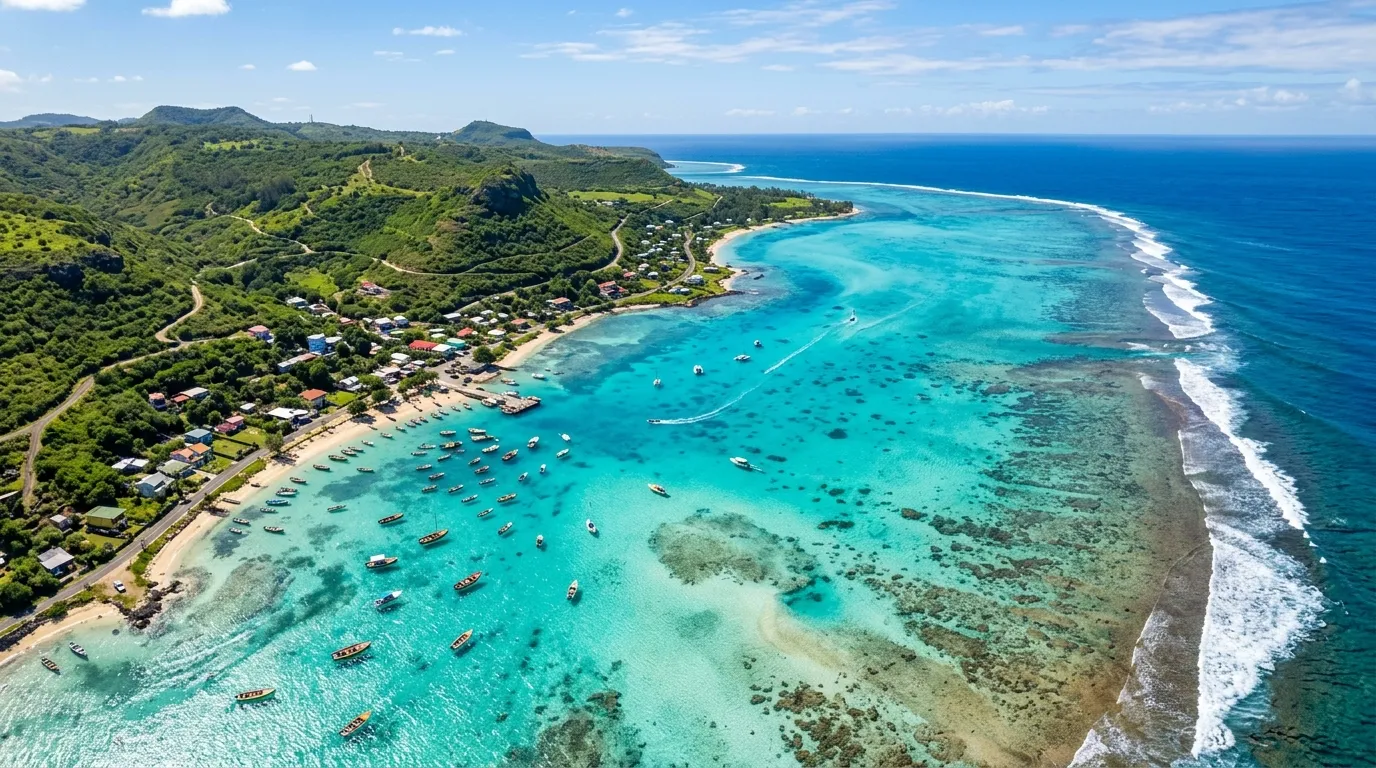
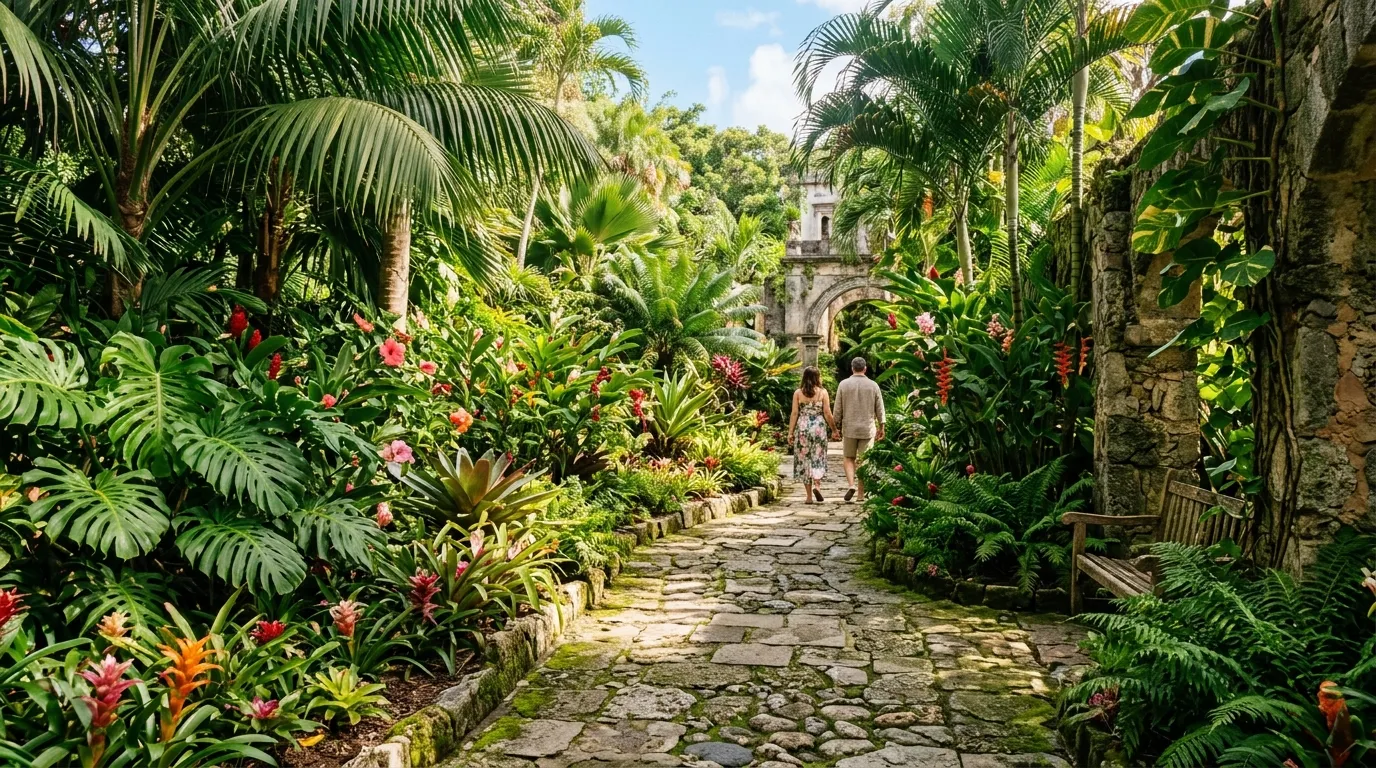
The Pamplemousses Botanical Garden is an unmissable stop in northern Mauritius. Its appeal lies as much in its tropical plants as in its history, which makes it one of the island's best-known heritage sites.ssrbg.govmu.org)
The promenade is easy to enjoy, but never mundane: pools, palm trees, spice patches, and old buildings follow one another in a calm setting, very different from the neighboring beaches.mymauritius.org)
Why the Pamplemousses Garden is worth a visit
The official website states that the garden covers 33 hectares and boasts 823 species, including exotics, endemics, medicinal plants, spices, palms, and ferns. It's easy to see why a visit appeals to the curious, families, and botany enthusiasts alike.
The garden is not frozen in the past. Since 2024, a rehabilitation program has been underway to modernize signage, infrastructure and the visitor experience, while better showcasing its history and collections.
A story that dates back to the 18th century
From the Mon Plaisir estate to the botanical garden
The story begins in 1735, when Mahé de Labourdonnais purchased the Mon Plaisir estate. He initially created a vegetable garden there to feed his household, Port Louis, and passing ships. In 1767, Pierre Poivre transformed the site into an acclimatization garden, and Nicolas Céré and other directors continued this botanical work over time.
The garden has borne several names over the centuries, before being officially renamed Sir Seewoosagur Ramgoolam Botanic Garden in 1988. This succession of names explains why the common usage 'Jardin de Pamplemousses' has remained very much alive in guides and in conversation.
Why has the name Pamplemousses retained its place
The garden is located in the village of Pamplemousses, about ten kilometers northeast of Port Louis. This location is what gives it its common name, even though the full official name is longer. For a visitor, both names refer to the same place.
If you are planning a longer stay in Mauritius, the Practical guides for expats in Mauritius They can also help you organize your budget, travel, and useful landmarks on the island.
Which plants and landscapes should be seen first?
The visit takes on its full meaning when viewed as a living collection. The garden highlights palm trees, ponds, spice gardens, and the medicinal garden, which form the backbone of the botanical walk.
Among the most photographed celebrities, we find the Victoria amazonica in the ponds and the talipot among the remarkable palm trees. These two plants perfectly encapsulate the charm of the place: spectacular, tropical, and very different from a classic ornamental garden.traveldojo.com)
The spice corner, meanwhile, recalls the site's original purpose. Nutmeg, cloves, and cinnamon trees tell the story of the role of plants in the island's economy and in the tropical trade of the colonial era.
- The lily ponds are the most famous image of the garden and often make you want to extend your walk.
- The palm-lined avenues offer the most majestic part of the visit, especially if you like large tropical trees.
- The spice corner is ideal for understanding how plants have shaped the history of Mauritius.myguidemauritius.com)
- The medicinal garden will interest those who want to link botany, traditions and local uses of plants.
Botanical landmarks to keep in mind
| Landmark | Key takeaways | Interest in the visit |
|---|---|---|
| Living collections | The garden features 823 species and several large botanical collections. | People don't just come for a stroll, but to discover a true tropical conservatory. |
| Water lilies and palm trees | There Victoria amazonica and palm trees are among the most striking images. | These are the areas to prioritize if you are short on time. |
| Useful plants | The site highlights medicinal plants and spices. | The visit takes on a more historical and educational dimension. |
| Heritage | The garden has had several names and was officially given its current name in 1988. | The walk also has a genuine heritage aspect. |
How to organize the visit without making a mistake
The official website publishes separate entry fees depending on the visitor's profile. At the time of writing, access is 300 Mauritian rupees for non-Mauritian visitors aged 5 and over, and 25 rupees for Mauritian residents aged 5 to 59; some categories are admitted free of charge.ssrbg.govmu.org)
Official guided tours are also available: the garden charges 75 rupees per visitor over 12 years old for an authorized guide, with specific rates for groups. A golf cart with a driver is also offered for up to three people, which can be convenient if you want to save your walking.ssrbg.govmu.org)
In practice, the visit is perfectly suited to a slow pace. MyMauritius recommends taking your time to enjoy the walkways, pools and shaded areas, which perfectly matches the spirit of the place.
- Allow at least a good part of half a day if you enjoy reading the signs and taking photos.
- Choose a drier period if you want to walk more comfortably and limit periods of rain.metservice.intnet.mu)
- If you are travelling with family or with people who do not walk much, a golf cart can really enhance the experience.
- If you are coming from Port-Louis, the proximity of the garden makes it easy to include in a trip to the north of the island.
Useful practical information before departure
| Point | Useful reference point | Why this is important |
|---|---|---|
| Entrance | Prices vary depending on the visitor's status. | You can anticipate the budget for the outing. |
| Guide | An official guided tour is available with a published price. | This is useful if you want to better understand plants and history. |
| Mobility | A golf cart can be hired with a driver. | Practical for visitors who prefer to limit walking. |
| Season | From May to October, conditions are generally more favorable. | The visit is often more pleasant with less rain. |
To find out who the website publisher is, the legal notices are available for consultation at any time.
FAQ about the Pamplemousses Garden
What is the complete history of the SSR Botanical Garden of Pamplemousses and how did it become the Pamplemousses Garden?
The garden began as a kitchen garden in 1735 on the Mon Plaisir estate, purchased by Mahé de Labourdonnais. In 1767, Pierre Poivre initiated its botanical phase by acclimatizing useful plants, and Nicolas Céré, mentioned in the garden's historical guides, continued this work in the 19th century; other directors, such as James Duncan, subsequently enriched the collections. The common name "Jardin de Pamplemousses" has remained because the site is located in the village of the same name, while the current official name pays homage to Sir Seewoosagur Ramgoolam.
What are the main plant species not to be missed during a visit to the Pamplemousses Botanical Garden?
If you are short on time, focus on three sets: the lily ponds with the Victoria amazonica, The garden features palm-lined avenues, where the talipot palm often catches the eye, and a section dedicated to spices and medicinal plants. The official website also indicates that the garden boasts 80 palm species, 150 medicinal plants, and 27 spice species, clearly demonstrating the breadth of the collection. A visit is therefore worthwhile even for those unfamiliar with botany.
How much does admission cost and what guided tour options are available at the SSR Botanic Garden?
At the time of writing, the official website lists the entrance fee as 300 Mauritian rupees for non-Mauritian visitors aged 5 and over, and 25 rupees for Mauritian residents aged 5 to 59, with some free admission depending on the resident's profile. Official guided tours are also subject to a fee: 75 rupees per visitor over 12 years old for an authorized guide, with specific rates for groups; a golf cart with a driver is also available.
What is the best time of year to visit the Pamplemousses Garden and avoid the heat or the rain?
The most comfortable time to visit is generally from May to October, as Pamplemousses' typical rainfall is lower during this period, with a marked dip around September and October. Conversely, January and February are wetter. If you have the choice, a visit during the drier season makes walking more pleasant, especially around the pools and along the open pathways. MyMauritius also recommends a leisurely pace, which is well-suited to the cooler climate.
How to get to the SSR Botanical Garden from Port Louis or from the main hotels in Mauritius?
From Port Louis, the garden is very close by Mauritian standards, about ten kilometers to the northeast. MyMauritius indicates that it is often included in itineraries between the capital and the northern resorts; in practice, a car or taxi is therefore the easiest solution if you want to avoid transfers. Visitors who prefer a day without the logistics can also opt for an organized tour, especially if they are already combining several stops on the same day trip.
And now ?
If the Pamplemousses Botanical Garden is just one stop on your exploration of the island, start by EXPAT MAURITIUS to then move on to a broader vision of Mauritius and your project there.