
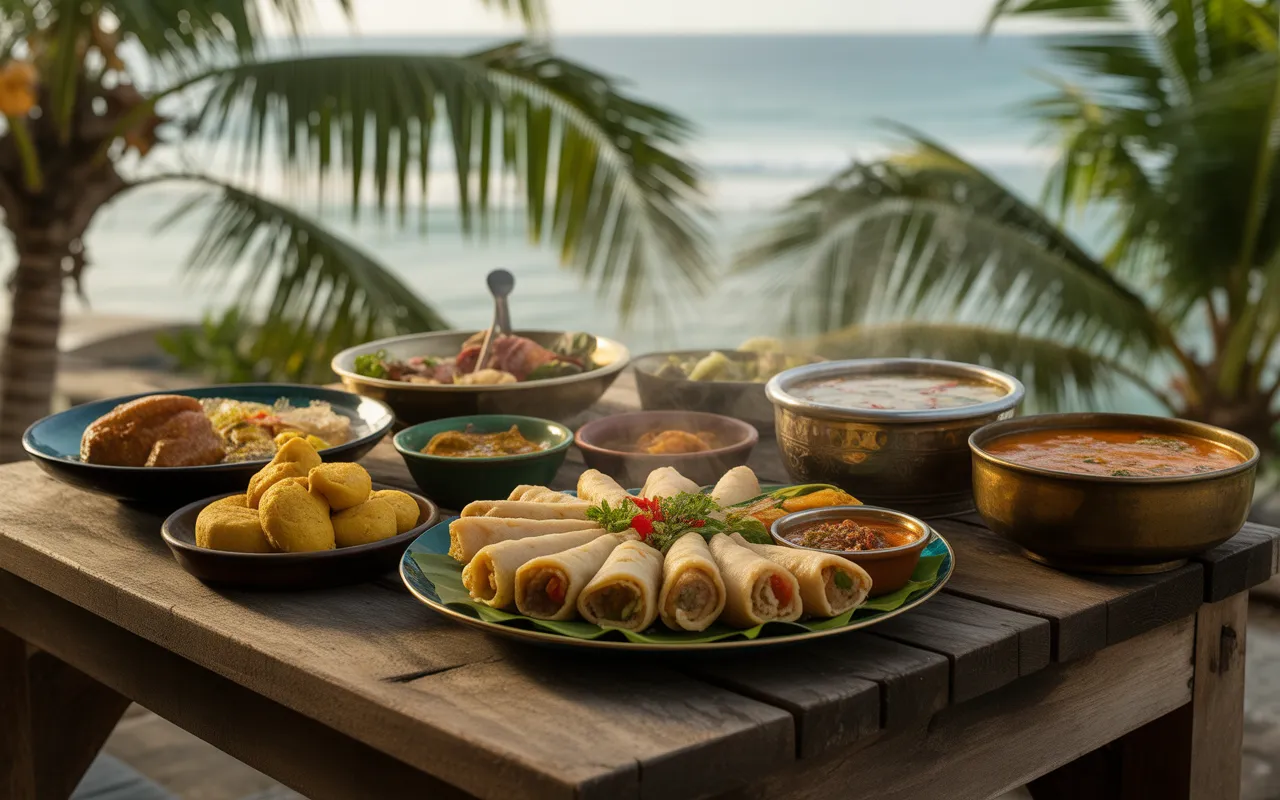
Eating in Mauritius is like traveling through cultures.
If you're looking for what to try, where to eat well, and how to enjoy the local cuisine (street food, restaurants, markets, Creole and Indo-Mauritian dishes), this guide provides a clear and practical roadmap. The goal: to help you eating in Mauritius like the locals, without getting lost in menus, spices or local customs — and while optimizing your budget.
On the blog of’EXPAT MAURITIUS, We often talk about settling in and daily life: eating well is one of the first things to consider when you arrive. To discover our comprehensive support for expatriation and investment, you can also visit the homepage: Living in Mauritius: Turnkey Expatriation and Real Estate.
Understanding Mauritian cuisine (before ordering)
A “melting pot” on the plate
Mauritian cuisine reflects various influences Creoles, Indian women, Chinese And European. In practical terms, we often find:
- bases curry / masala (Indo-Mauritian dishes),
- sauces tomato kind rougaille (Creole),
- fried noodles/rice (Sino-Mauritian influences),
- of the pickles and condiments: pickles, satini, chili peppers (very present).
Spice level: how to manage it without ruining the meal
In Mauritius, “spicy” can mean scented (turmeric, cumin, curry leaves) or very spicy. In street food, chili pepper is often added upon request. If you are sensitive to chili:
- ask “without chili” Or “not too spicy”,
- First, taste the chutneys/satinis in small quantities.,
- Opt for mild drinks/side snacks: alouda, yogurt, bread.
Food hygiene and safety: useful tips
As everywhere, standards vary depending on the location and context (markets, beaches, snack bars, restaurants). To minimize problems, maintain simple habits: choose well-attended stalls, opt for food that is piping hot and well-cooked, and wash your hands frequently. The CDC's "Traveler View" page outlines general "eat and drink safely" principles while traveling (water, food, hygiene). See the recommendations (CDC). (wwwnc.cdc.gov)
Field tip: At lunchtime, aim for places where there's a local queue. A fast-moving stall means fresher products and reduced risk.
Must-try dishes (and how to recognize them)
Mauritian street food: the best gateway
For many newcomers, street food is the easiest way to “understand” the local cuisine: it’s quick, accessible, and you get to taste several styles in the same day.
- Dholl puri : a thin pancake often filled with pea curry, rougaille, pickles, and chutneys. It is very often cited as an iconic street food, and its popularity is widely documented.tasteatlas.com)
- Roti / farata : more “flatbread” and generous, often served with curries.
- Chili pepper cakes Small fried balls made from split peas and spices, perfect as a snack.tasteatlas.com)
- Meatballs : dumplings (steamed) served in broth, sometimes with noodles and condiments (often in Sino-Mauritian stalls).
- Fried noodles : stir-fried noodles (local version), handy when you want something less “saucey”.
- Alouda : sweetened milk drink (often with basil seeds), very popular when it is hot.
Creole dishes: sauces, fish, and everyday curries
In Creole restaurants and in people's homes, you will often come across:
- Rougaille (often tomato/garlic/ginger): can be combined with sausage, fish, seafood.
- Fish curry / Chicken curry Mauritian curry (often less “creamy” than some Southeast Asian versions), served with rice, grains (legumes) and salad.
- Vindaye (e.g., fish): a flavorful preparation (often mustard/spices/vinegar depending on the recipe), very aromatic.
Indo-Mauritian inspiration: biryani and curries
- Mauritian Briyani : fragrant rice, usually with meat/fish (and depending on the recipe, potato, egg, onions), a “complete meal” dish.
- Grains : lentils, beans, peas — served as an accompaniment to rice (a classic lunch).
- Achards : pickled vegetables, very common with dholl puri/roti and curries.
Sweets and snacks: to try between swims
- Neapolitan : small biscuit/shortbread, often pink, filled (often with jam), very popular.
- Sweet potato cakes : sweet doughnut made from sweet potato (depending on the version, coconut/vanilla).
- Tropical fruits Pineapple, mango (depending on the season), lychee (depending on the season), etc. At the market, ask for a small portion if you want to taste several varieties.
Where to eat in Mauritius: markets, snacks, restaurants and beaches
The markets: the most local experience
The markets are ideal for sampling a variety of foods in a single morning: dholl puri/roti, fruits, spices, cakes… Go early for the best selection and atmosphere. The markets of Port Louis, Four Milestones, Flacq Or Mahébourg often return to local customs (days and times vary depending on the area).
Snacks: simple, quick, and often excellent
In Mauritius, “snack” does not mean junk food: they are often small popular places where you can eat roti, fried noodles, dumplings, biryani… The good sign: a short menu, fast service, and regulars.
Restaurants: when you want a more "relaxed" option“
In a restaurant, you will find it more easily:
- more "dressed" versions of Creole dishes (fish, seafood, rougaille),
- structured vegetarian options (dal, grains, curried vegetables),
- Suitable choices if you avoid chili peppers (you can request an adjustment).
Practical guide: what to taste, where to find it, and how to order it
Quick tips for eating well in Mauritius (don't hesitate at the stall)
| Speciality | Kind | Taste profile | Where to easily taste it | Ordering advice |
|---|---|---|---|---|
| Dholl puri | Street food | Spicy to your liking, very aromatic (curry/condiments) | Markets, street vendors, snacks“ | Ask for "no chili" + chutney on the side if needed |
| Chili pepper cakes | Snack | Fried, spicy, crispy | Markets, stalls near train/bus stations, snack bars | Try it plain first, then with sauce/chili. |
| Meatballs | Soup / Steamed | Milder, umami (broth), condiments of your choice | Sino-Mauritian stands, food courts, snacks | Ask for the sauces on the side if you are sensitive. |
| Fried noodles | Quick meal | Sautéed, salted, customizable | Snacks, roadside stands | Specify protein (egg/chicken/prawns) + “no chili pepper” |
| Rougaille | Creole dish | Tomato, garlic/ginger, spicy | Creole restaurants, guesthouses | Choose your base (sausage/fish/seafood) |
| Alouda | Beverage | Soft, fresh, sweet | Stalls, markets, ice cream parlors/snack bars | Perfect after a spicy dish |
Budget: How much does it cost to eat in Mauritius? (benchmarks and method)
Prices vary depending on the area (tourist vs. local), the type of address, and inflation. Rather than giving arbitrary figures, use a reliable method: observe the differences between street food/snacks/restaurants and following the general evolution of the cost of living.
For a macro reference point, Statistics Mauritius regularly publishes the Consumer Price Index (CPI) and inflation. For example, the 12-month “headline” inflation rate was at 5,8% in March 2024, and around 3,4% in September 2025 (with notable contributions from certain food products depending on the period). This data helps to understand why your shopping or meals may vary from year to year. CPI 1st quarter 2024 ; CPI 3rd quarter 2025. (statsmauritius.govmu.org)
Simple reference point : if you alternate street food + snacks On a daily basis and occasionally at restaurants, you generally keep a controlled budget while enjoying the diversity of Mauritius.
Paying, taxes, and tips: what you need to know
In Mauritius, the VAT is 15% (Public information from the Mauritius Revenue Authority). This doesn't explain everything on a ticket, but it's a useful benchmark when comparing "displayed" vs. "final" prices. Source: Mauritius Revenue Authority (VAT). (mra.mu)
- Species : very practical in markets and street food (bring some change).
- Map : more common in restaurants, shopping centers and tourist areas.
- Tip : often appreciated if the service is good, but the practice varies depending on the location (not a systematic obligation in street food).
Expat tips: shopping, habits, and integration through food
When you move into a new place, food becomes a daily topic: where to shop, how to eat healthily, how to vary your diet without breaking the bank. Here are a few helpful guidelines:
- Local basket : markets for fruit/vegetables, spices, herbs, snacks — often more “lively” and sometimes more advantageous.
- Imported products : available in supermarkets, but generally more expensive (logistics + currency exchange).
- Mauritian rhythm Many people eat a typical lunch rice + beans + curry + salad, and nibble on snacks (chili cakes, dholl puri…) depending on the day.
- Integration : testing a market and talking to the vendors (even just a few words) really speeds up your familiarity with the island.
To learn more about daily life and procedures, you can consult the following page: Expatriation guides – Expat Mauritius.
FAQ – Eating in Mauritius (Frequently Asked Questions)
Is it safe to eat street food in Mauritius without getting sick?
Yes, most visitors and residents consume them regularly, but simple precautions should be taken: choose stalls with a high turnover (local queue), favor well-cooked and hot food, avoid food left out in the sun, and wash your hands frequently. The CDC's recommendations on food hygiene while traveling emphasize the importance of these practices (water, hands, food). If you have a sensitive stomach, start with milder options (dumplings, fried noodles without chili) before moving on to very spicy chutneys.wwwnc.cdc.gov)
What are the typical dishes to try first when you arrive?
For a first overview, focus on 5 essentials: dholl puri (filled galette), chili cakes (fried snack), meatballs (dumplings in broth), fried noodles (stir-fried noodles) and a typical Creole dish rougaille (often tomato/garlic/ginger). Dholl puri is frequently cited as an iconic street food in Mauritius, including by international culinary guides and media.tasteatlas.com)
Is it easy to eat vegetarian (or pork-free) food in Mauritius?
Yes. You will easily find vegetarian options thanks to the grains (lentils/beans/peas), vegetable curries, dholl puri/rotis filled with vegetable preparations, and numerous snacks. To avoid pork, simply specify: many places offer chicken, fish, seafood, or vegetarian options. As recipes vary, also check the broths (meatballs) and some sauces. If you have allergies, clearly ask about the ingredients (oil, peanuts, shellfish).
How to estimate your "meal" budget when moving to Mauritius?
The most reliable method is to mix 3 levels: street food (fast and economical), snacks (simple dishes), and restaurants (occasionally). Then, monitor general price trends using public sources. For example, Statistics Mauritius publishes the CPI and inflation (5.8% over 12 months in March 2024; 3.4% in September 2025). This provides useful context: even if your basket depends on your choices, macro trends explain some price variations over time.statsmauritius.govmu.org)
And now ?
Eating well helps you feel at home faster — and it's often one of the best ways to get to know the island. If you're preparing for a move (visa/permit, accommodation, schooling, banking/insurance, real estate project, or starting a business), EXPAT MAURITIUS offers personalized support and a comprehensive approach from the island. To get started, check out the... expatriation guides and discover all the services on the Expat Mauritius website.