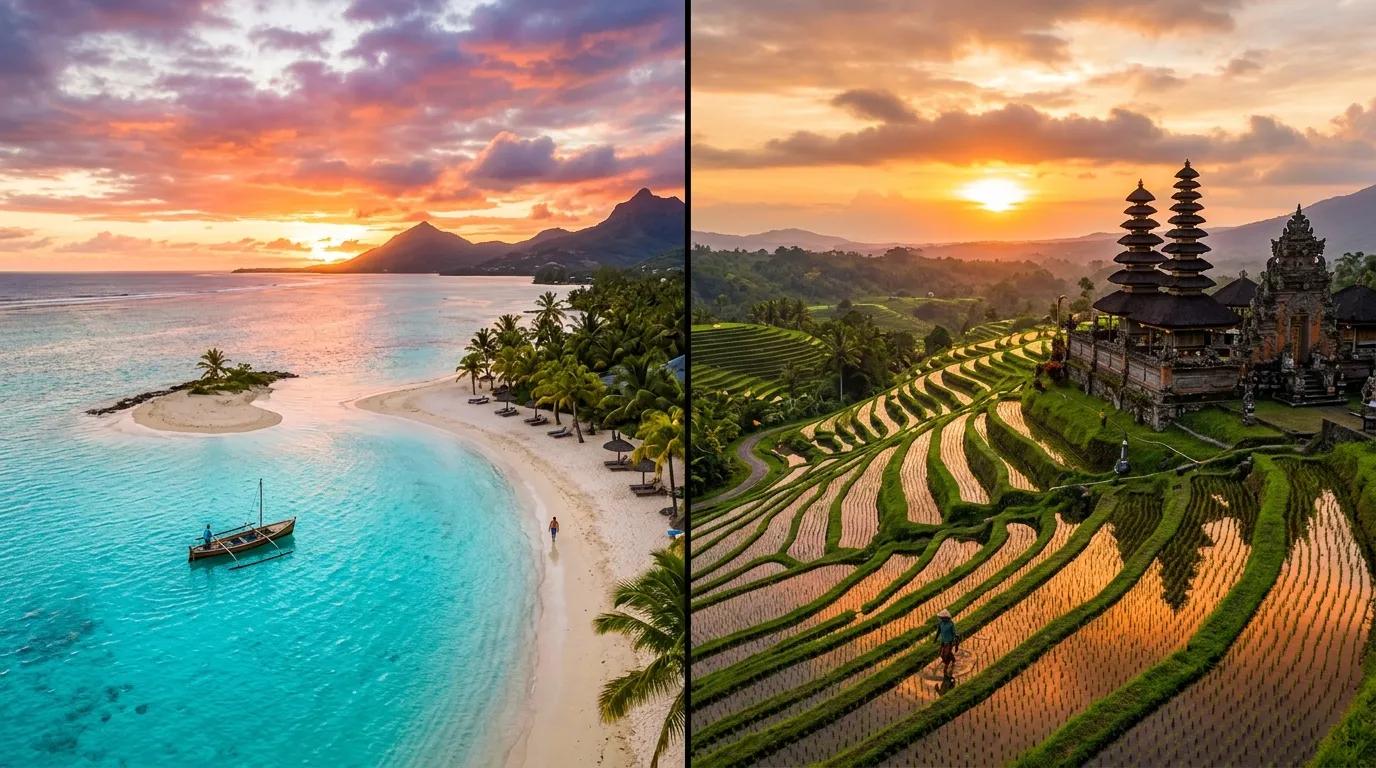
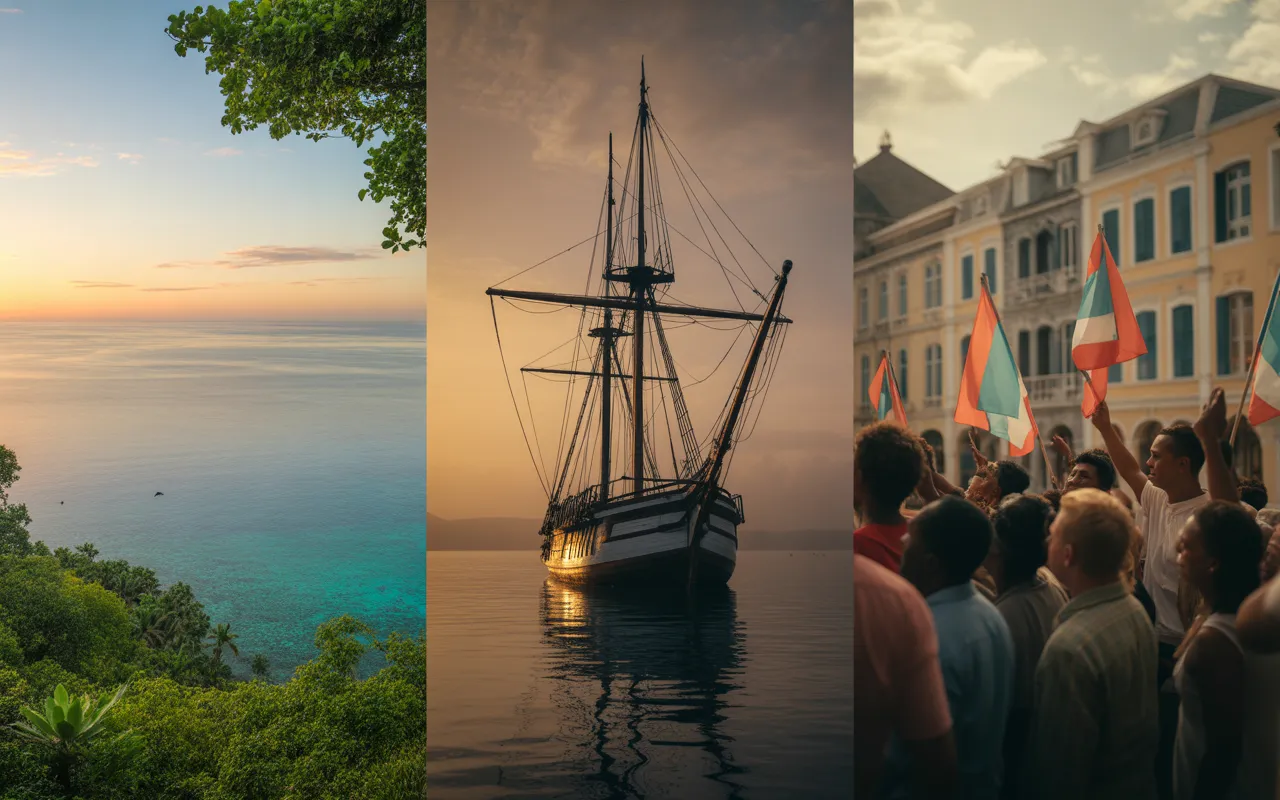
Mauritius is a world island.
L'’history of Mauritius This explains why, on a relatively small territory, African, European, Indian, and Asian heritages coexist, visible in the language, law, cuisine, religions, and urban landscapes. From a long period of uninhabited island to the major phases of colonization (Dutch, French, then British), Mauritius was built along maritime routes, through the sugar trade, slavery, and then indentured labor—before becoming independent on March 12, 1968. Source of synthesis (Britannica)
This historical perspective is particularly useful if you are preparing for a permanent settlement: understanding the past helps you understand the present (institutions, legal system, cultural diversity). For more practical information, you can consult the resources of’Expat Mauritius or their expatriation guides.
Key points: a strategic island in the Indian Ocean
Mauritius belongs to the Mascarene archipelago. For a long time uninhabited, The island was probably known to Arab navigators as early as the 10th century, Then it was visited by the Portuguese at the beginning of the 16th century without lasting colonization. Britannica – Early history
Its position on the maritime routes between Africa, India and Southeast Asia makes it an ideal base: it is this geostrategic logic (ports, supply, control of trade routes) that successively attracts European powers.
The Dutch period (1598–1710): taking possession, attempts at colonization, abandonment
The Dutch took possession of the island in 1598 and give it the name of Mauritius in honor of Maurice of Nassau. They attempted to settle there on several occasions (notably 1638–1658 Then 1664–1710), before permanently abandoning the island in 1710. Britannica–Dutch period (1598–1710)
This period leaves more modest traces than the French or British period, but it marks a first turning point: the island enters European colonial history, with a logic of resource exploitation and maritime positioning.
The French period: Île de France (1721/1715–1810), Port-Louis and the sugar economy
From the East India Company to the royal administration
In 1721, The French East India Company occupies the island, which has been renamed Île de France. The colony developed gradually, then the administration passed to the French Crown in 1767. Britannica – French occupation and 1767
Port-Louis: a port at the heart of French strategy
The development of Port-Louis is part of this maritime vocation: the capital, founded and structured in the 18th century, became a supply point and a major administrative center in the Indian Ocean. Britannica – Port Louis, founded in the 18th century
Sugar and slavery: prosperity built on coercion
French authorities imported enslaved people from Africa and the Indian Ocean. Sugar became the dominant activity and the colony prospered. Britannica – slavery and sugar
This phase is essential in the’history of Mauritius : it builds a plantation society, a social hierarchy, and forms of creolization (language, cultural practices) that leave a lasting mark on Mauritian identity.
1810–1814: British conquest and cultural continuity
At the beginning of the 19th century, while France and England were at war, Île de France served as a base for privateers threatening British trade. The British seized the island in 1810, and British sovereignty is confirmed by the Treaty of Paris (1814). Britannica – 1810 and 1814
A key feature: despite British rule, Mauritius largely retains French customs, laws and language, a legacy still perceptible today (civil law, toponymy, use of French and Creole). Britannica – continuity of laws and language
1835: Abolition of slavery, “apprenticeship” and memory (Le Morne)
A late abolition in Mauritius: February 1, 1835
In Mauritius, the abolition of slavery became effective on February 1, 1835, with the implementation of a system known as’learning (apprenticeship), which continues until 1839. Cambridge Core (PDF) – dates 1/02/1835 and 1839
The subject remains well-documented and sensitive: UNESCO has compiled, in a collection of Mauritian archives, sources on the slave trade, slavery, marronage, abolition and post-abolition (1721–1892). UNESCO – Memory of the World (archives of slavery)
Compensation: money for the owners, not for the victims
The United Kingdom is implementing financial compensation for slave owners. A British parliamentary debate on the matter. 1835 indicates that an envelope of approximately 2.1 million pounds is allocated to Mauritius. Hansard (UK Parliament) – compensation and amount for Mauritius
Synthesis studies on Mauritius suggest orders of magnitude of approximately 66,000 people concerned and total amounts close to these allowances. Le Mauricien – commission and estimates (context and figures)
Le Morne: symbol of marronage and resistance
THE Morne Brabant It is one of the most powerful memorial sites on the island: the mountain served as a refuge for runaway slaves (maroons) in the 18th and early 19th centuries. A UNESCO World Heritage Site, Le Morne has become a symbol of the struggle for freedom. UNESCO – Le Morne Cultural Landscape
1834–1920: Indentured Labor and Demographic Transformation (Aapravasi Ghat)
Why indentured servitude?
After abolition, the British authorities sought to maintain the plantation economy (particularly sugar production) by recruiting indentured laborers. This period profoundly shaped modern Mauritian society. Britannica – replaced by indentured servants
Aapravasi Ghat: the entry point for a major migration
Mauritius was chosen as the site for a major British experiment: the immigration of contract workers. According to UNESCO, between 1834 and 1920, nearly half a million indentured laborers arrive from India via the’Aapravasi Ghat in Port Louis. UNESCO – Aapravasi Ghat
A frequently cited benchmark: the November 2, 1834, a first group of 36 Committed workers arrive, marking the beginning of this large-scale system. Britannica – Aapravasi Ghat (2/11/1834, 36 people)
From social crises to autonomy: the road to 1968
In the 20th century, the sugar economy remained central, but it was punctuated by crises, social tensions, and demands for reform. Britannica notably mentions labor unrest in 1937 and economic and political reforms following 1945, which pave the way for independence. Britannica – 1937 and reforms after 1945
Finally, Mauritius became an independent state within the Commonwealth. March 12, 1968. Britannica – Independence (03/12/1968)
A concise chronology of the history of Mauritius
| Period / date | Power / event | What does this change in concrete terms? |
|---|---|---|
| 10th century (probable) | Knowledge from Arab navigators | First cartographic and maritime landmarks mentioned by historical sources |
| Early 16th century | Portuguese visits | No lasting colonization |
| 1598–1710 | Dutch period | Named “Mauritius”, attempts at colony, then abandoned |
| 1721 then 1767 | French Île-de-France (Company then Crown) | Port, administration, sugar, slave importation |
| 1810–1814 | British conquest, confirmed by treaty | Change of sovereignty, continuity of French laws and language |
| February 1, 1835 | Abolition of slavery in Mauritius | The "apprenticeship" system was implemented until 1839. |
| 1834–1920 | Indentured servitude (Aapravasi Ghat) | Arrival of approximately half a million contract workers (according to UNESCO) |
| March 12, 1968 | Independence | Birth of the independent Mauritian state |
What history still explains today
L'’history of Mauritius It is not just a story: it sheds light on very concrete everyday realities.
- Languages and culture: French heritage (law, toponymy) and linguistic plurality resulting from migrations.
- Heritage and memory: Aapravasi Ghat (indentured servitude) and Le Morne (marronage) structure the national memory. UNESCO – Aapravasi Ghat ; UNESCO – Le Morne
- Contemporary Demography: The current population is the result of a long historical process. As an example, the Mauritian census indicates a resident population of approximately 1 233 000 inhabitants 2011, And 1 235 260 in 2022 (Overall level stable, aging on the rise). Statistics Mauritius – Census 2011 (main results) ; Statistics Mauritius – Census 2022 (main results)
Understanding the colonial past, abolition and indentured labor helps to grasp Mauritian diversity: it is a country forged by human movements as much as by geography.
FAQ – Frequently asked questions about the history of Mauritius
Why was Mauritius called “Île de France”?
The name “Île de France” dates back to the French period. After its occupation by the French East India Company in the 18th century, the island was renamed and became a strategic stronghold in the Indian Ocean. This period saw the development of Port Louis, the administrative structuring of the colony, and the rise of a plantation economy, particularly around sugar. When the British took the island in 1810 and their sovereignty was confirmed in 1814, the name “Mauritius” was reinstated, but some French legal and linguistic influences remained.
What is the exact date of the abolition of slavery in Mauritius?
In Mauritius, abolition becomes effective on February 1, 1835, with the implementation of a transitional ’apprenticeship“ system which ends in 1839. This chronology is important because it shows that the end of slavery was not instantaneous: in reality, the organization of labor and economic dependencies were restructured over several years. Available archives and historical studies (particularly academic ones) detail this transition and its social impacts, especially on former slaves and the sugar economy.
What is the Aapravasi Ghat, and why is it central to Mauritian history?
The Aapravasi Ghat in Port Louis is the former immigration depot through which a great many indentured laborers passed, recruited mainly in India to replace slave labor after abolition. According to UNESCO, between 1834 and 1920, nearly half a million Many workers arrived there. The site is thus associated with one of the great labor migrations of the modern era and with the training of a major part of the Mauritian population. It is also a place of remembrance and a heritage landmark inscribed on the World Heritage List.
Is Le Morne really linked to runaway slaves?
Yes. Le Morne Brabant is recognized as a place associated with marronage, That is to say, the escape and resistance of slaves. According to UNESCO, the mountain served as a refuge for maroon communities in the 18th and early 19th centuries, thanks to its isolated and difficult-to-access cliffs. Beyond the historical facts, Le Morne has become a national symbol of the struggle for freedom, carried by oral traditions and collective memory. The site is a World Heritage Site, which strengthens its visibility and protection.
And now ?
If you are considering living in Mauritius, understanding the country's history will help you better grasp its cultural framework, institutions, and social norms. To prepare for your project (relocation, administrative procedures, lifestyle choices), you can explore Expat Mauritius support services and consult their practical guides to expatriation in order to move forward in a clear and structured way.