
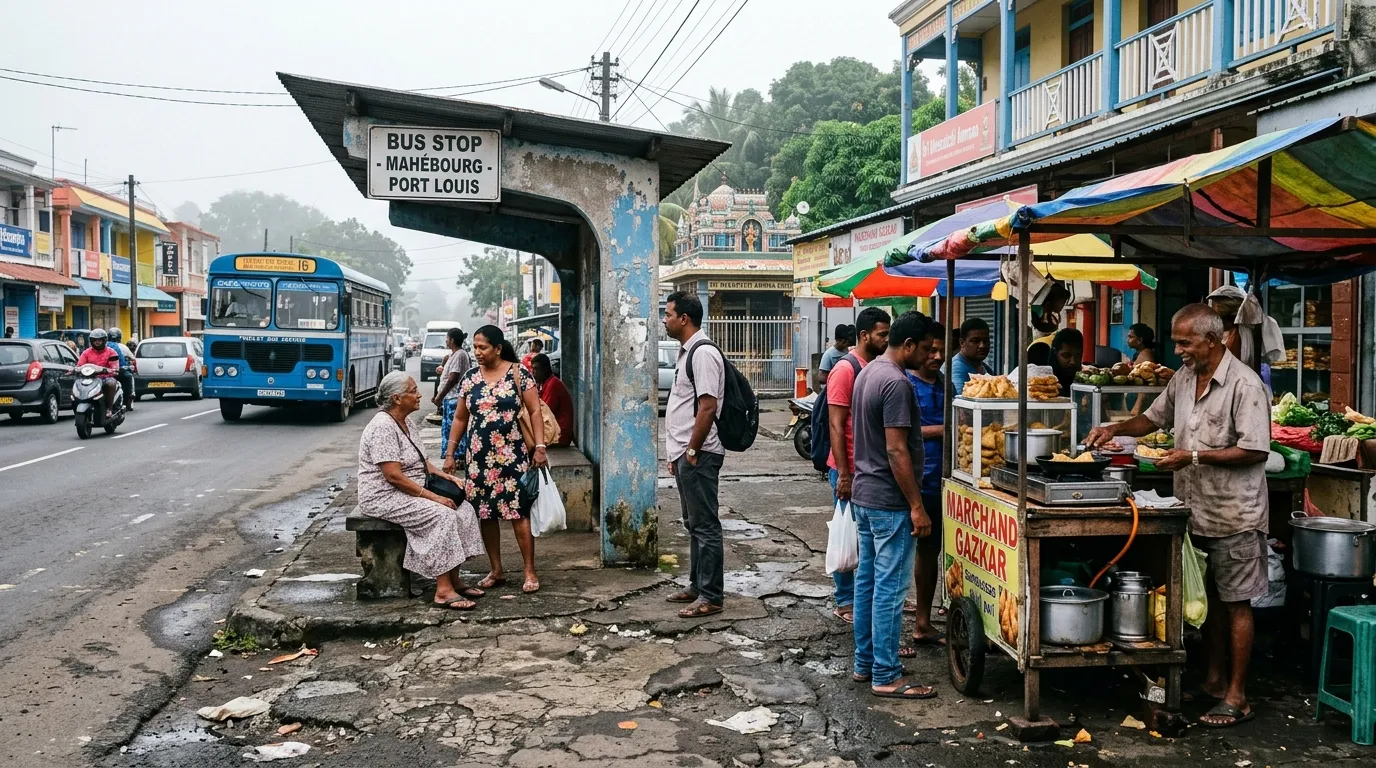
Mauritius is more than just a postcard.
If you are preparing to move abroad (or if you have just arrived), you are probably looking for concrete answers about real life on a daily basis : actual budget, procedures, local pace, health, schools, weather, transport… and above all practical details which is often only discovered after a few weeks on site. This article brings together the most useful points — without dramatizing, but also without idealizing — to help you avoid unpleasant surprises and create a peaceful environment.
To learn more, you can also consult Expat Mauritius' expatriation guides (checklists, procedures, advice by profile).
The “Mauritian rhythm”: what it changes in your daily life
Availability does not always mean speed
In Mauritius, many service providers respond quickly… but execution can take longer than expected. This isn't necessarily a lack of professionalism; it's often a matter of priorities, of dependence on third parties (suppliers, imports, administrations) and of seasonal charge (high season, cyclone periods, school holidays).
- Practical tip: always confirm the deadlines And the “next point of contact” (“when should I follow up with you?”).
- Budget advice: Allow some leeway for temporary solutions (short-term rental, coworking, 4G/5G router, etc.).
The small “invisible standards” (which prevent friction)
You quickly get used to Mauritian friendliness, but some local expectations are surprising:
- Relationships matter Trust is built, sometimes faster by meeting the person than by exchanging 15 emails.
- “Yes” can mean “I see” : feel free to rephrase (“so it’s confirmed for Tuesday at 10am?”).
- Punctuality is more flexible for certain appointments (outside of a highly structured professional context).
On a daily basis, your best ally is not rigidity: it is clarity (and a good margin of maneuver in the planning).
Cost of living: what's really surprising (and why)
Inflation, price fluctuations and the “island effect”
Two realities coexist: on the one hand, some services remain affordable compared to large cities; on the other hand, many products are imported (or depend on imported components), which can increase the bill depending on the exchange rate, freight, and the season. Regarding inflation, Statistics Mauritius indicates a “headline” inflation of 3.6% in 2024 (compared to 7.0% in 2023) and 2.9% over the twelve months ending in June 2025.statsmauritius.govmu.org)
What nobody tells you: It's not just "expensive or cheap", it's irregular. A shopping basket can vary significantly depending on the brand, the area, and the proportion of imported vs. local products (seasonal fruits/vegetables, fish, etc.).
VAT: simple on paper, omnipresent in everyday life
VAT is an important factor in understanding receipts and certain services. The Mauritian Revenue Authority (MRA) reminds us that The VAT rate is 15% on taxable supplies (excluding “zero-rated”).taxclub.mra.mu)
Electricity: air conditioning, water heaters… and the reality of the rates
Many newcomers underestimate the impact of humidity + air conditioning + water heater on the bill. Domestic rates are published by the Central Electricity Board (CEB) and operate in stages.ceb.mu)
Table — Example of tariff brackets (CEB domestic tariffs)
| Monthly tranche | Tariff 110A (Rs / kWh) | Prices 110/120/140 (Rs / kWh) | Key points to remember |
|---|---|---|---|
| Initial 25 kWh | 2.18 | 3.16 | The first tier is the cheapest. |
| Next 25 kWh | 3.04 | 4.38 | The cost adds up quickly if you use air conditioning often. |
| Next 25 kWh | 3.28 | 4.74 | Monitor the peaks (evening + weekend). |
| Next 25 kWh | — | 5.45 | Depending on your connection profile, you will move to this level. |
| Next 100 kWh | — | 6.15 | Typical area of an “active” home (air conditioning + cooking). |
| All additional kWh | — | 8.77 | Beyond that, each kWh has a significant impact on the bill. |
Source: CEB's "Domestic Tariff" page (tariffs and conditions).ceb.mu)
Online shopping and imports: the “double surprise” (taxes + processing fees)
The real everyday trap isn't paying VAT—it's discovering that taxes are calculated on a value that includes the product + transport + insurance (CIF), and that additional non-customs charges billed by the carrier (courier/post). The MRA also explains the "low value" threshold and the logic behind tax calculations.taxclub.mra.mu)
Table — How Customs Classifies Parcels (MRA)
| Category | Value | Treatment | What this changes for you |
|---|---|---|---|
| Cat. 2 | ≤ Rs 1,000 | “Low value non-dutiable” | In principle, not deductible (except for listed exceptions). |
| Cat. 3 | > Rs 1,000 | Durable | VAT and/or duty on the value beyond the allowance; documents (invoice / proof of payment) often requested. |
| Cat. 4 | Commercial / excluding simple cases | “Normal” procedure” | May require a broker and more complex formalities. |
Useful information provided by the MRA: allocation of Rs 1,000, definition of CIF, and reminder that courier/postal fees are not customs duties.taxclub.mra.mu)
Housing: the other side of the story (humidity, maintenance, neighbors)
The weather is experienced inside the house
Comfort in Mauritius isn't just about the sea view: it's about...’aeration, the management of the’humidity, and the fight against the mold (cupboards, bathroom, joints). Depending on the area, sea air and rain can accelerate corrosion and wear.
- Check the condition of the seals, the ventilation, any signs of moisture, and the water pressure.
- Ask who manages the maintenance (owner, building manager, agency) and within what timeframe.
- Prepare: dehumidifier, mosquito repellent, ventilation routine.
“Well-located” does not mean “practical”.”
Two apartments with the same rent can offer a very different daily experience depending on:
- travel times (schools, office, congested roads),
- the proximity of shops and services,
- sensitivity to outages (water/electricity) and the quality of the mobile network.
If you want a structured overview (budget, areas, procedures), the page Living in Mauritius: turnkey expatriation and real estate summarizes the support offered by Expat Mauritius (visas/permits, real estate, relocation and business creation).
Getting around: traffic jams, buses, subway… and driving on the left
Traffic: the hidden variable that causes fatigue
In everyday life, the true “cost” of transportation is often the time. Some roads can become congested during school and office hours. The result: you might live "12 km" from your workplace... and spend much longer there than planned.
Public transport: useful, but not always “European” in its use
The Metro Express is a useful landmark on certain routes. For buses, expect more "local" customs (payment, stops, etc.). The most efficient approach is often to combine : metro + bus + punctual taxi.
Driving and rules: details you need to know
If you drive, take the time to develop the reflexes of left-hand drive, roundabouts, and the management of two-wheeled vehicles. Regarding safety and obligations, the US State Department website notably reminds motorists of material requirements (e.g., warning triangles, accident forms, etc.).travel.state.gov)
Health: public, private, insurance… and “minor risks” too often ignored
The healthcare system: a large network, varying experience
The daily reality: you will have a choice between public and private facilities, with varying levels of comfort and waiting times. The WHO emphasizes the size of the network and the importance of strengthening the primary care approach to address the challenges of quality, accessibility, and equity.afro.who.int)
Health insurance: don't choose it "like you're on vacation"“
The critical point is the clarity of guarantees Hospitalization, evacuation, maternity, dental care, chronic illnesses, and coverage conditions. Many expatriates adjust their coverage after an initial consultation or examination… which is precisely what we want to avoid.
Vaccines and prevention: follow an official source
For travel/installation health, the most reliable source is the recommendations of the CDC (Travelers' Health – Mauritius), particularly regarding routine vaccinations (e.g., measles/MMR) and dietary precautions.wwwnc.cdc.gov)
Visas, permits and work: what “long stay” really means
Premium Visa: useful, but with limitations
The Premium Visa is often seen as “the easy solution” for staying for a year. The MRA points out that it is a visa that allows a non-citizen to stay more than 6 months up to 1 year with renewal option (issuance by the passport officer upon recommendation of the EDB).mra.mu)
What many discover too late: the Premium Visa is not a “classic” local work permit. It is designed for a long stay (tourism, retirement, or remote professional work), with certain conditions (insurance, proof of stay plan, sufficient funds).mra.mu)
Premium Visa taxation: the "remitted" distinction (and its implications)
A very misunderstood point: according to the dedicated MRA FAQ, Premium Visa holders are taxable insofar as money is handed over to Mauritius; Money spent via foreign bank card is not considered to have been remitted, and money deposited into a bank account in Mauritius may become taxable unless properly declared.mra.mu)
Important : These issues can become quite technical (tax residency, tax treaties, nature of income). For any binding decision, have your situation reviewed by a qualified professional and consult the relevant official texts and bodies.
Weather, cyclone season and “days off”: the factor we underestimate
The official cyclone season: key dates to know
People often confuse “it’s hot and humid” with “there’s a risk of a cyclone”. Mauritius Meteorological Services recalls, in its seasonal perspective, that the The official cyclone season in the Republic of Mauritius runs from November 1st to May 15th. (the following year), the period when the risk of formation is highest.metservice.intnet.mu)
- Prepare ahead: lamps, external battery, water, some "easy" food items.
- If you are renting: ask about the building's procedures (shutters, parking, exterior objects).
- If you are working remotely: have a plan B (connection sharing, coworking, generator depending on the situation).
Warnings and instructions: do not follow rumors
During sensitive periods, do not base your decisions on isolated WhatsApp messages. Refer to bulletins and instructions from the authorities (and check the alert levels). For foreigners, it is also useful to read a "field" summary such as the“advisory Travel.State.gov (safety, driving, emergencies). (travel.state.gov)
Integration: languages, social codes, and daily life “outside of expatriates”
Languages: You're managing... but not in the way you imagine.
In everyday life, you will often hear Mauritian Creole, French, and English, depending on the context. For administrative matters and certain contracts, English may be the dominant language, while French and Creole remain very common in daily life. As a result, even if you are a native French speaker, get used to reading some key documents in English and asking for clarification when necessary.
Cultural respect: simple, but important
- Adapt your attire in places of worship and certain more “family-friendly” areas.
- Avoid sensitive topics at the beginning (politics, religion) if you do not fully understand the context.
- Prioritize discretion regarding your income, taxes, and investments.
Checklist: Your first 30 days (realistic version)
- Stable address (even temporary) + written evidence (contract, invoices if possible).
- Buffer budget : accommodation, storage, small equipment purchases, transport, unforeseen expenses.
- Connectivity : immediate mobile solution + fixed internet afterwards (depending on timeframe).
- Health : suitable insurance + identification of a nearby clinic/hospital.
- Transportation : identification of actual journeys during peak hours (full-scale test).
- Import purchases If you need to place an order, anticipate VAT/duty + supporting documents (invoice, proof of payment).taxclub.mra.mu)
- Weather plan If your arrival falls between November and May, prepare a basic cyclone/rain kit.metservice.intnet.mu)
FAQ — Daily life in Mauritius: what nobody tells you
Is daily life in Mauritius really cheaper than in Europe?
It depends more on your lifestyle than the country itself. Services may be competitive, but the "island effect" makes some imported products more expensive and more variable. Electricity, for example, can increase if you use a lot of air conditioning, and online purchases may incur VAT/duty and processing fees. The best approach is to compare prices. your standard basket (housing, school, car, food, leisure) and add a margin for unforeseen expenses for the first 3 months.
What are the most common "minor setbacks" in the first few weeks?
The most common problems are rarely serious, but they are tiring: delays in settling in (internet, minor repairs), overly optimistic housing choices (commute time), managing humidity (mold, maintenance), and surprises regarding imports (documentation required, taxes calculated based on CIF). Many newcomers also underestimate the weather from November to May and lack a contingency plan (batteries, water storage, backup connection) in case of heavy rain or weather alerts.
How to avoid unexpected taxes on parcels and online purchases?
First, always keep the invoice and proof of payment, as they may be requested. Second, remember that the customs value may include transport and insurance (CIF), and that the MRA applies an allowance (e.g., Rs 1,000) before taxation on certain non-commercial shipments, with different processing categories. Finally, be sure to distinguish between different types of shipments. taxes/duties (collected by the authorities) and processing fees (billed by post or courier).taxclub.mra.mu)
Does the Premium Visa allow one to "live in Mauritius for a year" without complications?
It facilitates a long stay, but it is not “without rules”. The MRA describes the Premium Visa as a visa allowing stays of more than 6 months up to 1 year, renewable, and intended in particular for tourists, non-citizen retirees or professionals working remotely. Applicants must be able to provide proof of a stay plan, travel/health insurance and sufficient funds. Regarding taxation, the MRA FAQ highlights the concept of money “remitted” to Mauritius, which is worth reading carefully if you open a local account.mra.mu)
What is the best time to move to Mauritius (weather-wise)?
There is no single answer, but the weather must be factored into your logistical planning. The Mauritius Meteorological Services indicates that the official cyclone season runs from November 1st to May 15th (the following year). If you arrive within this window, it's not necessarily a problem, but be sure to have a basic kit, properly protected accommodation (shutters/locks), and a flexible work schedule in case of alerts. Outside of the season, installation may seem simpler, but prices and availability can also vary depending on the time of year.metservice.intnet.mu)
And now ?
If you want to turn these tips into concrete installation plan (Visa/permit, accommodation, schooling, banking/insurance, or business project), Expat Mauritius can support you with a comprehensive approach and personalized follow-up. You can request a free assessment and contact the team through the channels indicated on the official website of Expat Mauritius.