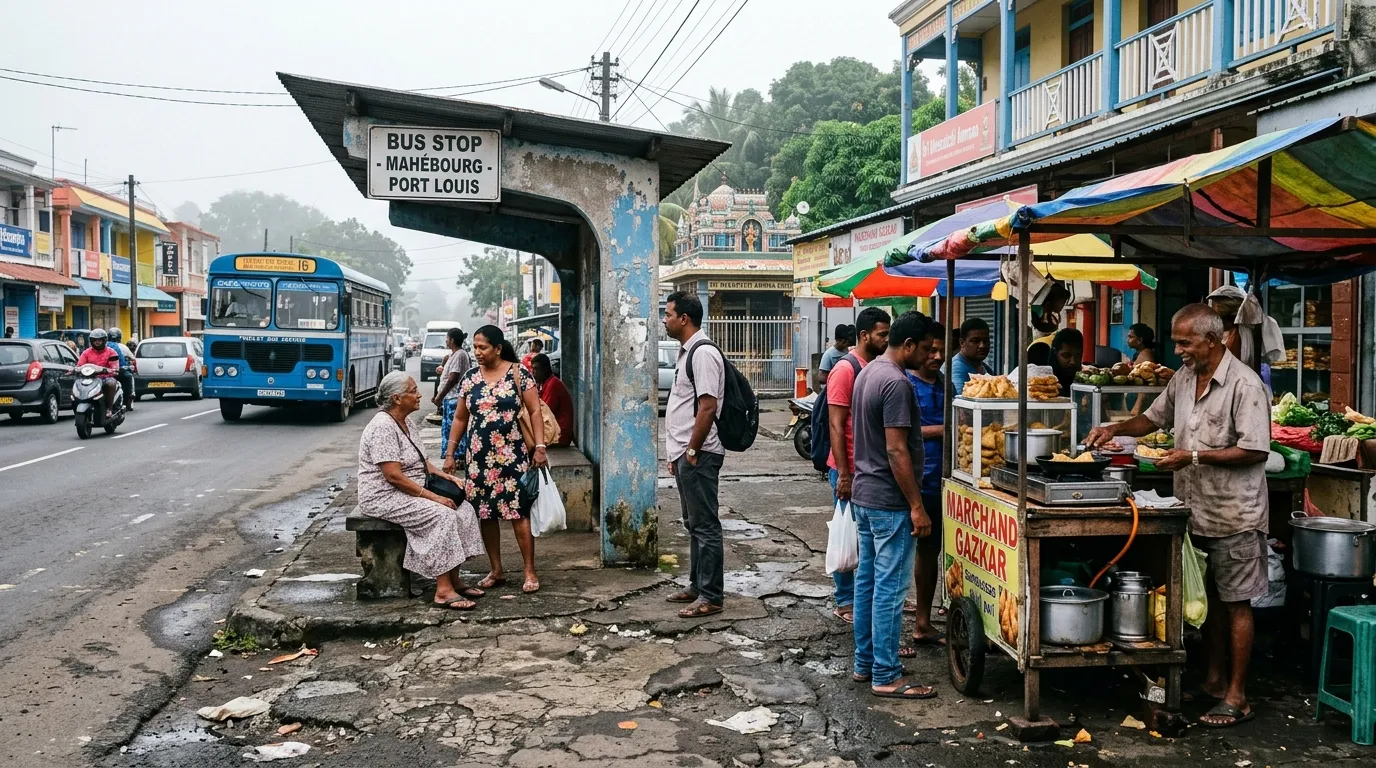
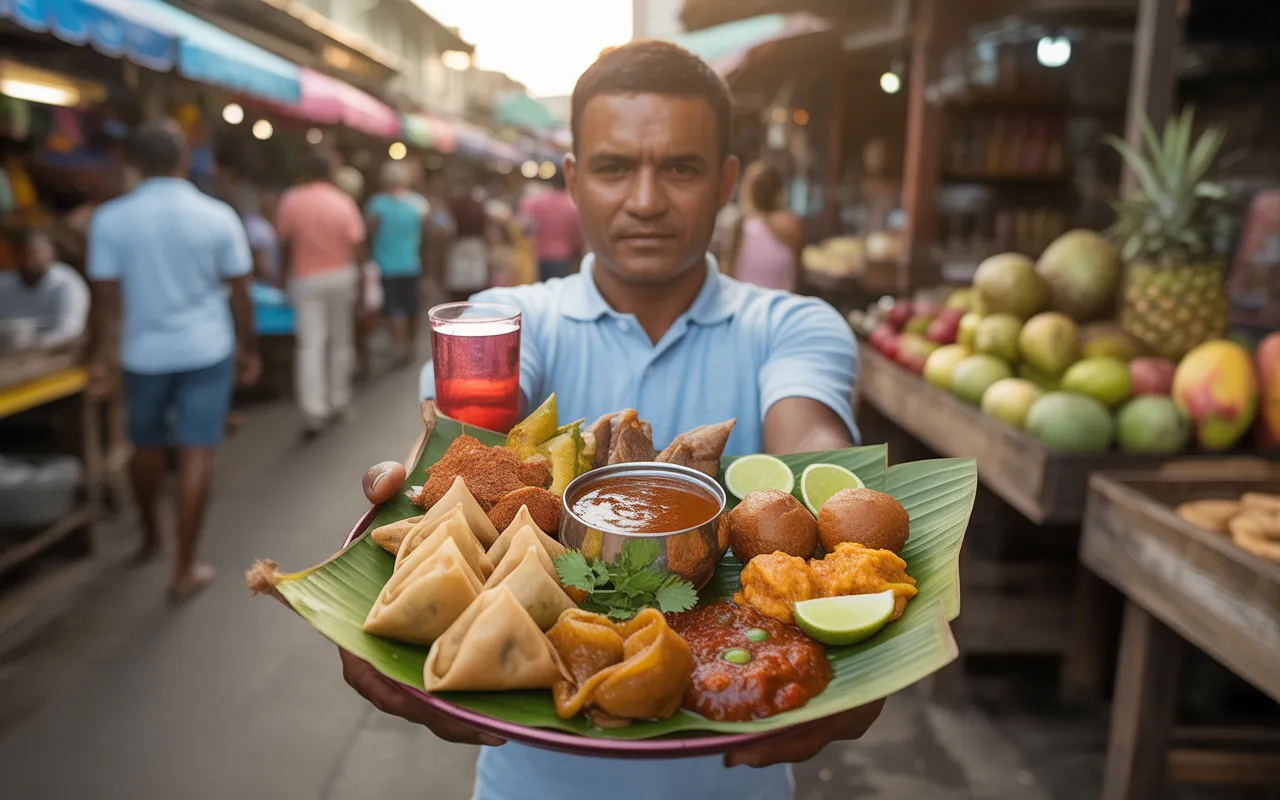
In Mauritius, people primarily eat in the street and at the market.
If you are looking where to eat like a local, bet on the bazaars, the small neighborhood snack bars, Chinatown in Port Louis and family restaurants: that's where the Mauritian gastronomy It is lived on a daily basis, between dholl puri rolled in the minute, steaming dumplings, stir-fried noodles and fragrant rougailles.
In this guide, you will find what to order, where to find it, how to avoid tourist traps and concrete guidelines (budget, spices, hygiene) to enjoy the flavours of the island with complete peace of mind.
Understanding Mauritian gastronomy: a deliberate fusion
A “mix” of influences (Indian, Creole, Chinese, French)
The local cuisine is often described as one of the great Creole cuisines: it blends heritages Indian (curries, breads, pickles), Chinese (stir-fried noodles, ravioli), Afro-Creole (rougaille, brèdes) and French (stews, simmering techniques), all adapted to the products of the Indian Ocean.
Two basics to know: “cari” and “rougaille”
On the island, many dishes revolve around two easily identifiable categories:
- Cari Mauritian curry (meat, fish, octopus, vegetables), often served with rice, grains (lentils/beans) and chutneys.
- Rougaille : tomato sauce with herbs (onion, garlic, ginger, thyme, chili…), used as a base or accompaniment.
The “vindaye”: the acidity that makes all the difference
Another signature: the vindaye (often a fish or octopus), recognizable by its profile mustard + turmeric + vinegar, sometimes consumed lukewarm… or even cold, like a dish that “holds up” well in the Mauritian climate.
Where to eat like a local in Mauritius
1) Markets (“bazaars”): the best entry point
For immediate immersion, start with the large markets: you'll see street food being prepared right in front of you, and you can sample several specialties at low prices. The most well-known (and easiest to include in an itinerary) are:
- Port Louis Central Market (essential for dholl puri, chili cakes, juice, spices).
- Four Milestones (very lively weekend, “shopping + snacking” atmosphere).
- Flacq (East), Mahébourg (Southeast), Rose Belle (South): perfect for tasting outside of very touristy areas.
Local tip: arrive early—the best batches often go before noon, especially for breads and flatbreads.
2) Neighborhood snacks: simple, quick, delicious
In Mauritius, a snack It's not "fast food" in the international sense: it's often a small, unpretentious place with a counter, a few tables, and dishes that come out quickly (fried noodles, fried rice, dumplings, farata/roti, biryani depending on the day). The advantage: high rotation, regular portions, and a local clientele that serves as a barometer.
3) Port Louis Chinatown: the land of meatballs
Looking for an urban 100% experience? Head to Chinatown in Port Louis: you can easily find meatballs (Mauritian-style ravioli/dim sum) served in broth, with chili, soy sauce, vinegar… and a very local lunchtime atmosphere.
4) Food courts and covered markets: practical when setting up shop
When you move (or work remotely), the “food” areas” In some shopping centers, it can be a simple option: long opening hours, several kitchens in the same place, and a good compromise for trying without too much searching.
Note: travel media outlets cite, for example 42 Market Street (Bagatelle) as a recent and popular spot for street food under one roof.
5) Bed and breakfasts and small family-run restaurants: for “homemade” dishes”
To try more "family-friendly" recipes (sausage rougaille, curry, greens, vindaye…), look for the formats table d'hôtes, small village restaurants and daily menus. The cuisine there is often closer to what you eat at home, with simmered dishes and complete side dishes (rice + grains + salad + condiments).
What to order: the must-haves of Mauritian cuisine
The best strategy: taste in small portions, compare several stands, and accept that recipes change from one neighborhood to another.
Practical guide: specialties, where to find them and how to request them
| Speciality | What to expect | Where to find it easily | How to order it (useful phrase) | Price reference (when available) |
|---|---|---|---|---|
| Dholl puri | Thin galette stuffed with split peas, served rolled with large peas, rougaille, achards, chili pepper | Markets, street stalls, snacks | “Enn dholl puri (de) / san pima”(with/without chili pepper) | Travel guides: starting from approximately Rs 20 (varies depending on location/year) |
| Farata / roti | Bread/flatbread (often more flaky for farata), filled with curry and condiments | Snack bars, stands near bus stations, markets | “Enn farata legim / poule” | Travel guides: ~ Rs 20–60 depending on the filling |
| Chili pepper cakes | Spicy split pea fritters (often eaten on their own or “in bread and butter”) | Markets, stalls near schools/bus stops | “De gato pima, silvouplé” | Variable |
| Meatballs | Ravioli/dim sum (beef, chicken, fish, vegetables), in broth or plain | Chinatown (Port Louis), snack | “Enn bol boulette (bouillon)” | Travel guides: ~ Rs 15–25 (variable) |
| Fried noodles | Mauritian-style stir-fried noodles (Chinese influence), with vegetables, egg, and chicken/prawns of your choice | Snacks, Chinatown, markets | “Fried noodles with egg” | Variable |
| Mauritian Briyani | Spicy rice (often with potatoes), chicken/beef/fish or vegetarian, caramelized onions | Snacks, weekend sales, caterers | “Enn biryani chicken” | Variable |
Condiments that change everything (and how to deal with chili peppers)
On a Mauritian counter, you will almost always see “extras”:
- Achards / atchar : pickled vegetables (tangy, crunchy).
- Satini : chutney (tomato, coconut, coriander, etc.).
- Crushed chili pepper : very strong, must be dosed with millimeter precision.
- Rougaille : sometimes served by the spoonful as a gourmet “binding” ingredient.
Simple advice: ask “without chili” (Or "“San Pima”) and add a tip yourself if needed. Many sellers adapt without any problem.
Drinks and sweets: what to have with a Mauritian meal
Local drinks to try
- Alouda : sweetened milk drink (vanilla, basil seeds, jelly), very popular at the market.
- Cane juice (depending on the stalls): perfect with savory snacks.
- Tamarind juice, ginger-lemon juice : to balance the fat and the chili.
A word about Mauritian rum (statistical data)
Mauritius also produces rum (and “tafia”): according to 2024 data compiled via the WITS platform (World Bank), the exports of “rum and tafia” from Mauritius reach 10,353,800 liters (value : 9,542.23 K$).
Budget, hygiene, tips: eating local without unpleasant surprises
Budget: Why prices vary (and how to keep track of them)
Prices vary depending on the area, the season, inflation, and even the time of day. For example, street food guides cite a pair of Dholl Puri “from approximately Rs 20”" and meatballs around Rs 15–25 (indicative, unofficial benchmarks).
For a more “macro” signal, Statistics Mauritius indicates that the Consumer Price Index (CPI) has evolved over the 1st quarter 2025, including a contribution from increases in the “prepared meals in snacks” (as well as on certain products like vegetables). In other words: Snacks are not static., So keep a little margin in your budget.
Hygiene & water: simple rules to follow
If you're new to street food in Mauritius, adopt some basic habits (valid everywhere):
- Prioritize the cooked very hot and the high turnover (line of locals = good sign).
- Avoid raw vegetables if you are unsure about rinsing them.
- Beware of the’water and to ice Travel health recommendations advise being vigilant about tap water and potentially contaminated food/water.
Local label: what “really” makes the difference
- We often eat with hands (dholl puri, farata): ask for a towel if needed, it's normal.
- Chili peppers are sometimes served separately: taste before adding.
- Think “simple”: a “hello”, “thank you”, “please” opens all doors.
3 mini gourmet itineraries (easy to fit into a day)
Port-Louis (morning + noon): market, dholl puri, Chinatown
- Breakfast at Central Market : dholl puri + alouda (or juice).
- A stroll through the city centre, then a break for "fried noodles" or "fried rice".
- Finish at Chinatown : meatballs in broth.
South/Southeast: more of a “village” atmosphere”
- Local market (Mahébourg, Rose Belle depending on your route): chili cakes + farata.
- Lunch: biryani or curry of the day at a snack bar.
- Snack: sweets (potato cakes, Neapolitan cakes depending on the stalls) and tea.
Central plateau (Curepipe / Quatre Bornes): the weekend “like the Mauritians”
- Morning: market/bazaar, fruits, spices, street food.
- Lunch: compare 2 different snacks (fried noodles vs farata).
- Bring back some condiments (pickles, chutneys) to recreate the “local taste” at home.
FAQ – Enjoying Mauritian cuisine
What is the “national” dish of Mauritian cuisine?
There isn't always a single official dish, but in practice, many Mauritians cite the dholl puri Like the unmissable number one: a thin flatbread stuffed with split peas, served rolled up with pea curry, rougaille, pickles, and chili. It's the snack you find everywhere (markets, street corners, lunch breaks), and the one that appears most often in street food guides dedicated to the island.
Where can I eat a good dholl puri in Port Louis like a local?
The simplest reflex is to go to Port Louis Central Market (and its surroundings): the selection is dense, the turnover is rapid, and you can compare several stalls. Look for a stack of continuously prepared pancakes, a still-warm sauce, and a line of customers. Go early: some vendors sell their best before noon. And if you're worried about chili, ask for“San Pima”and then add according to your tolerance.
Can you eat Mauritian food without spices (or without chili peppers)?
Yes, and it's easier than you think. Chili peppers are often offered as a condiment (crushed chili, sauce) rather than being "imposed" in the dish. In a snack bar, you can ask for a version without chili Keep the condiments separate. Also, opt for naturally milder dishes: dumplings in broth, simple fried noodles, and certain types of fried rice. Finally, a drink like alouda can help soothe the burning sensation if you've overindulged.
Street food in Mauritius: what hygiene precautions should be followed?
Choose stalls that are very busy (high turnover = freshness), eat cooked and piping hot, Avoid food that has been left lukewarm for too long. As for drinks, be careful with water and ice cubes if you don't know the source: travel health recommendations emphasize vigilance regarding tap water and potentially contaminated food, especially for travelers. In practice: use sealed bottles, avoid "questionable" ice cubes, and peel your own fruit.
How much does a local meal cost in Mauritius?
A local meal can range from a very inexpensive snack to a more "restaurant-style" meal. For reference, some street food guides mention dholl puri "starting from around Rs 20”"and meatballs around" Rs 15–25 (depending on location/year, so take as an order of magnitude). Nationwide, Statistics Mauritius shows that prices can change (e.g., movements in “prepared meals in snacks” in the CPI 2025), so keep a margin and compare two places before adopting your favorite “canteen”.
And now ?
Discover the Mauritian gastronomy, It's also about learning the rhythm of the neighborhoods, markets, and local customs—a real advantage when preparing to settle in. To delve deeper into your life project in Mauritius, you can consult the page Live in Mauritius with Expat Mauritius and browse the expatriation guides. Expat Mauritius offers comprehensive support (visas/permits, real estate, relocation, business creation) with a free evaluation and possible contact via telephone, WhatsApp, email or online form.