
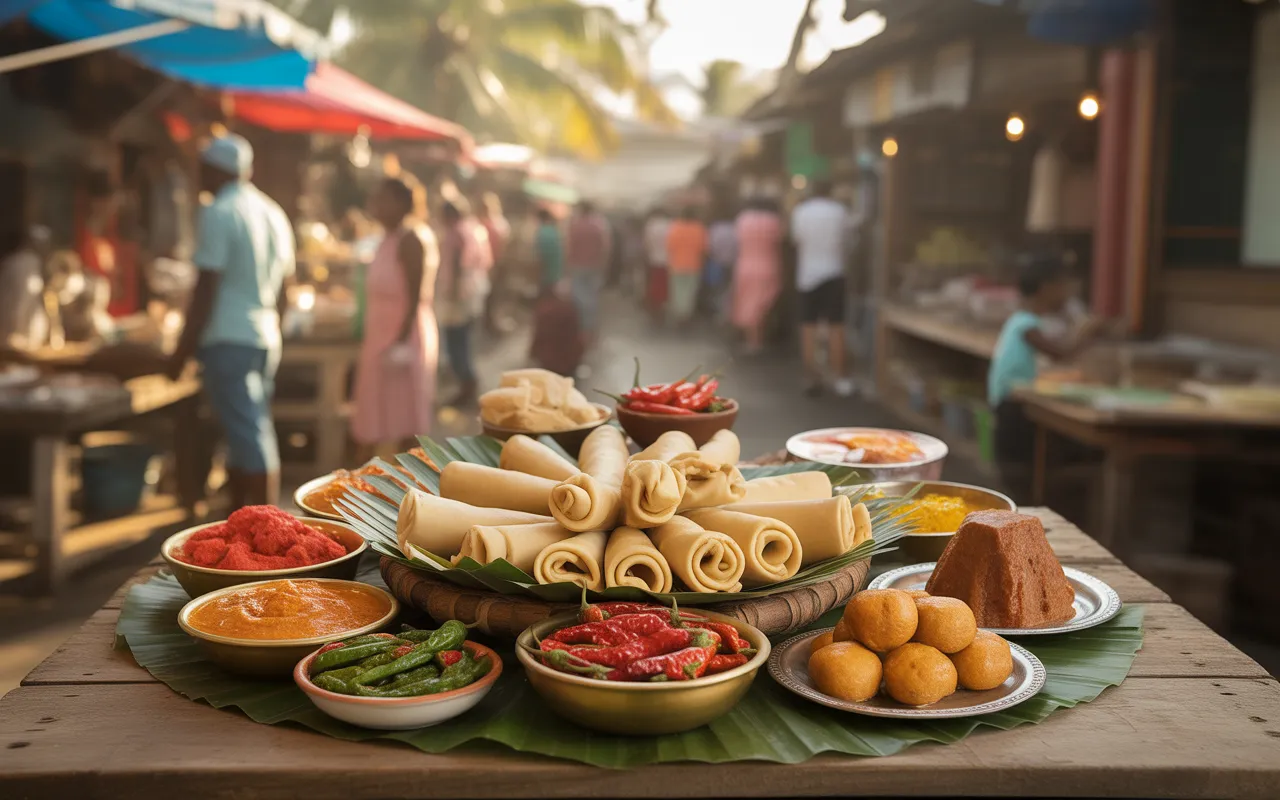
Mauritian cuisine is first discovered in the street.
If you are looking where to eat typical Mauritian dishes, The answer is simple: start with the markets, continue with the “neighborhood snacks, then explore the food courts and some Creole tables for slow-cooked dishes. In this guide, you will find the must-try dishes, the best places to find them (without getting lost), and practical tips for eating local, even if you have just arrived in Mauritius.
What makes Mauritian cuisine unique
Mauritian gastronomy is a living mixture influences Indian women (curries, farata, dholl puri), Sino-Mauritian (mines, pellets), Creoles (rougaille, dishes in sauce), and European (pastries, bread, certain techniques). This diversity is often highlighted by the official destination website Mauritius Now (MTPA), which reminds us how much street food is part of everyday life.
Arrival advice: To understand the island, observe what Mauritians eat "on the go" during their lunch break. That's often where you'll find the best surprises... and the best value for money.
Where to eat like a local in Mauritius
1) Markets: the easiest option to sample many specialties
The markets concentrate several stands all in the same place: perfect for trying several snacks in one morning.
- Port Louis Market (Central Market) A classic spot for experiencing local life, buying spices and fruit, and eating on the spot (dholl puri, samosas, alouda, etc.). The official guide describes it as a true shopping and street food hub. Port Louis Market – Mauritius Now.
- Flacq Market (Centre) : renowned for its atmosphere and street food, with recommended days (Wednesday and Sunday) on the official website: Flacq Market – Mauritius Now.
- Mahébourg (Monday Market) : appreciated for its stalls and local snacks (chili cakes, dhal/dholl puri, samosas). Lonely Planet highlights that the market double size on Monday : Monday Market – Lonely Planet.
2) Neighborhood “snacks” and street vendors: the DNA of Mauritian street food
In Mauritius, people often talk about “snacks” (small, simple addresses) and mobile vendors: you can stumble upon an excellent dholl puri on a street corner, near a bus station, or close to schools at dismissal time. The dholl puri is frequently described as a national staple, introduced by indentured laborers of Indian origin; a well-documented account (with sample prices from that era) can be found in the travel press: The Guardian – Dholl puri in Mauritius.
3) Chinatown (Port Louis): mines, dumplings and Sino-Mauritian cuisine
For the meatballs (ravioli/dumplings) and the mines (Noodles), Chinatown and its surroundings are a safe bet. The official Mauritius Now website explicitly highlights meatballs And dholl puri among the dishes to try, and highlights the importance of the street food scene: Mauritian food – Mauritius Now.
4) Public beaches and food trucks: simple, friendly, very Mauritian
On weekends, public beaches become real hubs of activity: fruits with chili/salt, gajaks (fried foods), cold drinks… Mauritius Now illustrates this culture well, particularly with the custom of eating fruits (like pineapple) with salt, chili and tamarind sauce: Street food & fruit on the beach – Mauritius Now.
5) Food courts and pedestrian zones: convenient when you're setting up shop
When you arrive in Mauritius (and haven't yet found your bearings), food courts are convenient: you can eat quickly, compare dishes, and easily return. In Port Louis, The Caudan Waterfront is presented as a shopping + restaurant + food court area: Le Caudan Waterfront – Mauritius Now. It's also an easy option if you want to combine sightseeing and a lunch break.
Typical Mauritian dishes to try (and where to find them easily)
Savory street food: the must-try items
- Dholl puri A thin pancake filled with yellow split peas, served with curry (large peas), rougaille, and achards. Look for it primarily in the markets (Port Louis, Flacq) and from local vendors. See also the official description: Mauritius Now – Dholl puri.
- Chili pepper cakes Small, spicy fried balls (split peas), often eaten on their own or in a baguette. Very common in markets and near snack bars. Also featured by Mauritius Now: Mauritius Now – Chili Cakes.
- Meatballs Steamed dumplings served in broth (sometimes with noodles). Try them in Port Louis and areas with Sino-Mauritian influence; Mauritius Now lists them among the signature dishes. Mauritius Now – Dumplings.
- Mines (boiled / fried) Boiled or stir-fried noodles, a marker of Chinese influence. Ideal for a quick lunch.
- Samosas, bajias, “gajaks” Fried foods and snacks are readily available in the markets (Port Louis is a good base). The Port Louis market is specifically recommended for these snacks. Port Louis Market – Mauritius Now.
Plated dishes: to discover slow-cooked cuisine
- Mauritian Briyani Fragrant rice (often with potatoes), available with chicken/beef/fish or vegetarian. Mauritius Now cites the spicy biryanis Among the flavors to explore: Mauritius Now – Mauritian food.
- Rougaille : tomato-onion-garlic-spice base, served with meat/fish or as a side dish (very common with dholl puri).
- Vindaye fish A flavorful preparation (mustard, turmeric, garlic, vinegar), often enjoyed cold or at room temperature, typical of the "pickle" flavors of the Indian Ocean. For a clear description of the ingredients and the spirit of the dish: Fish Vindaye – Restaurants.mu.
Sweets and drinks: the finishing touch
- Alouda : a sweet milk drink, often served chilled (perfect after a spicy snack). It is mentioned as a typical drink in Port Louis and in the markets: Port Louis Market – Mauritius Now.
- Local pastries and cakes : to be tested in bakeries and markets (depending on availability).
Practical tips for eating well (without unpleasant surprises)
- Aim for rotation times : in the morning and at lunchtime, the stalls turn over quickly (often fresher).
- Beware of chili peppers ask “no chili pepper” / “San Pima”"If you are sensitive. The sauces can be very spicy.".
- Bring cash : in markets and small snack bars, cash payment is often simpler.
- Budget (order of magnitude) Street food is known for being affordable. A documented example: in 2018, The Guardian mentioned a dholl puri sold in pairs at 14 rupees in a specific context (and on a specific date), but prices vary depending on the area and inflation; keep in mind that it's generally one of the most economical meals to try upon arrival. Source: The Guardian – Dholl puri (2018).
- Choose “simple and crowded” : In Mauritius, a small stall with a queue… is often a very good sign.
Quick guide: what to eat and where to find it
Table of typical Mauritian dishes and the best places to try them
| Speciality | Where to look for it first | Perfect moment | “Local” tip” |
|---|---|---|---|
| Dholl puri | Markets (Port Louis, Flacq), local vendors | Morning / midday | Try it with pickles and chutney, and adjust the chili pepper to taste. |
| Chili pepper cakes | Markets, snack bars, bus station areas | Breakfast / afternoon snack | Very good in a baguette with a little butter |
| Meatballs | Port Louis (Chinatown), specialist stalls | Late afternoon / evening | Ask for the broth version if you prefer a lighter option. |
| Mines (fries/porridge) | Port Louis and urban areas | Noon | Add an egg if offered (classic) |
| Samosas / gajaks | Port Louis Market, Village Markets | Snack | Perfect for sharing to test several things |
| Mauritian Briyani | Food courts, local restaurants, some market stalls | Noon | Try a portion before "upsize": it's often quite filling. |
| Vindaye fish | Local restaurants, caterers, home cooking | Noon | Delicious with bread or rice (and often even better the next day) |
| Alouda | Markets (Port Louis in particular) | After a spicy snack | Ideal for "turning off" the chili pepper |
| Chili/salt fruits | Public beaches, roadside stands | Weekend | Taste the pineapple with salt + chili + tamarind |
| Pickles & chutneys | Everywhere (with dholl puri/roti) | At each meal | Ask separately if you are sensitive to vinegar/chili |
Two easy mini “gourmet” trails
Route 1: Port Louis in 3 hours (market + local specialties)
- Start with the Port Louis market for a Dholl Puri + Gajaks: Official information (Mauritius Now).
- Continue to Chinatown for a dumpling soup or noodles.
- Finish at Caudan Waterfront If you want a more "comfortable" break (food court, cafes): Le Caudan Waterfront (Mauritius Now).
Route 2: East of the island (Flacq) for the “large market” atmosphere”
- Aim Wednesday or Sunday, Recommended days to make the most of the stalls: Flacq Market – Recommended Days.
- Try 2–3 snacks (dholl puri, chili cakes, samosas) rather than one large meal.
- Bring back spices, herbs and fruit: it's often the best place to understand "homemade" cooking.
Local cuisine is an excellent starting point when settling in.
When you arrive in Mauritius, eating local food also helps to getting one's bearings Identify the neighborhoods, understand local customs (market days, schedules), and establish routines. And this isn't just a coincidence: the country welcomes a large number of visitors each year (which supports a very diverse range of restaurants). For example, Statistics Mauritius noted 1 382 177 tourist arrivals in 2024 (against 1 295 410 in 2023) : International Travel and Tourism – Year 2024.
For a “macro” view (useful if you are considering a life or investment project), EDB Mauritius also shares recent indicators on the sector's dynamics, such as the average length of stay (ex. 11.6 nights over a period of 2024 cited in their newsletter): EDB Mauritius – Newsletter October 2024 (Tourism).
To learn more about daily life and practical tips, you can also consult the resources of’Expat Mauritius and browse the expatriation guides (accommodation, installation, procedures), in order to structure your arrival and your installation.
FAQ – Typical Mauritian dishes: frequently asked questions
What are the typical Mauritian dishes that should absolutely be tried during the first week?
For an “effective” first week, opt for a mix of street food and a plated meal: dholl puri (the most iconic), chili cakes (very common spicy snack), meatballs (Sino-Mauritian influence), and a more complete dish like a Mauritian Briyani. Add a alouda If you like sweet and refreshing drinks, the easiest place to start is in a large market (Port Louis or Flacq), where you can try several things without having to move around.
Where can I find dholl puri that are truly "like in Mauritius"?
The dholl puri is available everywhere, but for a truly authentic experience, look for it in the... markets (Port Louis Central Market is a reliable option) or from local vendors during peak hours (morning and midday). The official destination website clearly mentions the Port Louis market as a place to try dholl puri and other snacks. And if you enjoy learning about the history of food, the travel press has documented the origin and culture of dholl puri in Mauritius, which is helpful in understanding why this dish is so central.
Is Mauritian street food mostly vegetarian?
Very often, yes. Many popular snacks (dholl puri, chili cakes, some samosas, pickles) are naturally meat-free. That said, there are also many options with chicken, fish, or beef (biryani, noodles with meat, dumplings depending on the filling). The most important thing is to simply ask:“veg ?”, “meat-free ?" Or "”fish ". In markets, vendors are used to this and can easily direct you to the correct version.
How can you eat Mauritian food if you can't tolerate chili peppers?
In Mauritius, chili peppers are often served in sauces or as a side dish, which gives you some flexibility. Ask for“without chili”" (Or "“San Pima”) and avoid adding hot/red sauces without tasting first. Opt for dishes where the seasoning is adjustable: dholl puri (chili served separately), dumplings in broth, noodles, or biryani, which is generally mild depending on the restaurant. And keep a "heat-relieving" option on hand: a sweet/cool drink (alouda) or bread often helps to soothe the burning sensation.
And now ?
Want to fully enjoy Mauritius, beyond just a holiday, and quickly feel "at home" (neighborhood, accommodation, schools, administrative procedures)? Discover the support offered by“Expat Mauritius and explore their practical guides to structure your installation. You can also contact them directly for a free assessment and personalized support.
To get back to the topic of indulgence: keep this simple habit — a market + a snack bar + a specialty — and, in just a few days, you will already have a very good overview of typical Mauritian dishes.