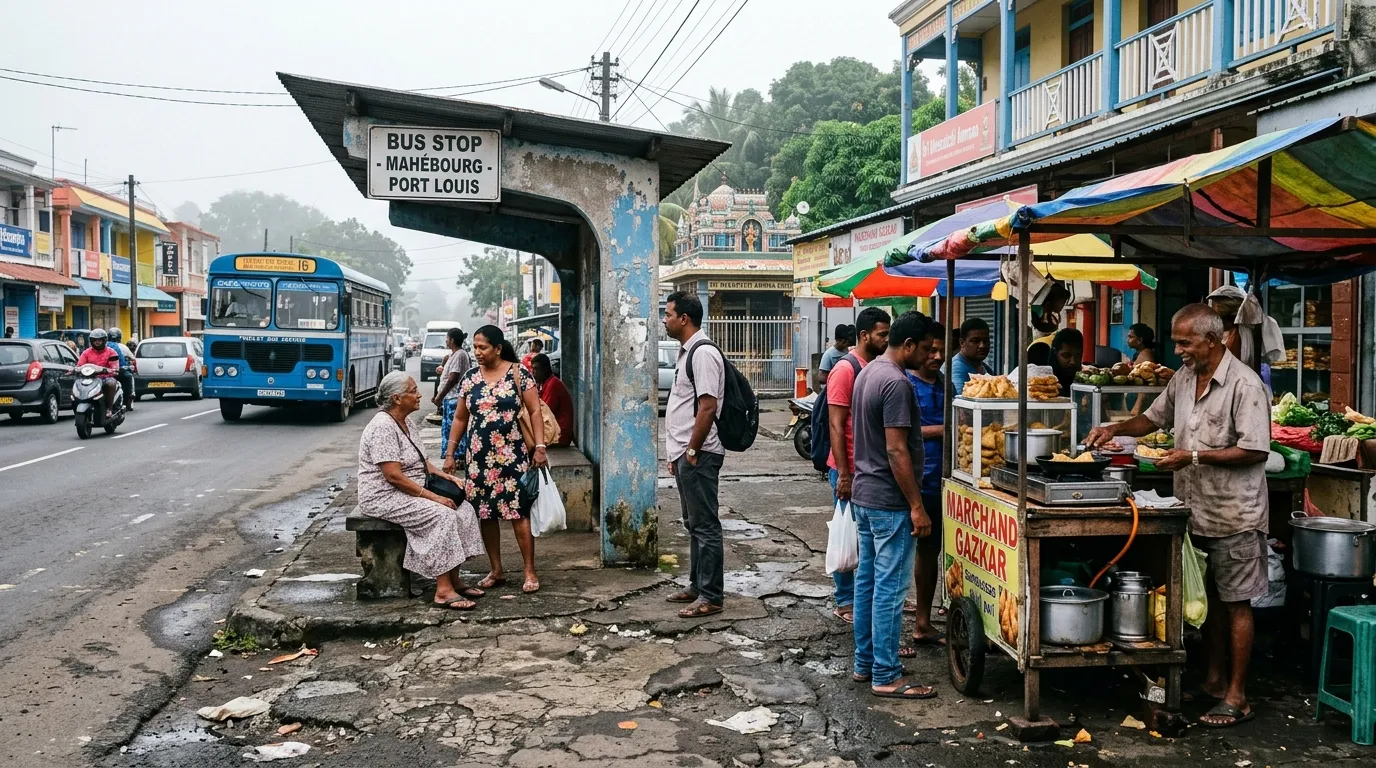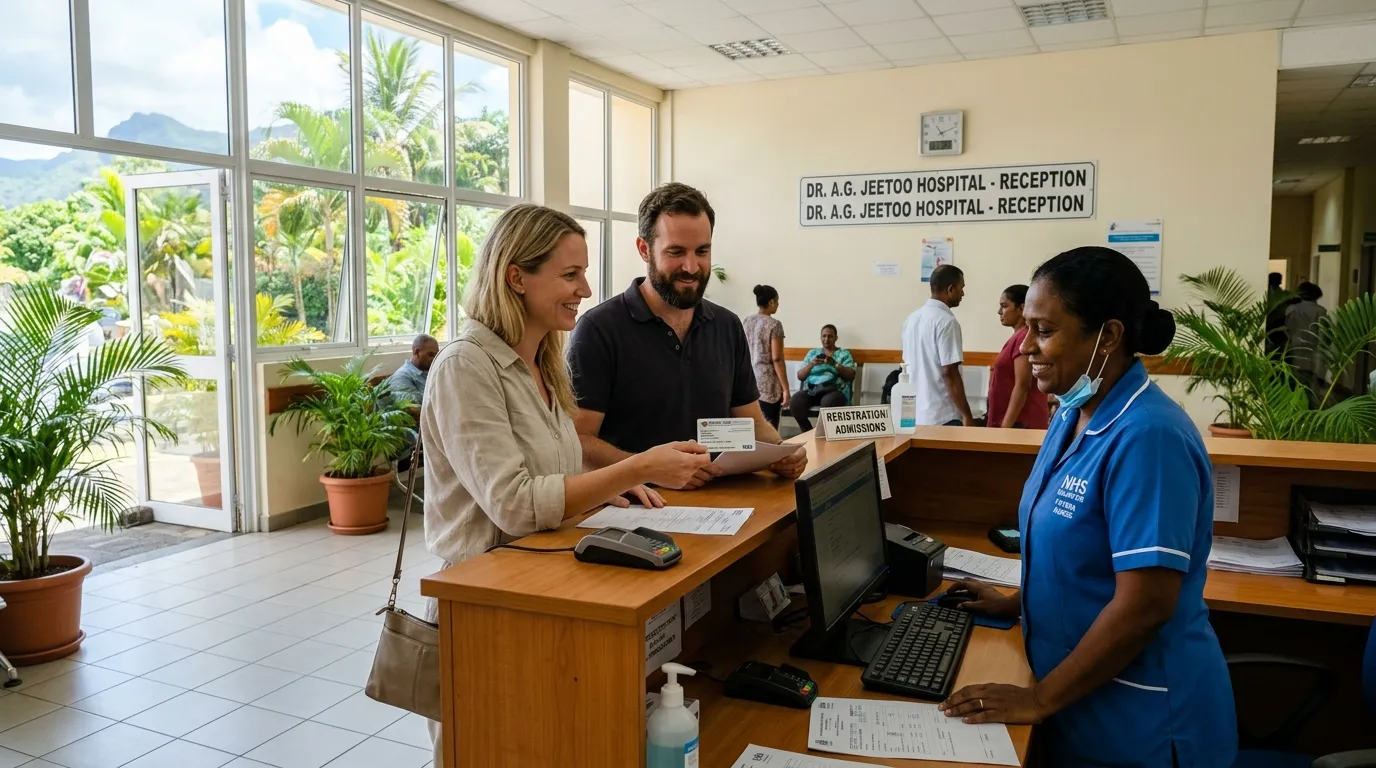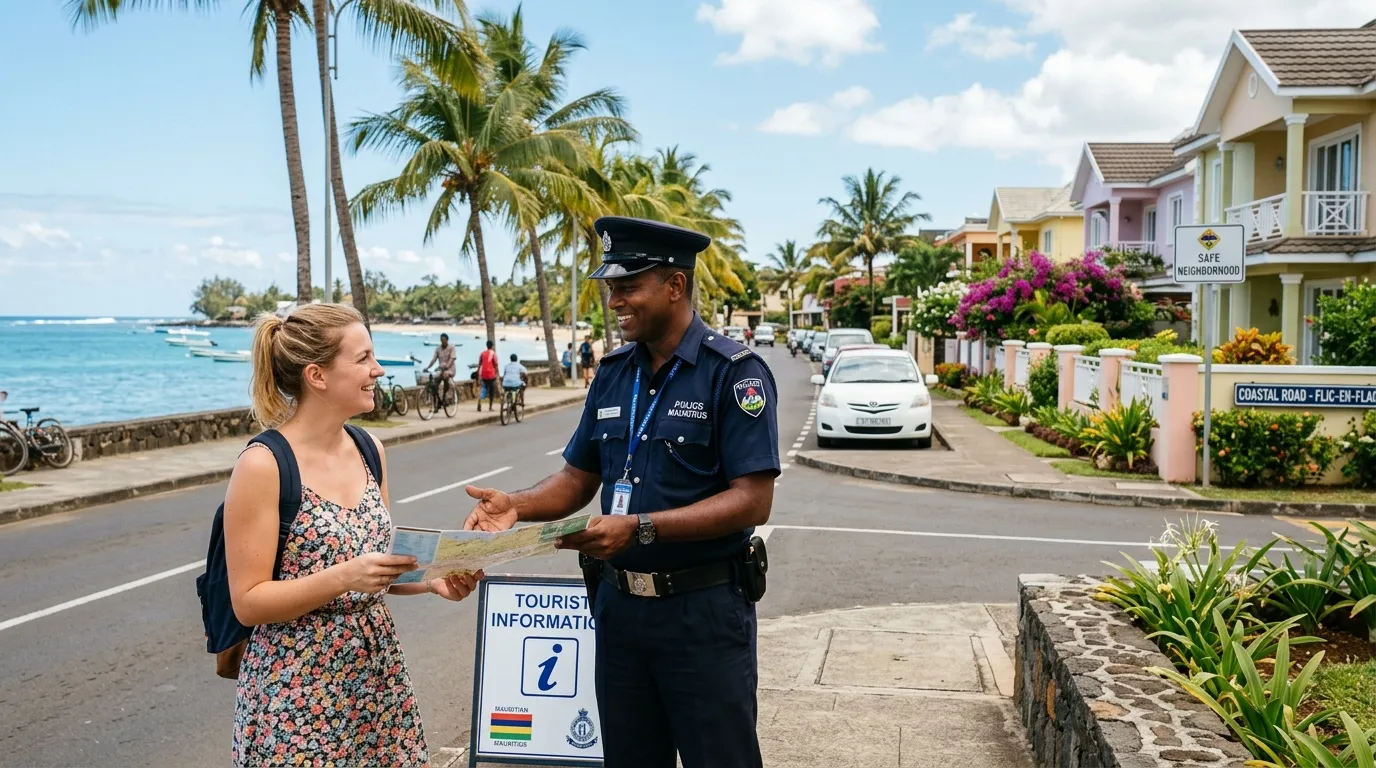
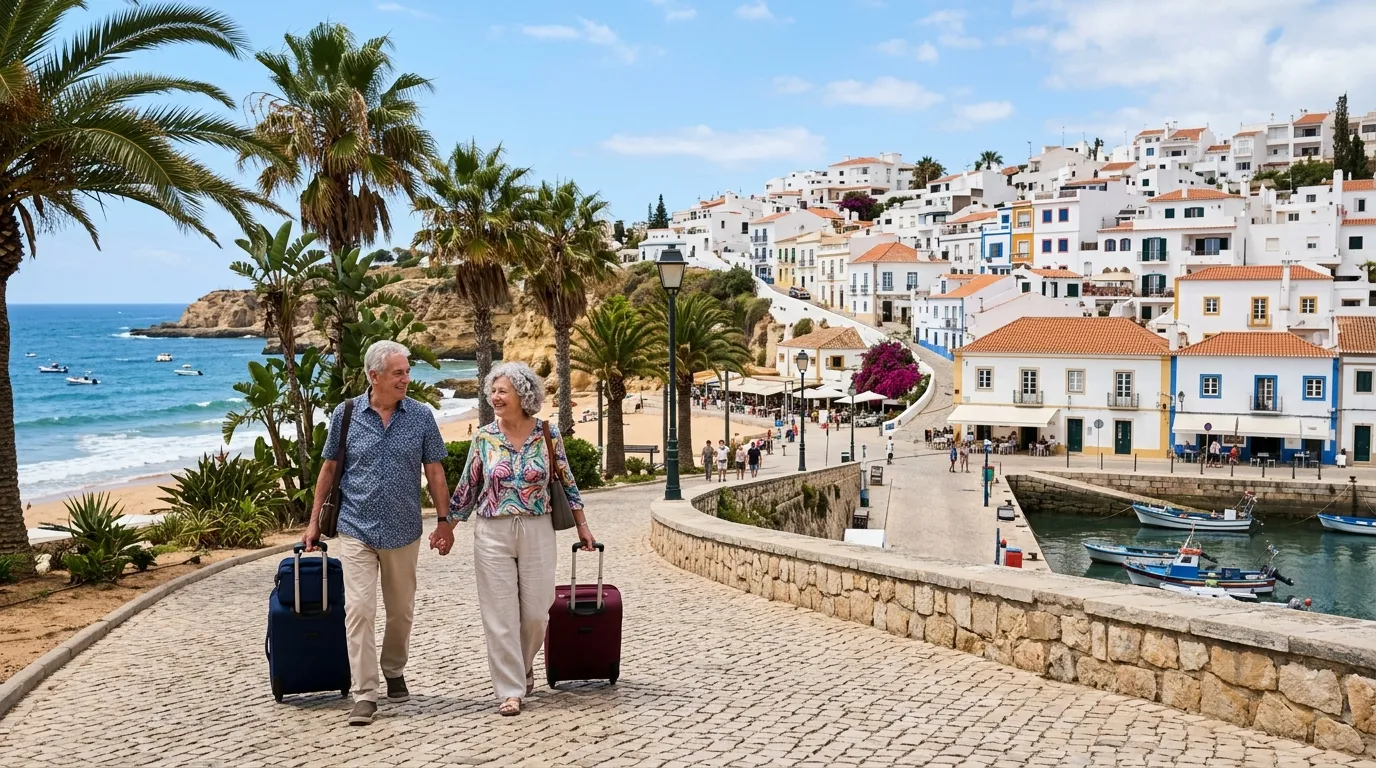
Two destinations, two styles of retirement.
Between Mauritius and Portugal, the “best” choice depends primarily on your number one priority: Tax optimization and tropical setting (Mauritius) or Access to Europe + services from an EU country (Portugal). This guide provides a concrete comparison of visas, taxation, health, budget, real estate and quality of life, with numerical benchmarks and official sources.
To learn more about settling in Mauritius (visas, real estate, relocation), you can also consult the website EXPAT MAURITIUS.
Quick summary: Mauritius or Portugal for retirement?
- Choose Mauritius instead If you're looking for a year-round tropical climate, an island lifestyle, a more transparent tax system, and a setting popular with French speakers (French and English are widely spoken), then this is the place for you. The Retired Non-Citizen permit is based on regular bank transfers (not on mandatory property purchase). (residency.mu)
- Choose Portugal instead If you're looking for: a European foothold (Schengen), EU infrastructure, a public (SNS) + private healthcare network, and a wide variety of regions. Note: the former NHR tax regime is no longer the universally appealing factor it once was for newcomers. (info.portaldasfinancas.gov.pt)
Useful shortcut: If your retirement is primarily funded by a comfortable pension and you want to experience Europe on a daily basis, Portugal remains very attractive. If you prioritize sun, ocean, and a "residency by transfer" approach (with investment opportunities), Mauritius is often a more suitable option.
The criteria that really matter in retirement (and that are often forgotten)
- Residence status : duration, renewal, conditions (income/transfers, presence, insurance, etc.).
- actual taxation Income tax, pension processing, financial income, capital gains, inheritances, tax treaties.
- Health : public access, cost/quality of private services, insurance, availability of specialists.
- Real estate : possibility of buying as a non-resident, acquisition/holding taxes, market liquidity.
- Cost of living : housing, energy, car, insurance, leisure, food.
- Quality of life : climate, safety, activities, community, language, travel (to family/care).
Visas & retirement residency: conditions (Mauritius vs Portugal)
Mauritius: Residence Permit “Retired Non-Citizen” (50+)
The “Retired Non-Citizen” permit in Mauritius is aimed at people who 50 years and older. The key requirements (a version largely adopted in the EDB guidelines) include:
- Initial transfer : at least USD 2,000 to a Mauritian bank within 60 days following the issuance of the permit. (residency.mu)
- Afterwards : transfer of USD 24,000/year Or USD 2,000/month. (residency.mu)
- Duration indicated as potentially going up to 10 years (renewable according to criteria). (residency.mu)
- Right to work : the holder must not exercise any’paid employment via this permit; investment is possible under certain conditions (not being employed in the activity, not receiving salary/benefits). (residency.mu)
- Costs : the guidelines document mentions USD 1,000 of “permit fee” and USD 50 of “application fee” (non-refundable). (residency.mu)
Important point: the "budget/appendices" documents have mentioned possible changes (e.g., minimum annual attendance). Depending on the version and implementation schedule, these elements may change: it is therefore essential to confirm the current rules at the time of submission. (pwc.com)
For an overview of “installation + real estate” in Mauritius, you can read: Living in Mauritius: turnkey expatriation and real estate.
Portugal: residence visa for “retirees / people living off their income” (often called D7)
Portugal is offering a residence visa for people who wish to settle down and who live on their own income (category often associated with “D7”). The documents requested include, in particular: criminal record, insurance, accommodation, and proof of means of subsistence. (gov.pt)
The official portal (gov.pt) details the approach “reformados, religiosos e pessoas que vivem de rendimentos próprios”. (gov.pt)
The crux of the matter: the means of subsistence. AIMA points out that the Portaria n.º 1563/2007 sets a reference based on the minimum wage :
- 1st adult 100% of the minimum wage
- 2nd adult 50% of the minimum wage
- child / dependent 30% of the minimum wage
(aima.gov.pt)
2026 benchmark: the minimum wage in Portugal (mainland) is indicated at €920 / month as of January 1, 2026 (useful reference for estimating the theoretical threshold). (pwc.pt)
Example calculation (indicative, to be confirmed according to consulate and situation):
- 1 person: ~ €920/month
- couple: ~ €1,380/month (920 + 460)
- couple + 1 child: ~ €1,656/month (+276)
Finally, keep in mind that Portugal has undergone administrative adjustments in recent years (AIMA, processing times, proof of accommodation). Planning ahead and ensuring your application is complete is essential. (gov.pt)
Retirement taxation: what (really) changes between Mauritius and Portugal
Mauritius: Tax structure (benchmarks 2025–2026) + common strengths
In Mauritius, personal taxation is often perceived as simpler. MRA documents present a table with a rate of 0% on a first tranche then a rate that can go up to 15% (depending on income level and rules applicable to the year in question). (mra.mu)
Also note: VAT is usually shown at 15% in the MRA documents. (mra.mu)
On the question of capital gains, there is not always a “capital gains tax” presented as such: some MRA documents (rulings/compilations) indicate that capital gains are not subject to income tax in certain cases. (mra.mu)
On the succession, Several international legal sources indicate the absence of inheritance/estate tax in Mauritius (to be confirmed according to asset structure, country of origin, assets located abroad). (step.org)
Important : The final tax result depends on your country of origin, the applicable tax treaty, the type of pension (public/private) and the income (dividends, rents, etc.).
Portugal: progressive tax + solidarity surcharge (and the end of the “NHR effect” for many)
In Portugal, the IRS (income tax) is progressive. The official Finanças portal publishes the general rates, with brackets ranging (according to the applicable table) from 12,5% à 48%. (info.portaldasfinancas.gov.pt)
There is also a additional solidarity tax : 2,5% on the portion of taxable income exceeding €80,000 until €250,000, Then 5% above €250,000 (reference CIRS art. 68.º-A). (info.portaldasfinancas.gov.pt)
Regarding "special schemes": the former NHR (Non-Habitual Resident) status no longer plays the same role for newcomers; the system has evolved towards a more targeted incentive (often geared towards career development/innovation rather than traditional retirement). In a retirement plan, this means: do not choose Portugal solely because of an “NHR tax myth”, but redo the calculations with a tax specialist. (iaservices.pt)
Tax residency: the “183-day” rules (and the pitfalls)
Maurice: fiscal year (July → June) and attendance
Reference documents (OECD) describe the current criterion of 183 days of presence (according to the definition of residence in Mauritian tax law). (oecd.org)
In retirement, this matters because it determines taxation, bank statements, and potentially obtaining tax residency documents requested by a third country.
Portugal: 183 days… or “usual accommodation”
Portugal reminds us that one can become a tax resident either by passing 183 days on the fiscal year, that is, by having a accommodation which shows the intention to make it a habitual residence even with less than 183 days. (info.portaldasfinancas.gov.pt)
Cost of living: concrete benchmarks (without unrealistic promises)
The cost of living varies enormously depending on the city (Lisbon vs inland, Grand Baie vs centre, etc.) and your style (car, restaurants, private/premium, travel).
For an order of magnitude based on baskets of contributory prices, Expatistan indicated in early March 2026 that Portugal would be ~43% more expensive than Mauritius (to be taken as an indicator, not as accounting truth). (expatistan.com)
Recommended method Before deciding: create two monthly budgets (Mauritius/Portugal) with your actual expenses (rent, health insurance, car, utilities, entertainment). Then add a contingency of 10–151 TP3T for unforeseen circumstances.
Real estate: buying, renting, and securing your retirement plan
Mauritius: regulated purchase for non-citizens + residency pathways
The rules for real estate acquisition by non-citizens in Mauritius are framed. A summary document on the Finance Bill 2025 indicates in particular the restriction towards approved schemes (IRS/RES/PDS/Smart City, etc.) and the end of the “outside schemes” possibility which had been opened under conditions. (mauritius-consulate.bg)
Another widely used point is residency through property purchase. The EDB guidelines state that a non-citizen who buys an eligible property (schemes listed) for at least USD 375,000 may be eligible for a Residence Permit linked to the property. (residency.mu)
Regarding fees and taxes, "budget" appendices provided by firms (e.g., PwC Mauritius) mention possible adjustments (duties/taxes). Therefore, you should have your project costed by a professional for the year of the planned signing. (pwc.com)
Portugal: a highly contrasting market and property taxes to consider
In Portugal, buying property is generally more “traditional” for a foreigner (depending on nationality, financing, etc.), but you must take into account:
- taxes on purchase (e.g., IMT based on value and use),
- property tax (IMI),
- and the tax impact of your rental income if you rent out your property.
In a retreat, the goal is often the stability Renting for 6 to 12 months before buying can avoid mistakes regarding neighborhood, local climate, or health accessibility.
Healthcare: public system, private system, insurance (Portugal vs Mauritius)
Portugal: access to the SNS (public) + private
As a resident, you can obtain a user number (SNS identifier). The gov.pt portal indicates that a foreigner can request identifiers (NIF, NISS and SNS number) via a dedicated procedure, and also specifies how to obtain the SNS number. (gov.pt)
In practice, many retirees combine SNS (family doctor, routine care) and private insurance (delays, choice of practitioners, comfort). The insurance budget depends heavily on age, medical history and level of coverage.
Mauritius: public (access) + private (often preferred by expatriates)
Mauritius operates with a public/private mix. For practical information, a British government document listing medical facilities in Mauritius notes, for example, that foreigners generally need pay in the private sector, and that in the public sector treatment is free for locals but foreigners may have to pay fees (even “minimal” depending on the case). (gov.uk)
For a peaceful retirement in Mauritius, it is common to plan international health insurance (or suitable local) and to identify upstream: reference private hospital, specialists, and regional evacuation/referral solution if needed (depending on pathologies).
Safety, climate, longevity: comparable data
Security (peace index)
According to a visualization of the Global Peace Index 2025 (Institute for Economics & Peace), Portugal is ranked “Very High” and Mauritius “High”, with rankings often better than the world average. (visualcapitalist.com)
Longevity (population health indicator)
The WHO report “World Health Statistics 2023” provides a benchmark of life expectancy at birth : approximately 74.1 years for Maurice and 81.6 years for Portugal (macro indicator, useful for contextualizing, not for predicting an individual case). (who.int)
Comparative table (useful summary)
Mauritius vs Portugal: pension comparison (key points 2026)
| Criteria | Mauritius | Portugal |
|---|---|---|
| Retirement visa/residence“ | Retired Non-Citizen (50+) based on transfers (USD 2,000 initial + USD 24,000/year or 2,000/month) | "Self-earned" visa (often called D7) with proof of accommodation, insurance, criminal record, means of subsistence |
| Threshold marker | Bank transfers (currency) to be maintained | Reference “minimum wage”: 100% 1st adult, 50% 2nd adult, 30% child |
| Taxation (general) | Rates/tariffs can reach up to ~15% depending on applicable rules; VAT 15% | Progressive IRS (12.5% to 48%) + solidarity surcharge of 2.5%/5% above certain thresholds |
| Health | Private facilities are often used by expatriates; public facilities are accessible with payment options available to foreigners. | SNS (public) + private; SNS number via démarches.gov.pt |
| Real estate (non-citizen) | Guided purchase through eligible schemes; possibility of permanent residence through purchase starting from USD 375,000 (subject to criteria) | Purchase generally open; property taxes to be anticipated (IMT/IMI, etc.) |
| Lifestyle | Tropical, sea, calmer pace, island | Europe, regional diversity (coast, mountains), intra-EU culture/transport |
Concrete scenarios: which country best matches your profile?
Profile 1 — “Sun + sea + controlled budget retirement”
If your priority is climate, beach, often lower daily expenses (excluding "premium lifestyle"), and a residence approach based on transfers, Maurice is often more consistent. The retired driver's license is managed with a transfer schedule and a clear administrative file. (residency.mu)
Profile 2 — “European retirement, family, Schengen, EU services”
If you want to be able to travel easily in Europe, be close to family (France/Belgium/Switzerland/UK), and have access to a public health system like the SNS in addition to private healthcare, Portugal remains an excellent candidate. In return, you must incorporate progressive taxation and the end of the “NHR for all” argument. (www2.gov.pt)
Profile 3 — “I want to invest (without working) and structure my assets”
In Mauritius, the guidelines indicate that the retiree can invest This can be done through a conditional activity (without being employed or receiving a salary/benefits), which may be suitable for a wealth management project. Portugal also allows investment, but the tax implications (income, capital gains, declarations) are often more complex on a daily basis. (residency.mu)
Practical checklist before making a decision
- Calculate your monthly budget (housing, health, car, leisure) in 2 scenarios.
- Simulate the tax on pensions + investments, and check the applicable tax treaty.
- Validate your health strategy (public/private, insurance, pre-existing, evacuation).
- Decide whether to rent or buy (and at what time).
- Plan your tax residency (183 days, usual residence, fiscal year).
- Plan ahead (criminal record check, translations, apostilles, deadlines).
- Check the conditions for maintaining your status (transfers, presence, renewal).
- Open the useful accounts (bank, insurance, proof of address).
- Take a trial stay (at least 4 to 8 weeks) outside the “postcard” period.
- Prepare a plan B (return, other country, heavy care, dependency).
FAQ — Mauritius vs Portugal for retirement
Which country is more tax-advantageous for a retiree: Mauritius or Portugal?
In many cases, Mauritius may seem more transparent (rates and structure often perceived as “simpler”), while Portugal applies a progressive tax with high marginal rates and a solidarity surcharge above certain thresholds. But the “best” choice depends on the nature of your pension (public/private), your financial income, the location of your assets, and tax treaties. The key point: run a simulation based on your actual situation, not on generalities (especially since the evolution of special regimes in Portugal). (mra.mu)
What is the simplest visa for retirement in Portugal (D7)?
The visa often associated with retirement is the one intended for people who "live off their income" (commonly called D7). The official portal lists the standard documents required: criminal record check, insurance, proof of accommodation, and proof of sufficient means of subsistence. These means are regulated by a portaria (a specific income threshold) and are calculated using a reference based on the minimum wage (100% for the first adult, 50% for the second, and 30% per dependent child). In practice, the strength of the application (stable income, bank statements, proof of accommodation) makes all the difference. (gov.pt)
Is it possible to obtain residency in Mauritius without buying real estate?
Yes: Retired Non-Citizen residency relies on regular transfers to a Mauritian bank (with an initial transfer, followed by annual or monthly payments). Property purchase is not mandatory for this permit. However, Mauritius also offers a residency pathway linked to the acquisition of an eligible property (with a minimum price specified in the guidelines). The best strategy depends on your objective: flexibility (without purchase) or long-term financial stability (with purchase). (residency.mu)
In retirement, is the Portuguese health system (SNS) or the private system in Mauritius better?
Portugal has a public health insurance system (SNS) accessible to residents, with a user ID number and official procedures available on gov.pt. Many retirees supplement this with private insurance. In Mauritius, many expatriates prefer private insurance for convenience and faster processing times, while acknowledging that public insurance is available (with specific procedures for foreigners). The best choice depends on your age, your insurance budget, and your medical needs (specialties, long-term care). (www2.gov.pt)
And now ?
If you are leaning towards Mauritius, the most effective step is to secure your strategy permit + accommodation + facility (bank, insurance, school fees if needed) and, if relevant, your real estate project within a compliant framework. You can browse the expatriation guides, then ask for a free evaluation with EXPAT MAURITIUS via their website to clarify the best path according to your profile (retirement, investment, settling down).