A trip to Mauritius is also experienced through its cuisine.
With influences ranging from Indian and Creole to Chinese and European, the local cuisine is a true patchwork of flavors: mild or strong spices, fragrant tomato sauces, fried snacks called "gajacks," marinated fish, seafood curries… In this guide, you will find the Mauritian specialties what to try first, where to find them, how to order them, and some concrete tips for eating like a local — whether you are just passing through or planning to settle down.
To prepare for your arrival with peace of mind (accommodation, administrative procedures, settling in), you can also consult the website of Living in Mauritius: Turnkey Expatriation and Real Estate.
Mauritian cuisine in 3 words: fusion, generous, accessible
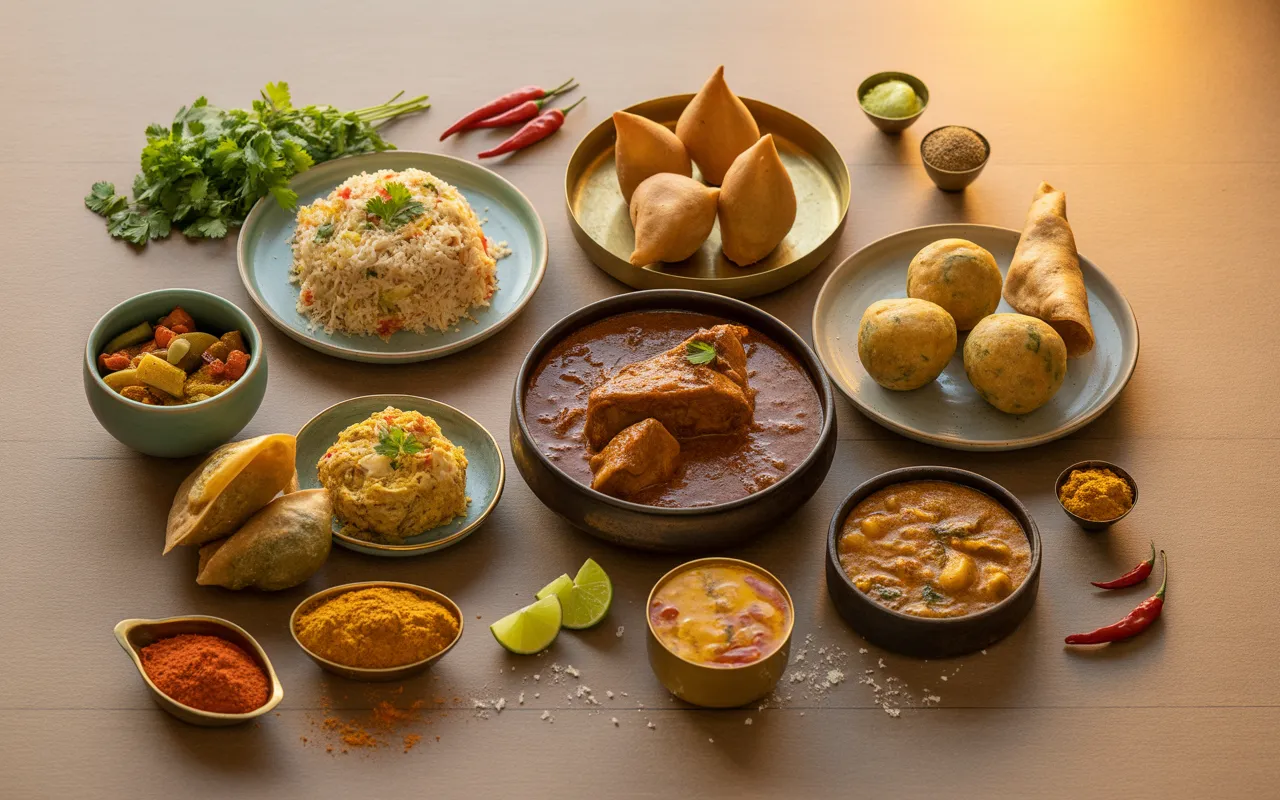
In Mauritius, the cuisine reflects the island's history: everyday "classics" naturally blend Indian (rotis, biryani), Creole (rougaille, curries), and Sino-Mauritian (fried noodles, dumplings, upside-down bowl) influences. Over time, these cuisines have intersected and adapted, ultimately forming a distinctly Mauritian culinary identity.
«The dhollpuri and roti are among the favorite delicacies of Mauritians. »
The right approach: don't look for "a" single dish that sums up Mauritius. The real discovery is the sequence: a savory snack at midday, a stew in the evening, a refreshing drink at the market, then a sweet treat at teatime.
Street food & snacks: Mauritian specialties to eat on the go
Dholl puri (dhal puri): the essential n°1
THE dholl puri It is often described as the favorite “street food” in Mauritius: a thin pancake filled with ground yellow split peas, served with curries (often beans/lima beans), rougaille, achards, and chutneys. It's simple, cheap, ultra-local — and it's eaten with your hands.
Origins: the tradition is linked to Indian influences (especially stuffed breads/flatbreads) and has become “Mauritianized” with the accompaniments and daily use.
- Worth a try : dholl puri with bean curry + rougaille + achards.
- Trick : ask for “not too spicy” if you are a beginner.
Roti / farata: the more “rustic” flatbread”
THE roast (often called farataRoti is a thicker, flakier flatbread than dholl puri. It's eaten rolled up and filled with curries (chicken, fish, vegetables) and pickles. In many snack bars, dholl puri and roti are offered side-by-side, each with its own unique texture and fans.
Chili cake: the bite that's spicy (just the right amount)
THE chili cake This is one of the most popular fried foods: small balls of legumes (often split peas), green chili, herbs, then deep-fried. The result: crispy on the outside, soft on the inside. It can be eaten as is, or in a buttered bun, like a street "sandwich".
Samosas: the market classic
In Mauritius, samosas They're everywhere (markets, bakeries, snack bars). Often triangular, crispy, and filled with vegetables, chicken, or sometimes fish, they're delicious with chutney. They're a practical option when you want a quick snack that's easy to share.
Dumplings: the Sino-Mauritian soul in broth
THE meatballs Mauritian dumplings (inspired by Chinese dumplings) are often enjoyed in a hot broth, with various shapes and fillings (fish, shrimp, meat, vegetables). They are a popular specialty when you want something comforting, especially in the evening or on cooler days.
At the table: signature dishes to order at the restaurant (or to cook at home)
Mauritian biryani: spices, fragrant rice, conviviality
THE Briani (or biryani) is a spiced rice dish, often prepared for special occasions and very present in the local culinary culture. In Mauritius, it is particularly associated with the Muslim community, with a preparation combining rice, spices, potatoes and meat (depending on the version).
Tasting advice If you like flavorful dishes but not too spicy, biryani is often an excellent “balanced” choice.
Rougaille: Creole tomato sauce (and its thousand variations)
There rougaille is a very common base: a flavorful tomato sauce (onion, garlic, ginger, herbs, sometimes chili) in which sausages, salted fish, eggs, shrimp, vegetables are then cooked… On the menu, you will often see sausage rougaille Or shrimp rougaille.
- Sausage rougaille : very popular, generous, perfect with rice + lentils.
- Shrimp rougaille : more “iodine-rich”, often lighter.
Vindaye: a yellow, tangy, addictive marinade
THE vindaye It's a unique specialty: less a simmered curry and more a marinated preparation (often with vinegar, turmeric, mustard, garlic, and spices), very fragrant and slightly tangy. It's frequently served with fish (tuna, swordfish, etc.), and it's also delicious cold, for picnics or in sandwiches.
Fried noodles: the “Mauritianized” noodles”
THE fried noodles (Stir-fried noodles) embodies the Sino-Mauritian fusion: a legacy of Chinese techniques, adapted to local tastes, very common in both fast food and restaurants. It can be found in chicken, shrimp, vegetable, and sometimes quite spicy versions.
Upside-down bowl: the theatrical “magic bowl”
THE upside-down bowl (The "upside-down bowl") is a dish that's as delicious as it is fun: rice, stir-fried vegetables and meat/prawns, a chop suey-style sauce, topped with a fried egg, all assembled in a bowl… and inverted when served. It's a classic Mauritian dish, very popular when you want a complete meal.
Seafood curry: octopus, fish, shrimp
While not a single recipe, the curry (Curry) is a must-try: an aromatic base (onion, garlic, ginger, spices), then cooked with fish, octopus, shrimp, or vegetables. Seafood versions are especially popular on an island: if you like slow-cooked dishes, ask for the curry of the day.
Sweets & drinks: ending on a Mauritian note
Alouda: the "signature" cold drink of the markets
L'’alouda is a cold milk-based drink, often served with basil seeds (tookmaria) and agar-agar, scented (vanilla, almond or rose, depending on the stall). It's sweet, very refreshing, and typical of breaks at the market, especially in Port Louis.
Neapolitan: the childhood biscuit
THE Neapolitan It's a well-known treat: two shortbread biscuits, a layer of jam, and a glaze (often pink). It can be found in many bakeries/pastry shops, and it's a nice "snack" to enjoy with tea.
Sweet potato cake: the sweet treat made with sweet potato
THE potato cake It is one of the traditional desserts: sweet potato, coconut, sugar, flavorings… It is a dense and fragrant sweet, perfect if you like less “creamy” and more rustic desserts.
Wax cake (nian gao): a Sino-Mauritian tradition
During the Chinese New Year, you will sometimes hear about the cake the wax (related to nian gao): a specialty associated with sharing in the Sino-Mauritian community, now enjoyed far beyond.
Where to taste these Mauritian specialties (without making a mistake)
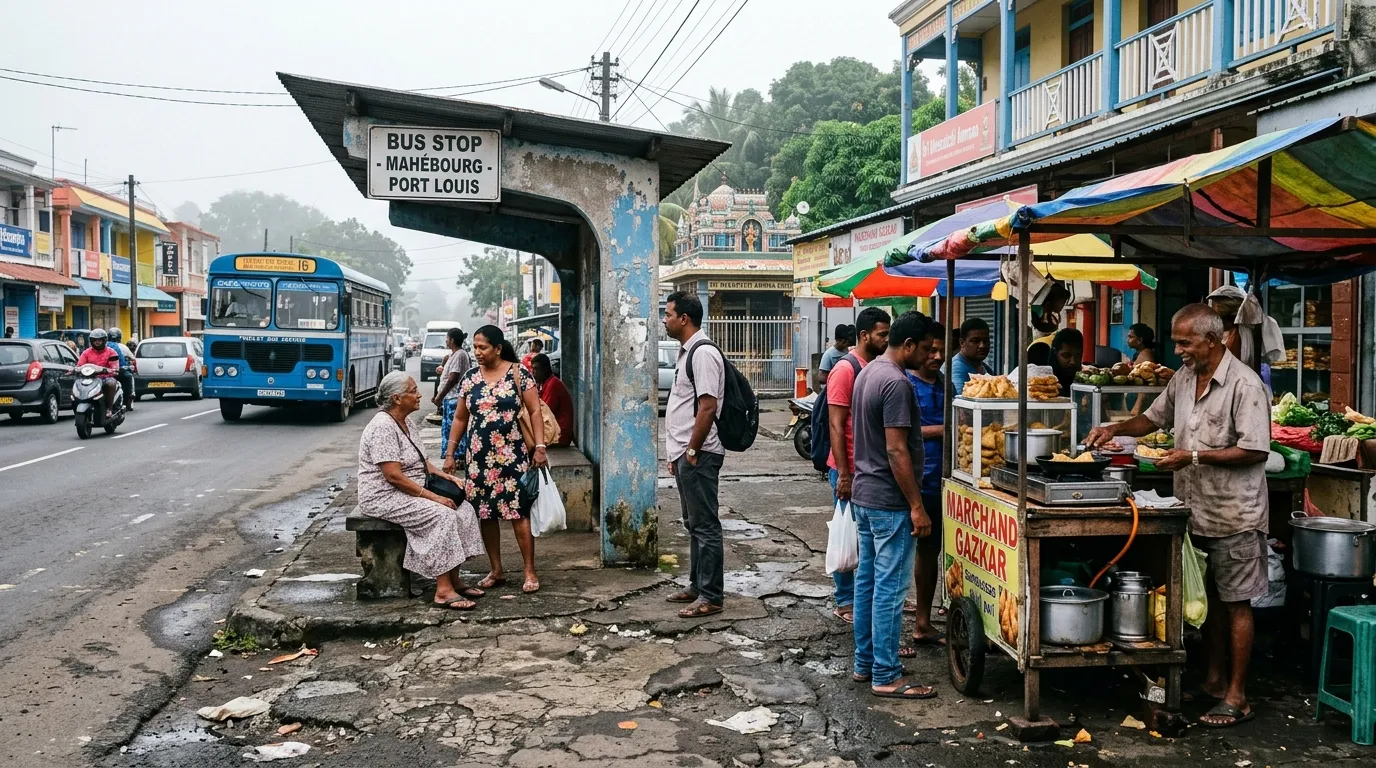
- Markets : ideal for dholl puri, chili cakes, samosas, alouda and small takeaway specialties.
- “Snacks” : everyday addresses, often the best for eating quickly and well.
- Local restaurants : perfect for an upside-down bowl, a curry, a well-prepared vindaye.
- Parties & Events Mauritian cuisine is also experienced during family and cultural gatherings (music, dance, traditions).
Note: cultural elements such as the Sega tipik are part of the island's living heritage (listed by UNESCO in 2014), and they can sometimes be found in parties or events where food also plays an important role.
Practical (and really useful) tips for eating well in Mauritius
1) Managing chili peppers without sacrificing flavor
Many dishes are served with chilies, sauces, and pickles. If you have a sensitivity to chili, simply mention it when ordering. Good to know: you can often ask for condiments on the side, so you can control the amount.
2) Understanding the “rice + grains + rougaille/curry” logic”
In many meals, the winning trio is: rice + grains (lentils/beans) + dish in sauce (rougaille/cari). It's nourishing, economical, and allows you to taste many things on the same plate.
3) Vegetarian, halal, allergies: it's often possible (but check)
Mauritius offers many vegetarian options (dholl puri, vegetable curries, chili cakes). For specific diets and allergies, please ask: some sauces may contain soy, egg, seafood, or be prepared using a shared base (fried).
4) Water and ice: adopt the right reflexes
As everywhere, adapt to your own sensitivities: choose busy places with high turnover (fresher products), and observe basic hygiene rules. For very cold drinks (including alouda), don't hesitate to ask how they are prepared if you have a sensitive stomach.
Key figures: sugar, cane and tea, at the heart of Mauritian identity
- at 6.018 tonnes (
Agricultural production (Mauritius): sugarcane, sugar and tea (2023–2024)
| Indicator | 2023 | 2024 | Source |
|---|---|---|---|
| Sugarcane production | 2,452,653 tonnes | 2,195,802 tonnes | Statistics Mauritius (Year 2023) / Statistics Mauritius (Year 2024) |
| Sugar production | 238,854 tonnes | 225,547 tonnes | Statistics Mauritius (Year 2023) / Statistics Mauritius (Year 2024) |
| Green tea leaf production | 6,762 tonnes | 6,018 tonnes | Statistics Mauritius (Year 2023) / Statistics Mauritius (Year 2024) |
This data does not tell us “what to eat”, but it provides a useful context: certain flavors (sweet, sweetened milk drinks, pastries) are also part of very real agricultural and historical habits.
Mini checklist: what to taste in 48 hours (without messing it up)
- Day 1 midday : dholl puri + condiments separately if necessary.
- Day 1 evening : upside-down bowl or seafood curry.
- Day 2 midday : roti/farata with curry (vegetarian option available).
- Day 2 snack : alouda + napolitain (or potato cake).
- Day 2 evening : vindaye (if you like tangy) or rougaille (if you like spicy tomato).
FAQ – Mauritian Specialties
What Mauritian specialties should you try first when you arrive in Mauritius?
Start with the essential ones that are easy to find and very representative: dholl puri (the classic street food dish), roti/farata (more consistent), chili cake (fried snack), then a complete meal like upside-down bowl Or rougaille. If you like tangy and spicy flavors, add a vindaye. And for a local touch on the drinks front, try a alouda at the market. The idea: to alternate between "on the go" and "at a table" to capture the culinary fusion.
What is the difference between dholl puri and roti (farata)?
Both are very popular pancakes, but they don't have the same texture or the same use. dholl puri is generally thinner And stuffed (ground yellow split peas), served with curries and chutneys. The roti/farata is often thicker, Sometimes laminated, and serves as a more robust wrap for curries (meat, fish, or vegetables). If you're a beginner, try both: you'll quickly understand why each has its fans.
Where to eat the best Mauritian specialties: market, snack bar or restaurant?
The three are complementary. walk It's ideal for discovering snacks (dholl puri, chili cakes, samosas) and a drink like alouda. snacks are often the best in terms of "authenticity/price/speed", especially at lunchtime. restaurant It becomes interesting for full meals (upside-down bowl, curry, vindaye, biryani) and for taking your time. For a "practical" guide, choose places that are very popular: fast turnover, fresher dishes, and a local atmosphere.
Is Mauritian cuisine very spicy?
It can be, but you keep control. Many dishes are fragrant (garlic, ginger, herbs, spices) without being fiery, while the “real fire” often comes from the condiments (Chili peppers, pickles, sauces) served on the side. The best thing to do is ask “not too spicy” and to dose it yourself. If you are sensitive, start with one Briani or a upside-down bowl, then gradually move towards spicier dishes such as certain vindayes or curries.
And now ?
Sampling Mauritian specialties is a great way to get a feel for the island… but a successful move also involves practical steps and choices (housing, schools, banking, permits, career plans). To make things easier, discover Expat Guides – Expat Mauritius and find comprehensive support on Expat Mauritius (turnkey expatriation). You can request a free evaluation and contact the team (phone, WhatsApp, email or online form) according to your preference.
Also read: Tips and checklists to prepare for your arrival in Mauritius.