The right status depends on your project.
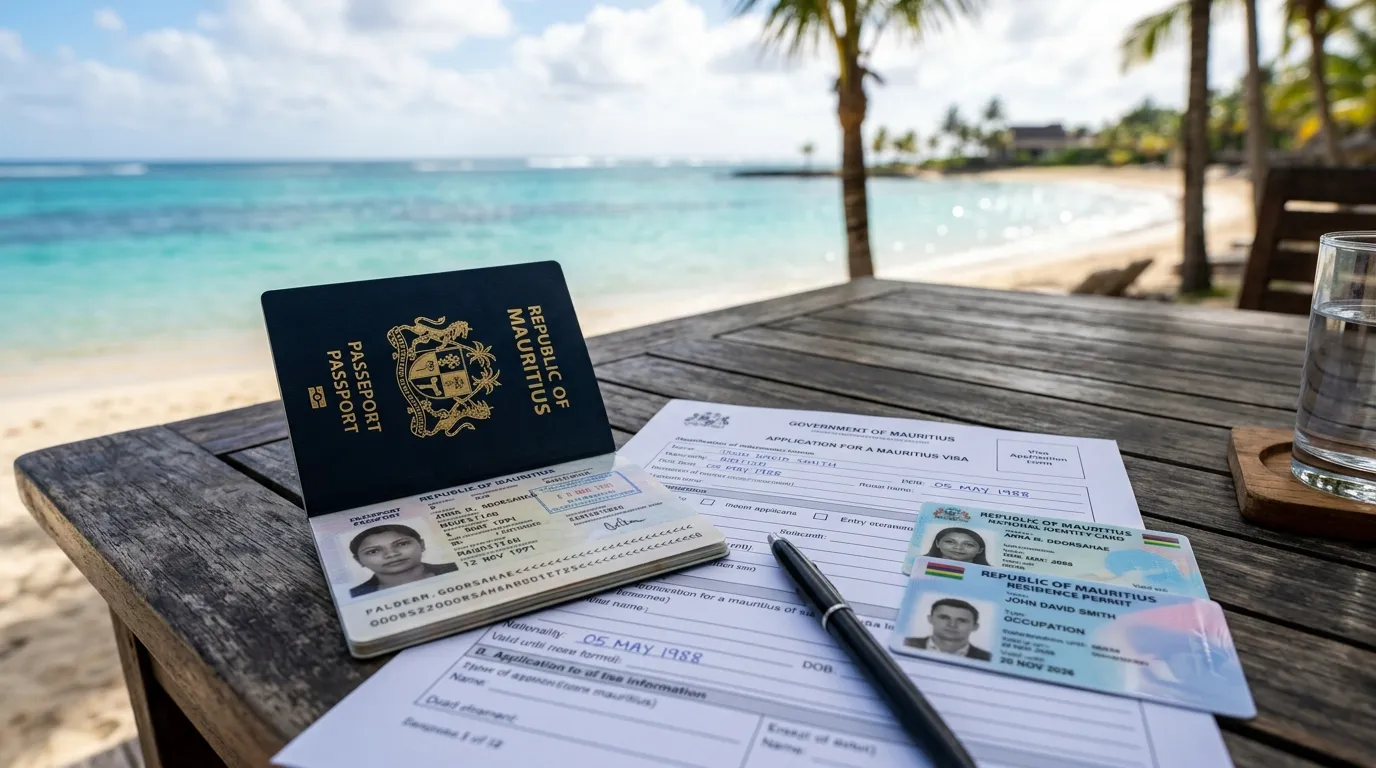
In Mauritius, the Premium Visa particularly suitable for long stays and teleworking; the’Occupation Permit aims at investment, employment or self-employment; the Residence Permit becomes relevant for local employment, retirement, or qualifying real estate.passport.govmu.org)
The key point is not to confuse reside And to work. The PIO specifies that local employment is based on a Residence Permit and, where applicable, a Work Permit, while the Occupation Permit is a combined work and residence permit.passport.govmu.org)
Quick answer: which status for which profile?
Here is the simplest logic to remember before going into detail:
- Premium Visa Choose this option if you are coming for an extended period without a local contract, for example to work remotely or test your new location. The visa is advertised as being valid for one year, renewable, and free of charge.
- Occupation Permit Choose this option if your project relies on local economic activity, whether it be employment, investment, or self-employment.passport.govmu.org)
- Residence Permit : choose it if your entry point is local employment, retirement after 50, or a property purchase that grants residency rights.
Understanding the three statuses
The Premium Visa: the most flexible solution for long stays
The Premium Visa was designed to attract non-citizens who wish to stay in Mauritius for an extended period as tourists, retirees, or professionals accompanied by their families, while also working remotely. The Immigration Office presents it as a free, renewable, one-year visa and explicitly states that it allows holders to come and work remotely from Mauritius.
In short, it's the best option for a settling-in period, a life break, or a remote working activity. As soon as your source of income becomes a local job or a structured professional presence in the Mauritian market, you should consider a different status.
The Occupation Permit: the right framework for working, investing or starting a business
The Occupation Permit is the most suitable status when there is a local economic dimension. The PIO defines it as a combined work and residence permit, available in three categories: Investor, Professional And Self-Employed. Investor and Self-Employed permits can be valid for up to 10 years, while the Professional category is generally limited to 3 years or the duration of the contract.
Note: Occupation Permit regulations are changing. The 2025/26 Budget announces a digitalization and revision of the criteria, with the aim of simplifying access to permits and aligning the conditions with economic priorities. This means that an application must always be verified on the date of submission, especially regarding financial thresholds and category criteria. (edbmauritius.org)
The same official page also mentions the Young Professional Occupation Permit, This serves as a gateway for certain foreign graduates trained in Mauritius. The logic is simple: if your project is already rooted in the Mauritian economy, the Occupation Permit is generally more appropriate than a simple residence visa.
The Residence Permit: a family of statuses, not a single permit
The Residence Permit is not a single status, but rather a set of circumstances. Official sources cite employment in Mauritius, retirement for individuals aged 50 and over, and certain real estate acquisitions as examples. For employment, the PIO (Public Immigration Office) indicates that a Residence Permit issued by the Immigration Office and a Work Permit from the relevant ministry are required.
Regarding real estate, the EDB specifies that certain approved schemes can grant residency rights starting at USD 375,000, with the possibility of living, working, and establishing a permanent settlement within the framework of the project. This is an attractive option if your project combines residence, assets, and a long-term perspective. (edbmauritius.org)
In many cases, dependents can obtain a permit aligned with the duration of the primary permit holder's permit. This is an important point for families who want to plan their move in a coherent manner.
The Permanent Residence Permit: a step after
If you're aiming for the very long term, there's also a Permanent Residence Permit 20 years. The PIO indicates that an Occupation Permit or Residence Permit holder can apply after 3 years, subject to income, turnover, or transfer requirements, depending on the category. Therefore, it is not the most common starting status, but rather a subsequent step for those already established.
Quick comparison
Summary table of the three statuses
The table below summarizes the essentials for making quick choices and avoiding reading errors.
| Status | Typical profile | Approximate duration | Key takeaways |
|---|---|---|---|
| Premium Visa | Long stay, teleworking or testing phase before installation. | 1 year renewable. | Free visa, designed for a prolonged stay without local employment. |
| Occupation Permit | Investor, professional, independent entrepreneur. | Up to 10 years for Investor and Self-Employed, 3 years for Professional. | Combined work + residence permit, with criteria to be verified at the time of application. |
| Residence Permit | Local employment, retirement from age 50, qualifying property purchase. | Depending on the reason; 10 years in certain retirement cases. | For employment, the working environment is specific; for real estate, certain approved schemes grant a right of residence. |
How to choose according to your situation?
You want to work remotely or relocate without working locally
In this case, the Premium Visa is often the best starting point. It's designed for extended stays, useful for settling in for the first time, living between two countries, or working remotely. If you don't need a job in Mauritius or a local business structure, it's the easiest status to understand.
You want to work, invest or start a business
Here, an Occupation Permit is generally more suitable. It aligns with an entrepreneurial or professional approach: you bring a business, a skill, or an investment to the island. It's also the status to consider if your project is already structured and you know what economic role you will play in Mauritius.
Are you retiring or are you aiming for real estate?
A Residence Permit becomes logical if your entry point is retirement after age 50 or a qualifying real estate purchase. For retirees, the EDB specifies that there is a dedicated, renewable permit with conditions for transferring funds. For real estate, some approved schemes grant residency rights starting at USD 375,000.news.edbmauritius.org)
To prepare the parts and maintain an overview, the practical guides for expatriation to Mauritius can help you structure the steps before filing anything.
If you wish to verify the site's publisher, the legal notices complete the reading.
Common mistakes to avoid
- Choose the status that appears simplest. The Premium Visa is convenient, but it does not replace local work status if your business changes.
- Confusing Residence Permit and work permit. For employment in Mauritius, the PIO refers to a Residence Permit and a Work Permit, not a simple residence visa.
- Forgetting that the criteria for the Occupation Permit are changing. The 2025/26 Budget announces a revision and digitization, therefore the thresholds and the readability of the file must be verified on the date of submission. (edbmauritius.org)
- Ignoring family logic. Dependents can follow the primary holder's term, which changes the permit strategy for an entire household.
FAQ
Which status should I choose between Premium Visa, Occupation Permit and Residence Permit to move to Mauritius?
The answer depends primarily on your activity. For a long-term stay with remote work or a period of living apart, the Premium Visa is the most flexible. For a local economic project, the Occupation Permit is more suitable, as it combines work and residency. For employment in Mauritius or a retirement project, real estate investment, or long-term residency, the Residence Permit becomes the right option. The best choice, therefore, depends first and foremost on your source of income and the actual duration of your project.
How do I know whether I need to apply for an Occupation Permit or a Residence Permit in Mauritius?
Consider the source of your income. If you bring a business, a mission, a position, or an investment with you, an Occupation Permit is generally the appropriate framework. If your presence in Mauritius is based on local employment as defined by immigration regulations, retirement, or a qualifying property purchase, a Residence Permit is more suitable. In practice, the Occupation Permit is more business-oriented, while the Residence Permit is more suited to situations of long-term residence or involvement in a specific project.
Does the Premium Visa allow you to work in Mauritius or only to stay temporarily?
The Premium Visa is designed for long-term stays and remote work, not as a replacement for a local employment permit. The Immigration Office presents it as a visa for tourists, retirees, or professionals with their families, with work carried out from Mauritius, and the official document specifies that it allows remote work from the island. If you transition to Mauritian employment, you must then determine the appropriate status before commencing local work.
What criteria must be met to obtain a professional Occupation Permit in Mauritius?
The principle is simple: you need an eligible professional project and an application that meets the current requirements. The PIO specifies that the Occupation Permit Professional is issued for a period of up to three years or the duration of the employment contract. As the 2025/26 Budget announces a revision and digitalization of permits, you should always check the requirements at the time of application, especially if your case depends on a salary threshold or a specific category.
Is it possible to switch from a Premium Visa to a Residence Permit after settling in Mauritius?
Yes, but not automatically. You must first be in the correct category and submit the corresponding application, because a simple Premium Visa doesn't magically become a work or residence permit. If your plans evolve into local employment, the PIO (Public Immigration Office) reminds you that you need a Residence Permit and a Work Permit; if your plans become a qualifying property purchase or retirement, the legal basis also changes. The transition must therefore be anticipated before the actual change in circumstances.
And now ?
If you're still undecided between a trial stay, a professional project, or a permanent move, the most effective approach is to start with your current situation and then determine the most suitable status. To validate your strategy from the outset, you can rely on the EXPAT MAURITIUS team.