Maurice is a dream... but a successful retirement needs to be planned.
In this guide, you will find Visa/permit options tailored for retirees, a a clear method to estimate your monthly budget (with official benchmarks), and an overview of best regions Where to live peacefully. For complete support (visa, accommodation, settling in), EXPAT MAURITIUS can help you structure your project and avoid common mistakes.
Why is Mauritius so appealing to retirees?
Beyond the beaches, Mauritius attracts seniors with a rare mix: a gentler pace of life, developing services, established international communities, and a mixed (public/private) healthcare offering.
Health: free public, accessible private
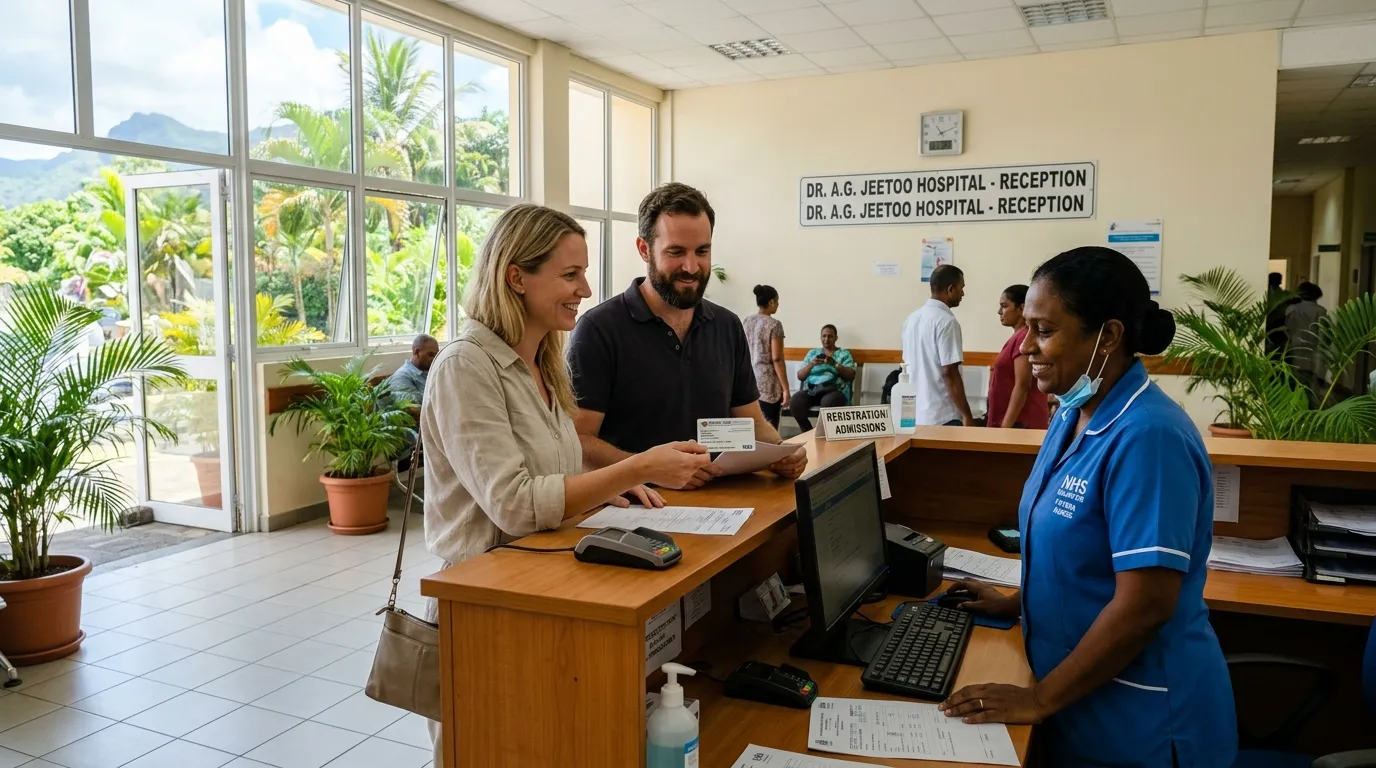
The country has a public healthcare system, supplemented by numerous private facilities. Public services offer free care, while private clinics can be more expensive but are present on the island.govmu.org)
To illustrate its private offering, the C-Care group specifically mentions establishments in Floréal (Darné), Moka (Wellkin), Grand Baie and Tamarin, covering several areas popular with expatriates.c-care.com)
Cost of living: some key figures, but they vary depending on your lifestyle
The cost of living depends mainly on the accommodation (near the beach, secure residence, villa, etc.), the level of services (home help, car, leisure activities) and your consumption of private care.
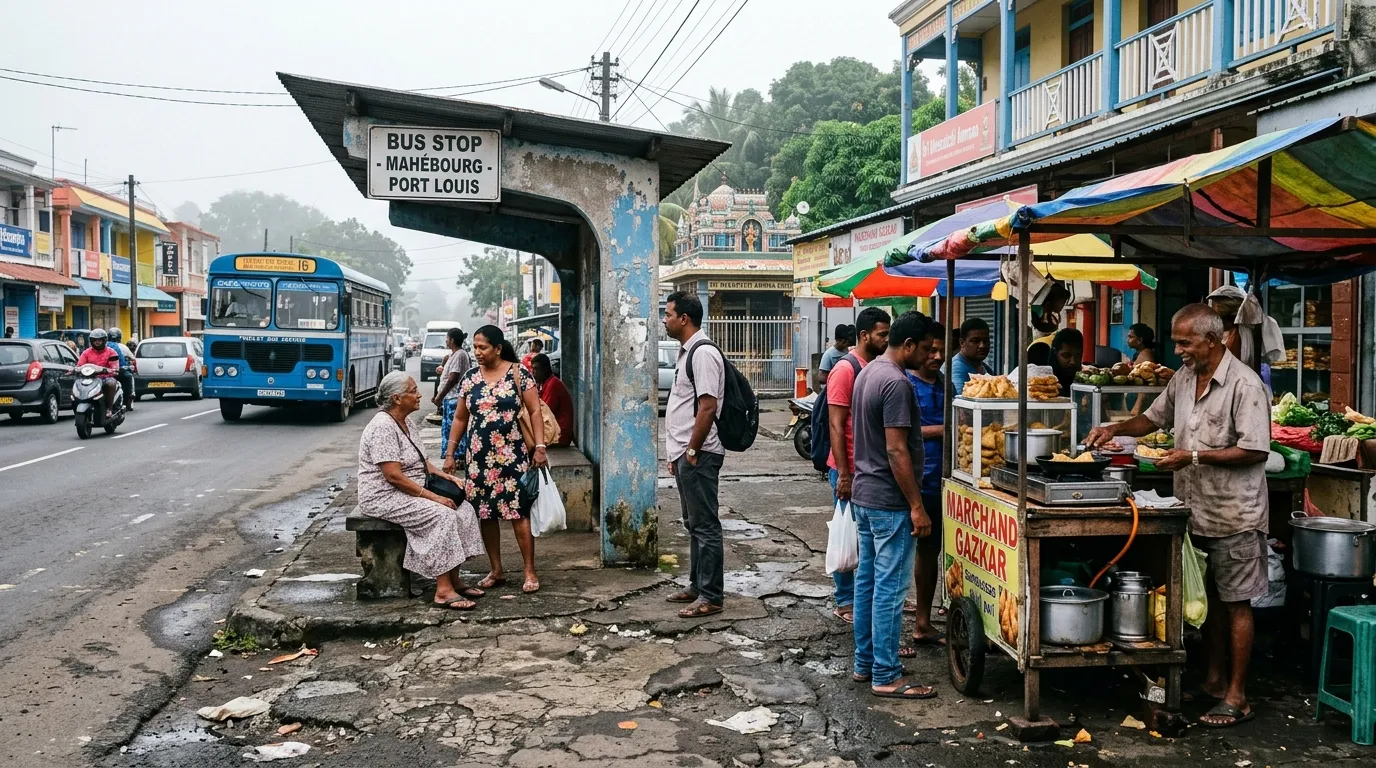
To provide local context, Statistics Mauritius indicates that in 2023, there average monthly household consumption expenditure has moved on to Rs 41,870 (average household of 3.2 people), with a significant share allocated to food (25%) and transportation (16%).statsmauritius.govmu.org)
Regarding inflation, the twelve-month inflation rate ending in June 2025 is given to 2,9% (compared to 4.5% a year earlier), which helps to understand recent price trends.statsmauritius.govmu.org)
Visa and permits for retiring in Mauritius: the key solutions
In practice, retirees often consider Mauritius in two stages: a first long stay (to test) then a more stable residence permit.
1) The Premium Visa (long stay up to 1 year, renewable)
THE Premium Visa allows a non-citizen to stay in Mauritius for a period of one year, with renewal option. It is advertised as free by the Passport and Immigration Office. (passport.govmu.org)
From a tax perspective, the Mauritius Revenue Authority (MRA) specifies that the Premium Visa is a visa (and not a residence permit) and that the holder must demonstrate a long-stay plan, a Adequate travel and health insurance as well as sufficient funds to cover the stay.mra.mu)
2) The “Retired Non-Citizen” permit (50+ years): the key framework for a sustainable retirement
The official “Residency in Mauritius” (EDB) page indicates that a non-citizen retiree of 50 years and older can benefit from 10-year residence permit subject to demonstrating sufficient financial resources. The displayed benchmark is USD 2,000 per month (Or USD 24,000 per year), with a application fees displayed at USD 1,000. (residency.mu)
The same portal specifies the eligibility criteria via certified bank statement: USD 24,000 minimum Or guaranteed income of USD 2,000/month. (residency.mu)
Good to know: it is also indicated that the application can be initiated online via the National Electronic Licensing System (NELS). (residency.mu)
3) “Senior Living” Residence (PDS): purchase (or a life annuity right) without a minimum displayed price
For seniors, there are also “PDS Senior Living” projects. The “Residency in Mauritius” portal indicates that a non-citizen retiree can acquire a unit Or life rights in an approved project, and that there is no no minimum purchase price for this formula.residency.mu)
This is a relevant option if you are looking for an age-appropriate environment (more “community-oriented” living, services, leisure activities), while still remaining independent.
4) The Permanent Residence Permit (PRP): 20 years after 5 years (subject to conditions)
THE PRP is presented as a residence of 20 years (renewable), accessible in particular to retirees, with a prerequisite of at least 5 years of residences already begun.residency.mu)
For the “Retired Non-Citizen” category, the displayed criterion is: holding a retired driver's license for at least 5 years and have transferred an aggregate of at least USD 200,000 (or equivalent) over a consecutive period of 5 years preceding the application.residency.mu)
Quick comparison of statuses (table)
| Option | Duration | Financial conditions (official benchmarks) | Cost/fees mentioned | For whom? |
|---|---|---|---|---|
| Premium Visa | Up to 1 year, renewable | Sufficient funds + travel & health insurance + long-term care plan (amount not specified in the MRA FAQ) | “Free of cost” (PIO) ad | Test Maurice 6–12 months before committing |
| Residence Permit “Retired Non-Citizen” (+50 years) | 10 years | USD 24,000/year or guaranteed income of USD 2,000/month | USD 1,000 (application fee shown) | Stable, long-term retirement |
| Senior Living Residence (PDS) | Related to the ownership/occupancy of the property | No minimum purchase price is indicated for this formula. | Variable depending on the project | Seniors seeking services + a suitable environment |
| Permanent Residence Permit (PRP) | 20 years, renewable | After 5 years, and aggregate transfers of USD 200,000/5 years (retired category) | Applicable fees (see official fee schedule) | Consolidating its presence over 20 years |
Sources: PIO (Premium Visa), MRA (FAQ Premium Visa), Residency in Mauritius (EDB) for retirement/PRP/Senior Living permit.passport.govmu.org)
Additional costs to anticipate (update)
The “Residency in Mauritius” portal displays a notice: a application fee of USD 50 (non-refundable) is effective from the December 1, 2025 for applications for occupancy and residence permits.residency.mu)
Monthly budget for seniors in Mauritius: concrete guidelines and calculation method
Rather than giving a “magic budget” (often misleading), the most reliable approach is to build your budget item by item, then test it over 1–2 months on site (ideally before signing a long lease).
Housing: the number one priority
The official “Cost of Living” portal provides indicative price ranges (in USD):
- Houses with 2 to 4 bedrooms (100–200 m²) on average USD 500 to USD 1,000/month. (residency.mu)
- Spacious “luxurious” villas/houses (3 to 6 bedrooms, 200–400 m²) on average USD 1,200 to USD 2,400/month. (residency.mu)
Note: Depending on the practices, a security deposit and agency fees may be added.residency.mu)
Utilities (electricity, water, internet)
- Electricity : USD 20 to USD 100/month (Varies depending on equipment and usage).residency.mu)
- Water : USD 3 to USD 6/month (Normal domestic use for 3–4 people).residency.mu)
- Internet : landmark USD 30/month (Example: 20 Mbps unlimited/1 TB).residency.mu)
Food: base it on a shopping basket (and on your habits)
The same portal provides indicative unit prices (useful for planning your shopping). For example: bread (USD 0.25), eggs (USD 1.8 per dozen), milk (USD 1.25/L), water (USD 0.5/L), potatoes (USD 2/kg).residency.mu)
Budget tip: note down your expenses over 2 weeks (market + supermarket + imported goods), then multiply by 2. This is more reliable than any average.
Transportation: highly variable depending on whether or not you have a car“
- Bus : approximately USD 1 the journey.residency.mu)
- Metro : approximately USD 1.25 the journey.residency.mu)
- Taxi : approximately USD 2.5 to USD 3/km. (residency.mu)
- Essence : landmark USD 1.45/L. (residency.mu)
Restaurants & leisure activities: plan a realistic "fun" budget
- Moderately priced restaurant (2 people) : from USD 30. (residency.mu)
- Upscale restaurant (2 people) : from USD 50. (residency.mu)
- Movie theater : from USD 7. (residency.mu)
Health & insurance: the key issue for seniors
Many retirees adopt a “hybrid” strategy: public for urgent matters And private for comfort, speed and certain specialties. (govmu.org)
For a private consultation benchmark (example of a practice in Mauritius), Oaklands Medical Practice displays the following consultation fees: Rs 2000 (new patient) and Rs 1500 (follow up). (oaklandsmedical.org)
Regarding insurance, the requirements depend on the status (for example, Premium Visa: sufficient travel and health insurance).mra.mu)
Taxation: what a retiree needs to understand (no shortcuts)
Tax residence: the rule of days (183 / 270)
The OECD document on tax residency (Mauritius – CRS) states that an individual is generally considered a tax resident in Mauritius if they meet one of the following criteria, including: 183 days or more on the fiscal year (July 1–June 30), or 270 days on the current fiscal year and the two preceding ones.oecd.org)
Income tax: tax brackets effective from July 1, 2025
The MRA indicates that from July 1, 2025, An individual is taxed according to the following scale:
- First Rs 500,000 : 0%
- Next Rs 500,000 : 10%
- Stay : 20%
These rates are listed on the MRA page regarding the obligation to file a return and the applicable rates.mra.mu)
Special case: Premium Visa and taxation
The MRA specifies that holders of Premium Visa are taxable in Mauritius only in certain situations, particularly in relation to money deposited into a bank account in Mauritius (with the possibility of filing a declaration if the tax has already been paid in the country of origin/residence). It also indicates that, by default, holders do not have to register or file a declaration, except in exceptional circumstances.mra.mu)
Best regions to live in Mauritius as a senior citizen (advantages & points to be aware of)
The “best place” depends mostly on your priorities: access to private care, quiet, nearby services, easy walking, social life, and housing budget.
North (Grand Baie, Mont Choisy, Pereybère): practical and lively
- Strengths : shops, restaurants, social life, services, strong presence of expatriates.
- Health : presence of private medical services in the area (e.g., private consultations and emergency care in Grand Baie according to C-Care).c-care.com)
- Vigilance : more lively areas, sometimes higher rents by the sea.
West (Tamarin, Rivière Noire, Flic-en-Flac): sun, nature, “outdoor” style”
- Strengths : climate often drier, nature activities, pleasant setting.
- Health : private offering (e.g., facility in Tamarin according to C-Care).c-care.com)
- Vigilance : distances according to your exact place of residence (shopping, specialists, etc.).
Central area (Moka / central plateau): accessibility, infrastructure, relative coolness
- Strengths central location for getting around, infrastructure, climate often a little less hot.
- Health The Moka region highlights a structured medical offering centered around Wellkin (private), laboratories, etc. (moka.mu)
- Vigilance : less “seaside” if your dream is to be at the beach every day.
East/Northeast (Roches Noires, Azuri and surrounding areas): quiet and residential setting
- Strengths : quieter coastal areas, residential life.
- Good to know : EXPAT MAURITIUS is based in Azuri Village and can guide you on the realities on the ground (accommodation, services, settling in) in this part of the island, according to your profile.
Retirement checklist in Mauritius: "stress-free" preparation“
- Choose your strategy Premium Visa (test) or retirement permit (10 years) depending on your time horizon.passport.govmu.org)
- Create a budget by item Rent + utilities + healthcare + transportation + leisure activities (while maintaining a margin).residency.mu)
- Anticipating health insurance and your medical needs (specialties, follow-up).mra.mu)
- Prepare the “proof of funds” section” (bank, transfers, certified documents).residency.mu)
- Tax planning & attendance days (potential tax residence). (oecd.org)
Useful resources (official links and guides)
- Living in Mauritius: turnkey expatriation & real estate
- Expatriation guides – Expat Mauritius
- Premium Visa (Passport & Immigration Office) (passport.govmu.org)
- Non-citizen retiree permit +50 years (Residency in Mauritius / EDB) (residency.mu)
- Permanent Residence Permit – PRP (Residency in Mauritius / EDB) (residency.mu)
- Household Budget Survey 2023 – Highlights (Statistics Mauritius) (statsmauritius.govmu.org)
FAQ – Retirement in Mauritius with EXPAT MAURITIUS
Can EXPAT MAURITIUS help me with a retirement permit (+50 years) in Mauritius?
Yes, EXPAT MAURITIUS can assist you with the application process and the coordination of the steps (preparing documents, ensuring proof of funds is consistent, and organizing your move). The "Retired Non-Citizen" permit is available for those 50+ with income thresholds (USD 2,000/month or USD 24,000/year) and is valid for 10 years.residency.muThe goal is to ensure a smooth process by avoiding incomplete documents and miscalculations (housing, banking, insurance, etc.). For an overview, start with the page EXPAT MAURITIUS.
What monthly budget should a retired couple plan for in Mauritius?
The budget depends primarily on the accommodation. Official benchmarks, for example, give an average rent of USD 500–1,000/month for a 2–4 bedroom house, and USD 1,200–2,400/month for higher-end villas.residency.muNext, add your expenses (electricity USD 20–100, internet ~USD 30, water USD 3–6).residency.muTo "balance" your shopping, use the unit prices and your actual receipts. Finally, keep a margin for health expenses (private consultations possible, insurance).oaklandsmedical.org)
Premium Visa or retiree permit: which to choose for the first year?
To "test" Mauritius without committing, the Premium Visa is often the first step: it allows a stay of up to 1 year, renewable, and is advertised as free by the administration.passport.govmu.orgThe MRA reminds travelers that a long-term care plan, insurance, and sufficient funds are required.mra.muIf your goal is clearly long-term, the retiree permit (50+ years) offers 10 years of stability (with explicit financial requirements).residency.mu) Many serious projects combine the two: 6–12 months of testing, then switching to the appropriate permit.
How to become a tax resident in Mauritius if you are a retired foreigner?
Tax residency depends in particular on the number of days spent there: the OECD document (Mauritius – CRS) mentions thresholds of 183 days in the tax year (July 1–June 30) or 270 days in the tax year and the two preceding years.oecd.orgNext, this needs to be coordinated with your country of origin (agreements, pensions, etc.). As situations vary (public/private pensions, remittances, assets), the most prudent approach is to prepare a tax plan before transferring significant amounts or applying for certain statuses.
Can one buy in “Senior Living” (PDS) and obtain a residence permit?
The “Residency in Mauritius” portal explains that, within the framework of the PDS Senior Living projects, a non-citizen retiree can acquire a unit or life annuity rights, and that there is no minimum purchase price indicated for this formula.residency.muThis is an interesting option if you're looking for an environment designed for people over 50 (services, leisure activities, social life), while still maintaining your independence. To ensure the arrangement is coherent (project, region, budget, status), have everything reviewed and approved before signing.
And now ?
If you are considering retiring in Mauritius, the most cost-effective step is to validate your scenario (visa + budget + region) before you commit. EXPAT MAURITIUS We assist individuals and entrepreneurs with administrative procedures (permits/visas), real estate, and settling in (housing, banking, insurance), with a personalized approach. For more information, see also Living in Mauritius: Turnkey Expatriation & Real Estate and our expatriation guides.