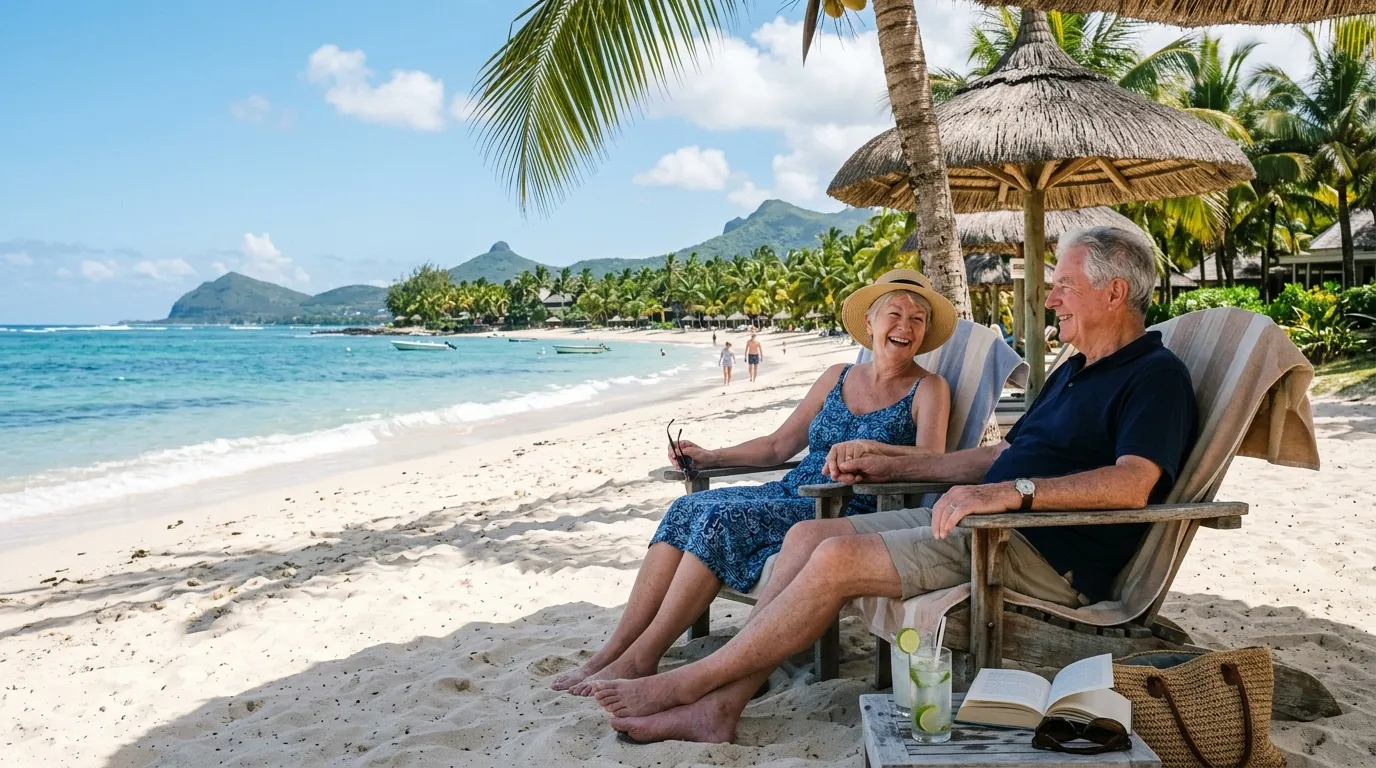
Retiring in Mauritius is possible.
In 2026, the retirement residence permit will be available to non-citizens aged 50 and over. The official text stipulates a 10-year validity period, an initial transfer, regular transfers, a prohibition on paid employment in Mauritius, and the possibility of investing without receiving a salary or company benefits. (lawsofmauritius.govmu.org)
If you prefer to explore the island first, the Official Premium Visa allows a one-year renewable stay, with a free application, sufficient travel and health insurance, and professional activity limited to income and workplace located outside Mauritius.
Which path should you choose for your retirement plan?
The right status depends primarily on three things: your age, your monthly budget, and your need for flexibility during the first few months. The legal framework is outlined in the Immigration Act 2022 and the Economic Development Board Act. (lawsofmauritius.govmu.org)
Quick comparison of the three most useful paths
| Way | Duration | Key conditions | For whom? |
|---|---|---|---|
| Retired person's residence permit | 10 years | Ages 50 or older, apply via NELS, initial transfer of USD 2,000 followed by USD 24,000 per year or USD 2,000 per month, without local paid employment. (lawsofmauritius.govmu.org) | For a sustainable setup if your income comes mainly from abroad. |
| Premium Visa | 1 year renewable | Free application, sufficient health and travel insurance, long-term stay project, income and activity outside Mauritius, no entry into the local job market. | To test the island before finalizing your residency strategy. |
| Residence linked to a real estate purchase | According to the program | A minimum of USD 375,000 is required for multiple residential schemes, or over USD 200,000 for a Senior Living Scheme (PDS) if the applicant is over 50 years old at the time of application. (lawsofmauritius.govmu.org) | To secure both housing and residency rights at the same time. |
Key takeaways: the Premium visa is a flexible entry point, the retirement permit is the true long-term status, and qualifying property purchase opens another separate residency pathway.
Exact conditions for the retirement permit in 2026
This is the version to remember if you are aiming for a standard retirement permit and not a property solution or a temporary residence visa. (lawsofmauritius.govmu.org)
- You must be at least 50 years old. (lawsofmauritius.govmu.org)
- The application is made through NELS, then the EDB and the Passport and Immigration Office verify the file before it is reviewed by the Joint Committee. (lawsofmauritius.govmu.org)
- The permit issued is valid for 10 years from its date of issue. (lawsofmauritius.govmu.org)
- You must transfer at least USD 2,000 to a local account within 60 days of issuance, then USD 24,000 per year or USD 2,000 per month. (lawsofmauritius.govmu.org)
- You cannot engage in paid employment in Mauritius, but you can invest in a business if you are not employed by the company and do not receive a salary or employment benefits. (lawsofmauritius.govmu.org)
- After 5 years of residence under this status, you can apply for a permanent residence permit if you have transferred a total of USD 200,000 over 5 years. (lawsofmauritius.govmu.org)
In short, the retirement permit is for residing in Mauritius, not for holding paid employment there. (lawsofmauritius.govmu.org)
What monthly budget should I plan for in 2026?
To estimate the budget, I rely on two 2026 datasets: Wise on the cost of living in Mauritius And Numbeo. Wise estimates the cost of living for a single person at approximately $924 per month, including $401 for average rent, while Numbeo puts the monthly expenditure for a single person at $594.6 excluding rent.
In practice, a single retiree who wants a substantial buffer for health insurance, unexpected expenses, bank transfers, and decent housing can expect to spend around $1,200 to $1,800 USD per month. For a couple, this often exceeds $2,000 USD. This is a comfortable estimate, not a legal minimum.
- Rent : This is often the first item to be considered, with 2026 averages of around USD 460 for a 1 bedroom in the city center and USD 314 outside the center.
- Daily life: Food, outings and transportation remain reasonable if you adapt your lifestyle to the chosen neighborhood.
- Health : Private insurance and a reserve for uncovered expenses should be included, especially at the beginning of the installation.
If you want to combine the budget with housing, healthcare, and relocation procedures, the practical guides to expatriation are useful for refining your envelope.
Is it possible to buy real estate to prepare for retirement?
Yes, but a distinction must be made between the standard retirement permit and the real estate route. Mauritian law provides a right of residence for certain qualifying real estate purchases: a minimum of USD 375,000 for several residential schemes, and a threshold exceeding USD 200,000 for a property under the Senior Living Scheme if the applicant is over 50 years old at the time of application. (lawsofmauritius.govmu.org)
This option can be attractive if you want to secure both your housing and your residency status, but it doesn't automatically replace the traditional retirement permit. If you're unsure, you should compare the total cost of the project: purchase price, installation costs, ongoing expenses, and the amount of liquid assets you'll need to transfer. (lawsofmauritius.govmu.org)
How to submit an application without making a mistake?
- First, define your strategy: retirement permit, Premium visa as a test solution, or residence linked to a real estate purchase.
- Verify that your income is compatible with the transfers required by your chosen route, and that your departure schedule allows sufficient time to prepare your application. (lawsofmauritius.govmu.org)
- For retirement permits, the application goes through NELS; the EDB and the Passport and Immigration Office check the completeness of the file, then the relevant commission makes its recommendation. (lawsofmauritius.govmu.org)
- For the Premium visa, prepare proof of your intended stay, travel and health insurance, and evidence that your business activities and income remain outside of Mauritius. (edbmauritius.org)
- Keep in mind that the Premium visa is a renewable temporary stay, while the retiree permit opens a long-term residence.
Can one become a permanent resident later?
Yes. The current legislation stipulates that after five years as a resident retiree, a non-citizen can apply for a permanent residence permit if they have transferred a total of at least USD 200,000 or the equivalent in convertible currency over the five years preceding the application. The permanent residence permit obtained through this process is then valid for 10 years. (lawsofmauritius.govmu.org)
This is therefore a medium-term strategy: first, a retirement permit, then, if your financial resources allow, a possible move towards permanent residency. (lawsofmauritius.govmu.org)
Frequently Asked Questions about Retirement in Mauritius
What are the exact conditions for obtaining a retirement residence permit in Mauritius in 2026?
The basic rule is simple: you must be 50 years of age or older, submit your application via NELS, and be able to make the required initial transfer followed by the regular transfers stipulated by current legislation. The permit issued is valid for 10 years, and during this period, you cannot hold paid employment in Mauritius. However, investment is permitted as long as you do not become an employee of the company and do not derive any employment benefits from it. (lawsofmauritius.govmu.org)
What monthly budget should one plan for to live comfortably in Mauritius as a retiree in 2026?
The publicly available 2026 data provides a good benchmark, but a margin for error is necessary. Wise reports approximately $924 per month for a single person, including average rent, while Numbeo estimates the monthly cost for a single person at $594.60 excluding rent. For a retiree who wants to live comfortably, with healthcare, transportation, and unexpected expenses covered, aiming for around $1,200 to $1,800 per month remains a conservative estimate. For a couple, the budget typically exceeds $2,000.
How to obtain the Premium Visa or the retirement permit in Mauritius in 2026?
The Premium Visa is applied for online, is free, and allows a one-year renewable stay. Applicants must demonstrate their intention to stay for an extended period, have sufficient travel and health insurance, and remain outside the Mauritian labor market. The Retirement Permit, on the other hand, is more structured: it is processed through NELS, with the application reviewed by the EDB and Immigration, and the permit is issued once the conditions are met. The choice therefore depends on your timeframe for settling in Mauritius.
Is it possible to work in Mauritius when retired, or is it necessary to remain abroad?
With a retirement permit, no: the law prohibits any paid local employment, even though it allows passive investment in a business without salary or benefits. If your goal is to work remotely or maintain an external professional activity, the Premium Visa is more suitable, provided that your business and source of income remain outside Mauritius. This is therefore a crucial point in choosing the right status. (lawsofmauritius.govmu.org)
What is the duration of the retirement permit in Mauritius and what are the conditions for renewal or transition to permanent residence?
The retirement permit is issued for 10 years under current law, and the official Passport and Immigration Office website states that it is renewable according to established criteria. For a longer-term perspective, the next real step is permanent residency: after 5 years of retirement status and transferring USD 200,000 over 5 years, the application becomes possible. This is the most logical path if you are planning for the long term. (lawsofmauritius.govmu.org)
And now ?
If your project is serious, start by defining your budget, choosing the right path, and preparing a coherent proposal. You can discover EXPAT MAURITIUS for a comprehensive overview of expatriation, then consult the legal notices if you wish to know the publisher and the legal framework of publication.