
Retiring in Mauritius is possible.
If you are looking for a practical guide on the procedures (visa/permit), the budget And taxation For retire in Mauritius, You've come to the right place: residency status, financial requirements, administrative steps, key figures for 2023–2026, tax residency rules, and points to consider depending on your country (e.g., France). The goal: to help you avoid costly mistakes and plan your move with peace of mind.
For personalized support (permits, settling in, real estate, etc.), you can also explore the services of’Expat Mauritius (free evaluation).
Why choose Mauritius for your retirement?
Mauritius attracts many French-speaking retirees thanks to its climate, quality of life, multicultural environment, and healthcare infrastructure (particularly private). On the practical side, the island offers residence status clearly identified (including the Retired Non-Citizen) and a tax framework that deserves to be understood in detail, especially if your retirement income comes from abroad (pensions, dividends, rents, etc.).
Procedures: How to obtain the right to reside in Mauritius as a retiree?
The most common status: “Retired Non-Citizen” (50 years and older)
The official residency portal in Mauritius states that a non-citizen aged 50 or over can apply for a residence permit as a retiree (“Retired Non-Citizen +50 years”).residency.mu)
From a legal standpoint, the’Immigration Act provides for the principle of applying for a “retired non-citizen” residence permit through the competent authority (historically via the Board of Investment / EDB).attorneygeneral.govmu.org)
Financial conditions: minimum transfers (updated Budget 2025–2026)
THE Budget 2025–2026 (and its reference notes/annexes) announced a strengthening of the conditions for non-citizen pensioners, including:
- Initial transfer at least USD 2,000 to a local bank within 60 days ;
- Then USD 24,000 per year (Or USD 2,000 per month) ;
- and one minimum presence of 180 days per calendar year in Mauritius.
These elements appear in widely used budget summary documents (PwC annexes) and “Budget Highlights 2025/26”.pwc.com)
Practical tip: The official pages may be updated gradually. To ensure your application is successful, base your planning on the requirements of the 2025–2026 Budget (transfers + 180 days/year) and have your strategy validated (attendance schedule, pension plan, bank) before submitting.
Driving licence duration: be aware of recent reforms
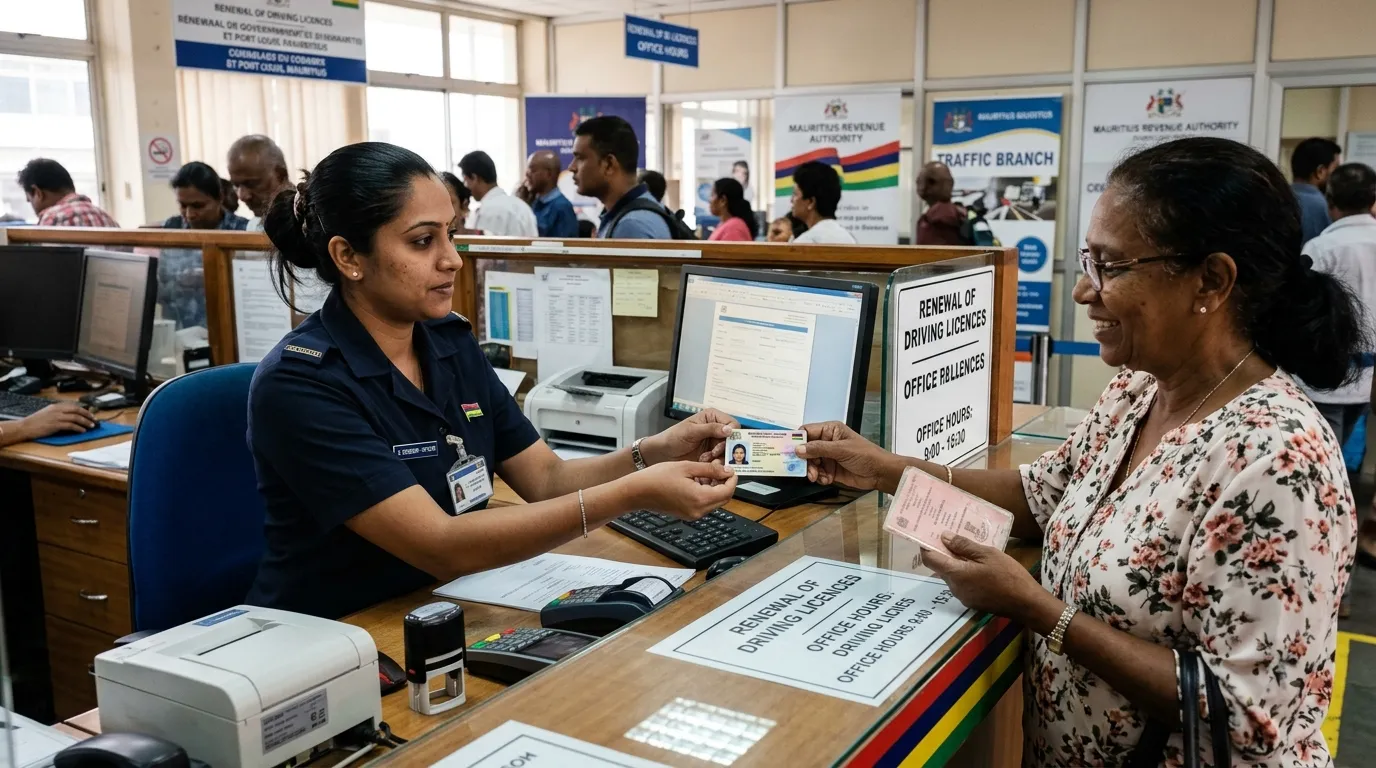
Budget documents for 2025–2026 also indicate a reduction of certain driving licence durations to 5 years, with possible renewal (measure cited for investors / self-employed / retirees).onelink.mu)
At the same time, the “Residency” portal still mentions 10-year terms on some pages (with funding requirements), which illustrates the importance of checking the version applicable to your filing date.residency.mu)
Application steps (overview)
- Enter Mauritius (often with a visitor/tourism status depending on the case).
- Submit the application online on the dedicated platform (NELS), with “preliminary” pieces for a Approval in Principle. (residency.mu)
- Following the agreement in principle: open/activate the local bank account, carry out the medical examinations, Complete the supporting documents and pay the statutory fees if your permit is granted.residency.mu)
- Finalization : appointment/inspection and issuance of the permit according to the procedure in force.
Note: the official portal specifies that the application on NELS is announced as free (no EDB processing fees) and only successful candidates pay the statutory fees to the Government of Mauritius.residency.mu)
Documents to prepare (administrative checklist)
The exact list depends on your situation, but the “Retired Non-Citizen +50 years” page provides a useful reference. It includes, among other things:
- Birth certificate (English/French or certified translation); ;
- Passport (biodata page); ;
- Police clearance / certificate of character (often requested over a long and recent period); ;
- ID photos ;
- Commitment signed (undertaking); ;
- After agreement in principle: Mauritian bank account statement, medical certificate and reports, entry visa pages, etc.
Refer to the official list at the time of submission (formats, validity dates, translations, originals to be submitted).residency.mu)
Family: spouse and dependents
THE dependents (depending on the definitions and required evidence) may obtain a permit to reside in Mauritius for the duration of the primary permit holder's stay. The official page also specifies that the application for a "dependent" permit is processed by the Passport and Immigration Office. (residency.mu)
Is it possible to invest (without working) with a retired person's permit?
The official portal indicates that a “retired non-citizen” holder can invest in an activity provided that not to be employed there and not to receive salary/benefits related to employment.residency.mu)
Budget: How much does it cost to live in Mauritius in retirement?
“Macro” benchmarks (public sources) to help you frame your budget
To give you an idea of the orders of magnitude, Statistics Mauritius indicates that in 2023, the average monthly expenditure households were Rs 41,870 (all positions combined), and the average monthly income of Rs 55,600. The main expenditure items included, in particular food (25%), transportation (16%) and housing/energy (10%). (statsmauritius.govmu.org)
Regarding inflation, Statistics Mauritius, for example, published a point indicating a “headline” inflation rate of 2,9% over the 12 months ending in June 2025 (vs. 4.5% a year earlier).statsmauritius.govmu.org)
Useful reading: These figures describe an “average” Mauritian household (not an expatriate lifestyle). For a foreign retiree, the number one variable remains the accommodation (area, standard, sea view, secure residence, etc.), then the car and the health/insurance.
Indicative prices for 2026 (concrete examples)
For operational benchmarks, collaborative price databases like Numbeo publish regularly updated price ranges. For example, in Port Louis (update displayed on March 24, 2026), one can find approximate prices for rent, utilities, transport, etc.numbeo.com)
Table – Example of an indicative monthly budget (2026)
The table below is used to build your budget based on specific items. Rents/charges are very sensitive to the area (North, West, Central) and the type of property.
| Job | Indicative range | How to read the number |
|---|---|---|
| Rent (1-bedroom apartment) | ~ Rs 6,000 to Rs 29,600 / month | Example Port Louis: outside centre vs centre (contribution ranges).numbeo.com) |
| Utilities (electricity/water, etc.) | ~ Rs 1,500 to Rs 3,000 / month | Example “basic utilities” apartment ~85 m².numbeo.com) |
| Fixed Internet | ~ Rs 1,000 to Rs 2,000 / month | Example “broadband”.numbeo.com) |
| Mobile phone | ~ Rs 350 to Rs 2,000 / month | Example of a data plan.numbeo.com) |
| Transport (bus + occasional taxi) | Ticket ~ Rs 38–60; taxi fare ~ Rs 150–300 | Costs skyrocket if you rely on taxis daily.numbeo.com) |
| Fuel (if car) | ~ Rs 58 to Rs 70 / litre | A useful benchmark for estimating monthly kilometers.numbeo.com) |
| Shopping (examples) | Milk 1L ~ Rs 60–105; eggs (12) ~ Rs 48–150 | Excerpts from typical shopping baskets (prices vary depending on the retailer and imports).numbeo.com) |
| Restaurants (examples) | Simple dish ~ Rs 150–500; dinner for 2 people ~ Rs 1,200–2,500 | Guidelines for a "going out" budget.numbeo.com) |
| Health (insurance + consultations) | Variable | To be priced via quote based on age, medical history, coverage level, evacuation, etc. |
Recommended method Start with a realistic rent estimate (area + type of residence), add utilities + transportation + health insurance, then adjust for your lifestyle (going out, leisure activities, travel, home help). This will give you a more reliable monthly budget than any general "average".
Taxation: How are you taxed in Mauritius when you are retired?
1) Tax residence: the criteria (and the tax year)
For the Mauritian tax authorities, the’tax year goes from July 1st to June 30th. Tax residency criteria include, in particular:
- 183 days or more in Mauritius during the fiscal year, or
- 270 days or more over the current fiscal year plus the two preceding fiscal years,
- or criteria related to residence and at the place of permanent residence.
These criteria are included in an OECD reference document (CRS) and refer to the provisions of Mauritian tax law.oecd.org)
2) Foreign income: “remitted to Mauritius” (key rule to understand)
There Mauritius Revenue Authority (MRA) defines the foreign revenues such as income from abroad (including pensions, annuities, interest, rent, etc.). It also specifies that, when the residency criteria are met, the resident individual is subject to income tax in Mauritius. “derived in Mauritius or remitted to Mauritius” (income from Mauritian sources or repatriates in Mauritius).mra.mu)
Involvement The banking structure (where the pension arrives, which account is credited, and what amounts are transferred to Mauritius) can change your taxable base in Mauritius. This point must be carefully considered, especially if your country of origin retains the right to tax pensions (see below).
3) Income tax scale (2025–2026) and “Fair Share” contribution”
The scale was amended by the Finance Act 2025. An official MRA document (PAYE circular for 01/07/2025–30/06/2026) indicates the following rates for individuals:
- 0% on the first Rs 500,000 chargeable income; ;
- 10% on the Rs 500,000 following ;
- 20% on the stay.
The same document also specifies a Fair Share Contribution : a contribution from 15% on the leviable income beyond Rs 12 million, applicable from the fiscal year beginning July 1, 2025 and the two following years (according to the notice).mra.mu)
4) Pensions: what French retirees absolutely must check
The most sensitive point is not “Maurice” but the tax treaty with your country of origin. Example: the official French form “You are a resident of Mauritius” (impots.gouv.fr) indicates that the private sector pensions paid by funds located in France must be declared in France, even if you are a resident of Mauritius.impots.gouv.fr)
Conclusion : Becoming a tax resident in Mauritius is not enough to "exempt" a French pension from taxation. Analysis is necessary:
- the nature of the pension (private / public); ;
- the “pensions” article of the convention; ;
- and the possible “tax credit / exemption” effect.
To get started, you can consult the MRA page listing the applicable tax treaties (including France) and summary texts.mra.mu)
5) Capital gains: no “capital gains tax” on securities (but beware of reclassifications)
The MRA has issued a statement indicating that there is no No capital gains tax (“no capital gains tax”) in Mauritian tax legislation, and that capital gains from the sale of shares/securities are outside the scope of income tax (with nuances depending on the trading/activity context).mra.mu)
In real estate, we talk less about “capital gains” than about transfer duties and taxes (see next section), and the treatment also depends on your status (non-citizen, EDB scheme, resale…).
6) Real estate: purchase rights and resale taxes (non-citizens)
If you are considering purchasing property as a non-citizen (often in eligible projects/schemes), the 2025–2026 Budget has announced significant increases and measures, for example:
- Registration fees for a non-citizen acquiring residential property under certain schemes: increase from 5% to 10% ;
- In the event of sale by a non-citizen of a residential property under these schemes: taxation announced at higher between 10% of the value Or 30% of the gain realized ;
- Adjustments/restrictions on certain acquisitions (e.g., State land / Not Geometric) and the end of a 2023 mechanism allowing purchases “anywhere” beyond USD 500,000 (according to budget summaries).
These measures are included in the 2025/26 budget annexes and highlights.pwc.com)
The “Residency” portal also points out that access to homeownership for non-citizens typically occurs through dedicated programs (IRS/RES/PDS/Smart City) and certain apartments (subject to specific conditions).residency.mu)
7) Inheritance tax: what can be said without being mistaken
In practice, Mauritius is frequently described as not collecting any’inheritance tax of the “estate duty/inheritance tax” type, meaning a specific tax on inheritance (civil rules of succession and formalities exist). Reputable legal guides indicate the absence of inheritance/gift taxes in the fiscal sense. (practiceguidesdev.chambers.com)
Key points to remember: Estate planning remains essential, as your country of origin may continue to tax (or demand reporting obligations) depending on your tax residence, nationality, or the location of assets.
Health, insurance and daily life: points to anticipate
Healthcare: public vs. private (and costs for foreigners)
The official “Retire” portal indicates that the healthcare system is both public and private and specifies that, as a foreigner, costs are to be expected for care in public hospitals (whereas private facilities are fee-based).residency.mu)
In practice, many retired expatriates prefer a international health insurance (at a minimum, hospitalization/evacuation), to be calibrated according to your age and medical history.
Banking and compliance (KYC/CRS)
The official “Retire” page also mentions the CRS logic: you may be asked to provide information on other residences, including tax information, and this information may be shared with the Mauritian tax authority under the CRS.residency.mu)
In practical terms: prepare a separate “source of funds” file (pensions, savings, transfers, etc.) and anticipate account opening times, as this is often the critical point for complying with the permit transfer obligations.
Quick checklist: Retiring in Mauritius without forgetting the essentials
- Permit : choose the status (most often Retired Non-Citizen), check transfers + minimum presence (180 days/year) according to the 2025–2026 rules.pwc.com)
- Documents Civil status, passport, criminal record/police clearance, photos, forms, medical, bank.residency.mu)
- Budget : define the living area + rent, then health insurance, transport, leisure; use 2023–2026 benchmarks to calibrate.statsmauritius.govmu.org)
- Taxation : determine your tax residence (183/270 days) and understand the “remitted to Mauritius” rule.oecd.org)
- Pensions : analyze the tax treaty (e.g., France: private pensions must be declared in France according to the official form).impots.gouv.fr)
- Real estate : include duties/taxes (10% at the time of purchase in some cases) and potential resale taxation.pwc.com)
FAQ – Retiring in Mauritius: procedures, budget, taxation
Which permit should I choose to retire in Mauritius after age 50?
The most commonly used status is the Retired Non-Citizen (Accessible from age 50). It involves compiling a file (civil status, criminal record/police clearance, medical, bank statements) and meeting financial requirements. Since the 2025–2026 budget reforms, it is necessary to plan for transfers (USD 2,000 initial then USD 24,000/year or USD 2,000/month) and a minimum declared presence of 180 days per calendar year. Check the version applicable at the time of application.residency.mu)
How much should one budget per month to live comfortably in Mauritius as a retiree?
There is no single “right” figure: it all depends on the accommodation (area, standard), transport (car or not), and health (insurance). For context: Statistics Mauritius indicates an average monthly household expenditure of Rs 41,870 in 2023 (macro benchmark), while 2026 price bases provide concrete orders of magnitude (e.g., T1 rent: ~Rs 6,000 to ~Rs 29,600 depending on location). Build your budget item by item, then add a margin (travel, unexpected health expenses).statsmauritius.govmu.org)
If I become a tax resident in Mauritius, will my French pension be taxed in Mauritius?
Not automatically. Pension taxation depends primarily on the tax treaty between France and Mauritius and the nature of the pension (private/public). An official French information sheet for Mauritian residents indicates that private sector pensions paid by pension funds located in France must be declared in France. Then, on the Mauritian side, the MRA (Mauritius Revenue Authority) indicates that residents are taxable on income “derived in Mauritius or remitted to Mauritius”. In practice, a joint “France + Mauritius” analysis is necessary before modifying your bank transactions.impots.gouv.fr)
Is there a capital gains tax in Mauritius?
Regarding securities (shares and other financial instruments), the MRA issued a statement indicating that there is no “capital gains tax” under Mauritian tax law and that capital gains on the sale of securities are generally exempt from income tax, with one important caveat: if the activity is reclassified as trading (trading activity), profits may become taxable as income. For real estate, the issue often lies more in transfer duties and taxes and the specific rules for non-citizens depending on the schemes.mra.mu)
Do you need to spend 183 days in Mauritius to be a tax resident and keep your retirement permit?
These are two separate subjects. For the tax residence, Official criteria exist (notably 183 days in the Mauritian fiscal year, or 270 days cumulatively over three fiscal years). For the retired driver's license, The 2025–2026 budget reforms announced a minimum presence requirement of 180 days per calendar year for non-citizen retirees. Therefore, in your planning, you must manage both the “tax” calendar (July 1–June 30) and the “immigration” calendar (calendar year) to avoid any unpleasant surprises.oecd.org)
And now ?
If you want to secure your retirement plan (choice of status, application, attendance schedule, actual budget, understanding of "remitted to Mauritius" cash flows, real estate strategy), explore the resources of“expatriation guides and the page Living in Mauritius: a turnkey expatriation solution. To move from plan to action, you can contact Expat Mauritius and request a free assessment of your situation.