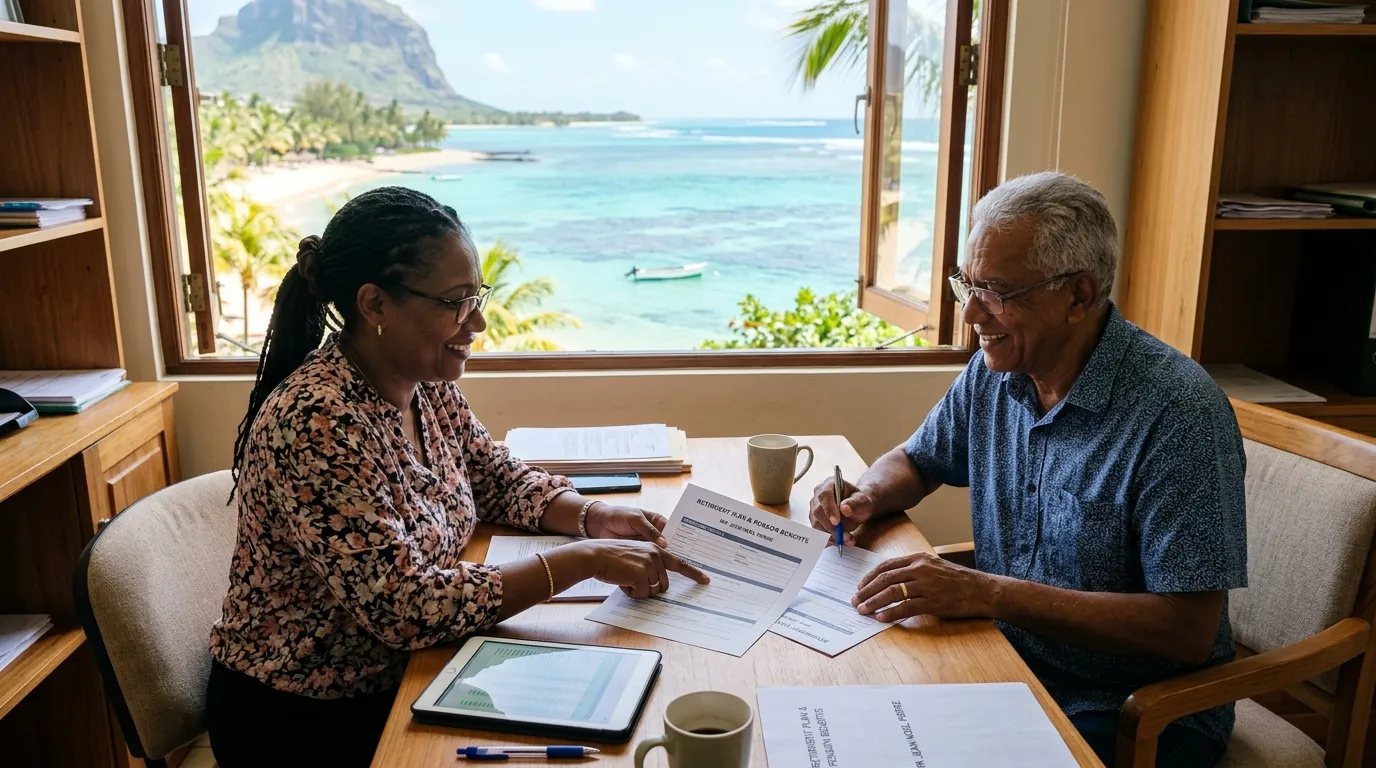

A scouting trip changes everything.
In just a few days, you can see if a neighborhood suits you, if your commute is realistic, and if your plan to move there is truly viable. The idea isn't to visit Mauritius like a tourist, but to test out a future daily life.
Why take a scouting trip before installation?
The site visit helps you test your project on the ground. For visa, residency, and permit matters, the Passport and Immigration Office is the reference authority, while the Corporate and Business Registration Department The regulations govern the registration of domestic companies and stipulate that a domestic company must have at least one resident director and a registered office in Mauritius. The rules are subject to change, so it is always advisable to check the latest version of the procedures before booking any costly steps.
This trip also helps you prioritize the essentials over the secondary ones. You'll consider the location, traffic, access to services, potential schools, health insurance coverage, and the feasibility of your daily budget. If you're planning a long-term move, it's better to leave the initial scouting trip with a clear shortlist rather than just a general impression. A thorough scouting trip reduces mistakes, regrets, and unnecessary expenses.
A good search doesn't aim to see everything. It seeks to validate, under real-world conditions, that the accommodation, the commute, and the procedures are compatible with your future life.
Typical itinerary for a 7 to 14 day stay
The most effective format remains a short but structured stay. It should alternate between site visits, useful meetings, and time for comparison. If you stay longer, leave some buffer days to revisit a site visit, re-examine a neighborhood at a different time, or adjust your schedule.
Typical program for a 10-day reconnaissance trip
| Time of stay | Objective | What you check | Expected result |
|---|---|---|---|
| Day 1 | Getting your bearings | Priority areas, travel time, general atmosphere, initial trips | A first mental map of the terrain |
| Day 2 | Explore the neighborhoods | Nearby services, access, noise, traffic, amenities, immediate surroundings | Two or three truly comparable areas |
| Day 3 | Visiting accommodations | Condition of the property, brightness, ventilation, storage, maintenance, rental conditions | A shortlist of credible properties |
| Day 4 | Test the routes | Commutes to work, school, services, real-time during peak hours | A concrete idea of everyday life |
| Day 5 | Check family needs | Schools, daily routines, transportation, health, practical organization | Reference points for the whole family |
| Day 6 | Make progress on the administrative side | Questions about stay, residence, company, bank, insurance, documents to prepare | An ordered list of steps |
| Day 7 | Compare and prioritize | Overall budget, compromises, sticking points, next visits | A clearer decision |
| Days 8 to 10 | Consolidate | Second visits, rescheduled appointments, additional checks | An action plan ready to launch |
If you are staying for 14 days, use the extra days to revisit a neighborhood at a different time, review a property you really like, or confirm an administrative appointment that couldn't fit into the initial schedule.
Pre-departure checklist
Before you leave, prepare a simple, legible file that's easy to show during meetings. The goal isn't to take everything, but to have the documents you need readily available to move quickly and ask the right questions.
Documents and information to gather
- Identity documents and digital copies of the people involved in the project.
- Documents relevant to your situation, such as a CV, a project note or a business plan if you are starting a business.
- The supporting documents that may be requested for a residency, schooling or settlement application.
- The list of neighborhoods, accommodations, schools or service providers that you want to compare on site.
- A schedule of appointments already confirmed, with a margin for unforeseen circumstances.
- A digital version of all essential elements, stored securely.
Questions to prepare before each visit
- What is the real weak point of the neighborhood at different times of the day?
- What journeys will be mandatory each week for your daily life?
- What services do you need to have in your immediate vicinity?
- What contractual constraints need to be clarified before signing anything?
- For a business project, which aspects fall under the permit, the company, or the lease?
To centralize your practical preparation, the article on the public transport in Mauritius can help you structure your route planning, especially if your daily commute is a deciding factor.
The visits that are really worth the trip
Housing and neighborhood
Focus on properties that could truly suit your long-term needs. Check the immediate surroundings, noise levels, traffic, natural light, ventilation, humidity, perceived safety, and the actual distance to everyday amenities. A property may look ideal in photos but be far less practical once you experience commuting.
- Visit the property at several times of the day if possible.
- Look at what is happening around the dwelling, not just inside.
- Ask how maintenance, repairs and lease termination are handled.
- Check the quality of connections and essential services before making any plans.
Daily commutes
A route that looks reasonable on a map can become tiring during rush hour. Test out the routes that really matter, such as home to school, home to work, or connections to essential appointments. This is also a good time to compare travel options with your actual lifestyle, without relying on a simple estimate.
Schools and family rhythm
If you are coming with children, your research should include admissions, the language of instruction, the timetable, daily logistics, and travel time. Try to understand how mornings, school pick-ups, and after-school activities would be organized. The goal is to verify practical feasibility, not just the reputation of a particular sector.
Health and insurance
Identify the health services you might need, then check your insurance coverage and reimbursement terms. It's better to ask your questions before moving in than to discover an exclusion or coverage limit afterward. The guide on the Mauritian healthcare system and health insurance can serve as a basis for preparing these points.
Administrative checks not to be forgotten
For a residency, investment, or business start-up project, use the reconnaissance trip to confirm the major steps with the appropriate authorities. The Passport and Immigration Office handles visa, residency, and occupancy permit matters, while the Mauritius Revenue Authority It is worth remembering that the tax system is based on self-declaration and that tax residence can change how income is taxed.
If your project involves setting up a company, the Corporate and Business Registration Department specifies that a domestic company must have at least one resident director and a registered office in Mauritius. For payroll, accounting, customs clearance, taxation, or legal matters, have your case reviewed by a professional, especially if your structure is complex.
From France, impots.gouv.fr explains that the reporting procedures change in the event of departure abroad, and France Diplomacy France recommends registering with the French Nationals Living Abroad Register for stays exceeding six months. If your project also involves professional activities, France Travail offers a helpful starting point for preparing the necessary procedures and logistics before departure.
What budget should be allocated for the scouting trip?
There's no single budget. Spending depends mainly on the length of your stay, the comfort level of your temporary accommodation, the number of neighborhoods you'll be exploring, and the number of appointments you want to fit into the same trip. The most helpful approach is to create a budget item by item, then add a contingency for unexpected expenses.
- International travel and local transfers.
- Temporary accommodation for the duration of the site survey.
- Meals, communications and small daily expenses.
- Additional visits if you need to revisit a property or neighborhood.
- Any potential meetings with service providers or professionals involved in the project.
If your relocation involves visas, residency, real estate, or business creation, compare the overall cost of relocation, not just the initial search. This is often where the differences lie.
FAQ
What are the steps involved in a scouting trip before settling in Mauritius?
The most effective approach is to proceed in four stages. First, you define your priorities before leaving, such as the neighborhood, the type of housing, or the schools. Then, once there, you test the areas, the commutes, and the everyday services. Next, you check the necessary administrative procedures, especially if your project involves a permit, residency, or a company. Finally, you leave with a clear shortlist and realistic next steps, instead of just a general impression.
How to organize a scouting trip to check accommodation, transport and essential services in Mauritius?
Set aside separate time slots for each priority. Start with neighborhoods, then move on to housing, transportation, and essential services like healthcare or schools if you're traveling with family. Ideally, retrace at least one important route at two different times of day. Note what really matters in a simple table, then compare your observations before making a decision. To prepare the transportation and healthcare sections, the dedicated articles on this site can serve as a starting point.
What budget should be planned for a 7 to 14 day scouting trip before moving to Mauritius?
Rather than a single amount, build your budget item by item. The core costs include temporary accommodation, travel, meals, communications, and a buffer for additional visits or rescheduled appointments. The budget also depends on your desired level of comfort and the number of areas you want to compare. If you need to meet with multiple professionals, add this line item from the start to avoid any unpleasant surprises.
What administrative procedures should be checked during a reconnaissance trip before settling in Mauritius?
First, check your residency status with the Passport and Immigration Office, especially if you are applying for a visa, residency, or occupation permit. If you are setting up a company, also check the requirements of the Corporate and Business Registration Department, particularly regarding the registered office and resident director for certain structures. In France, impots.gouv.fr and France Diplomatie remind you that moving abroad may affect your tax and consular procedures. The rules change, so always check the most recent version.
Which neighborhoods should be prioritized in Mauritius during a scouting trip for a long-term expatriation?
It's better to think in terms of criteria rather than neighborhood names. First, look for compatibility between your lifestyle, your commute, your family's needs, and essential services. A good area for a family isn't necessarily the best for an entrepreneur or someone working remotely. During your initial search, focus on comparing actual travel time, access to amenities, and the overall atmosphere. This combination should guide your final choice, not a general impression of the area.
And now ?
If your initial assessment confirms that the project is the right one, proceed to the next step with EXPAT MAURITIUS to move forward with visa, residence, real estate, relocation or business creation with personalized support and a free assessment.