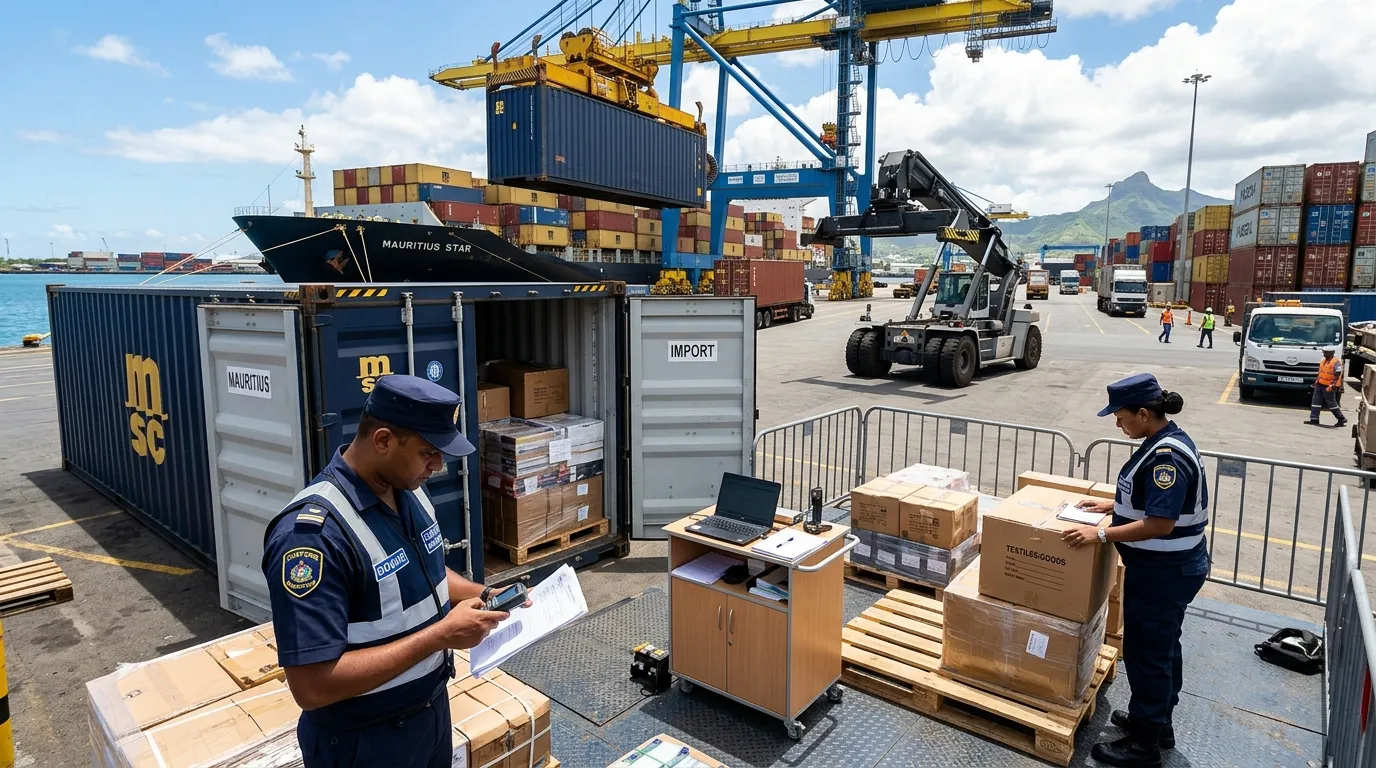
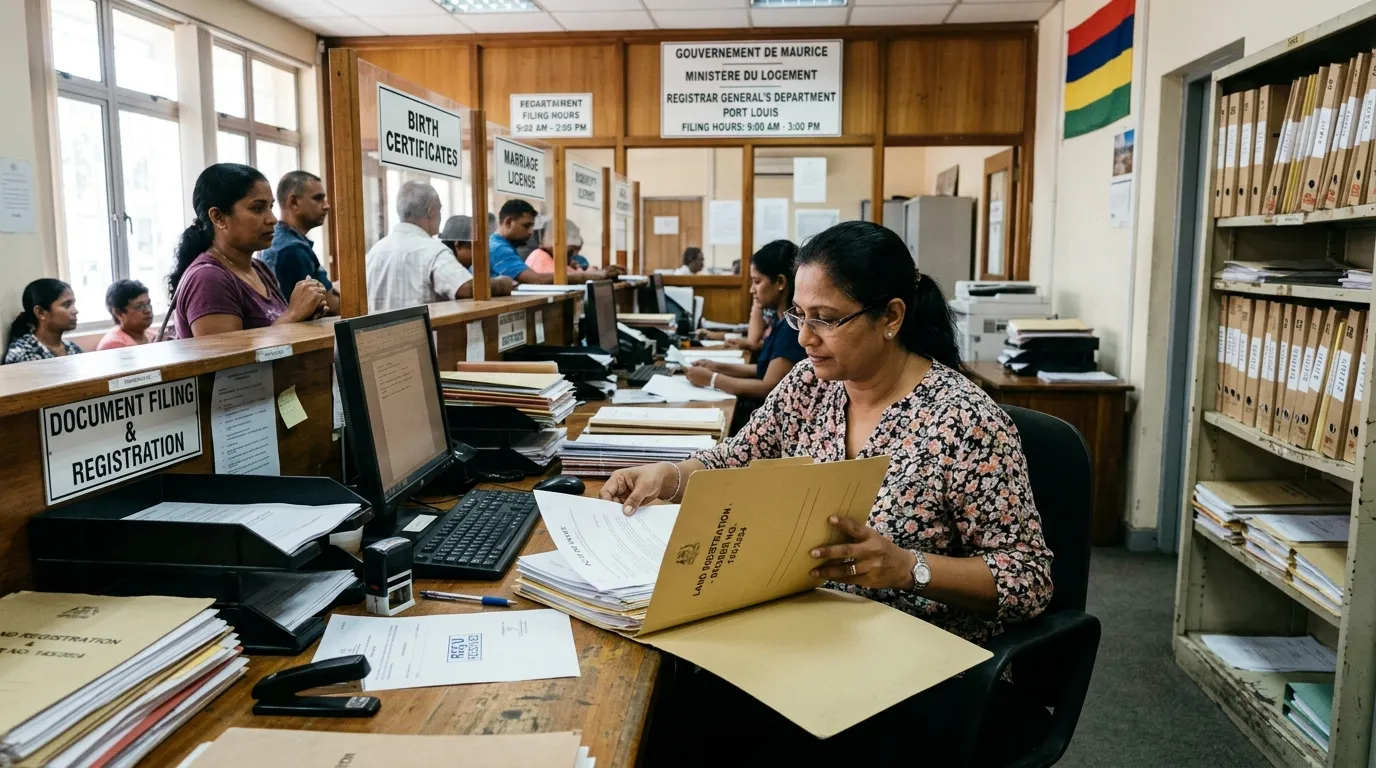
Registering a trademark in Mauritius is done through the PIO, the Industrial Property Office of Mauritius, often referred to as IPOM on the official website. The application must be accurate from the outset, as an error in the trademark, classes, or documents can delay the process or even cause it to be rejected.foreign.govmu.org)
The logic is simple on paper, but strict in practice: preliminary search, filing, examination, publication, opposition, and then certificate if everything holds up. Protection remains territorial, so a trademark registered in Mauritius protects Mauritius, not the rest of the world.
What a Mauritian brand protects
In Mauritius, a trademark serves to distinguish your products or services from those of others. The right to trademark arises upon completion of the registration process, and Mauritian law links the application to a representation of the trademark, the applicant's identity, and a list of goods or services classified according to the applicable international classification. In practice, therefore, one must consider the mark, the wording, and the classes simultaneously.
The key point for an entrepreneur setting up a business is this: a brand does not replace a company, a license, a permit, or tax registration. It protects a specific intangible asset. The other formalities of your establishment are handled separately.companies.govmu.org)
Who can register a trademark, and is a local agent required?
An individual or a company can file, but the use of an agent depends on the place of residence or principal place of business. If you are Mauritian or your company is effectively incorporated in Mauritius, you can file yourself. If your residence or principal place of business is outside Mauritius, the application must be submitted through a lawyer residing and practicing in Mauritius or through a licensed agent.foreign.govmu.org)
- The local applicant can act without a compulsory agent if they have an effective presence in Mauritius.
- The non-resident applicant must be represented by an authorized local professional.
- If you appoint an agent, the power of attorney must be registered with the Registrar General and filed with the application or within two months of filing.
What the TM 1 form must contain
The official filing form, TM 1, includes the elements that the PIO expects in a complete application. The trademark must be clearly represented, the goods or services must be listed by class, and certain statements are mandatory if the trademark contains foreign words, a transliteration, or a claim of priority.foreign.govmu.org)
- The applicant's name and address must be accurate and consistent with the other documents in the file.
- The representation of the brand must be clear, legible and conform to the frame provided by the form, with a size not exceeding 8 x 8 cm.
- The type of mark must be specified where applicable, for example word mark, service mark, three-dimensional mark, collective mark or certification mark.
- The list of products or services must be grouped by classes of the applicable international classification.
- If the mark contains non-Roman words or a language other than English or the national language, a transliteration or translation must be provided.
- If you are claiming priority, the application must state this and proof of the previous filing must follow within the specified timeframe.
Step-by-step procedure in front of the PIO
THE Official PIO guide for applicants Mauritian law outlines a very concrete sequence. The key point is to submit a complete application from the outset, as the PIO reviews the application, may request corrections, and then publishes the application before the opposition is opened.
- Conduct a prior art search before filing. The PIO recommends checking that no identical or very similar trademarks already exist in its registers. The application should not be based on mere intuition, as the office will then conduct its own review.
- Prepare the TM 1 filing with the reproduction of the trademark, the applicant's name, address, type of trademark and the list of goods or services correctly classified.
- Submit the application with the prescribed fee. The law specifies that the filing fee is non-refundable, which makes the quality of the application even more important.
- If the application is incomplete, the Director will notify you of the omission, and you will have two months to correct it. If the application is not corrected within this timeframe, it will be considered as not having been submitted.
- The PIO then reviews the application. If the requirements are not met, it may request additional information or a modification. If there is no response, the application is withdrawn.
- If the application is accepted, it is published in the Official Gazette. This publication triggers the objection period.
- Following the opposition, and if no objection blocks the registration, the PIO registers the trademark and issues the certificate.
Which classes should I choose?
The reference classification is the Nice classification, available in WIPO version NCL(13-2026), with 34 classes of goods and 11 classes of services. Mauritian regulations require that goods or services be grouped according to the applicable classes, and form TM 1 allows for multiple classes to be covered on a single application if they are clearly indicated.
To visualize the logic, consult the WIPO Nice Classification. It remains the international basis used for correctly labeling trademarks.
- Class 35 Advertising, business management, administration, and office functions. It is often relevant for commercial activities, business consulting, and certain uses related to e-commerce.nclpub.wipo.int)
- Class 36 Financial, monetary, banking, insurance and real estate services. It targets, for example, credit, financial management or real estate agency services.nclpub.wipo.int)
- Class 41 Education, training, entertainment, sports, and cultural activities. It is suitable for schools, training centers, educational content, and leisure.wipo.int)
- Class 43 : catering services and temporary accommodation. It notably covers catering, hotels and short-term accommodation services.wipo.int)
The right approach is to choose classes based on what you actually sell or provide, not just what you might do someday. A broad application can complicate the review, while a narrow one can leave gaps in your protection.
Official costs published in 2026
The PIO displays an official fee schedule on its page of fees for brands. The amounts below are those published by the administration in 2026, excluding any consulting, translation or representation fees.
Table of brand fees in Mauritius
| Operation | Official amount | Helpful note |
|---|---|---|
| Registration request | Rs 3,150 for an application covering up to two classes. | The public scale refers to "any two classes". |
| Extra class | Rs 1,575 per additional class. | The additional cost is added to the base demand. |
| Opposition | Rs 2,100 for filing a notice of objection. | The opposing third party must provide reasons for their objection. |
| Renewal | Rs 3,150 for an application covering up to two classes. | The renewal follows the same class logic. |
| Additional class for renewal | Rs 1,575 per additional class. | This should be considered if your certificate covers more than two classes. |
| Late renewal surcharge | Rs 1,050. | Mauritian law allows for an additional six-month period, subject to this surcharge. |
In addition to these public fees, there may be practical costs, such as preparing trademark descriptions, hiring a local professional if you are a non-resident, or translating a trademark into a foreign language. These costs are not set by the PIO itself.
Time limits, objections and risks to be aware of
The legal framework is established by the’Industrial Property Act 2019 of Mauritius. For a trademark, the initial term is 10 years from the filing date, then protection can be renewed for successive 10-year periods.
From a procedural standpoint, three key deadlines must be noted. First, two months to correct an omission flagged by the PIO. Second, the objection period, which is two months from the date of publication according to the official PIO FAQ. Finally, six months to request the Director to reconsider a refusal. No document consulted guarantees a single, overall timeframe for the entire procedure, so the actual timeline depends on the completeness of the application and any potential appeals.
- If you do not correct an omission within the requested timeframe, the application is considered not to have been filed.
- If the PIO requests additional information or an amendment and you do not respond, the request is dropped.
- If an objection is filed and you do not file a counter-declaration, the application is deemed abandoned.
- If the renewal is not carried out, the trademark may lapse and be removed from the register.
- In the event of non-use for at least three years, an interested third party may request the cancellation of the trademark.
In practice, the best way to secure the schedule is to prepare the research, classes and rooms in advance, and then respond quickly to any request from the PIO.
Brand and installation in Mauritius: what not to confuse
If your brand is involved in a business setup or creation project, the brand is just one piece of the puzzle. Depending on your structure, you may also need to go through the... guide to setting up a company in Mauritius and by the page on trade fees and business licenses in Mauritius. The PIO handles the trademark, but other bodies manage the legal structure, taxation, or sector-specific authorizations.
- CBRD, Registrar of Companies. The Corporate and Business Registration Department is the one-stop shop for business registration, incorporation and Business Registration Number.
- MRA. The Mauritius Revenue Authority manages companies' tax obligations, registrations, and tax returns.mra.mu)
- EDB. The Economic Development Board supports the establishment of businesses and certain authorizations through platforms such as NELS.edbmauritius.org)
- NTA. For activities related to land transport, the National Land Transport Authority is involved in registration, licensing, and certain road taxes.nlta.govmu.org)
- MQA. The Mauritius Qualifications Authority oversees the accreditation of training institutions and the recognition of qualifications.mqa.govmu.org)
- Civil Status Office. The Civil Status Division registers births, marriages, and deaths and issues civil status certificates.csd.govmu.org)
Frequently Asked Questions about trademark registration in Mauritius
How do I register a trademark in Mauritius with the PIO and what are the exact steps?
The procedure begins with a prior art search, followed by completing form TM 1 with the trademark representation, the applicant's identity, and a list of the goods or services correctly classified. The Patent Office then examines the application, may request corrections, publishes the application in the Gazette, and opens an opposition period. If no opposition blocks registration, the certificate is issued. If you are a non-resident, a local agent or a Mauritian lawyer is required.
What are the trademark registration fees in Mauritius per class and how are additional classes added?
The official 2026 PIO fee schedule shows Rs 3,150 for an application covering up to two classes, then Rs 1,575 for each additional class. The same logic applies to renewals. An objection costs Rs 2,100 and the late renewal surcharge is Rs 1,050. These amounts are public fees, excluding agent, translation, or file preparation fees.
How long does the trademark registration process take in Mauritius and what are the typical processing times?
There is no single, guaranteed total timeframe stipulated in the text, as everything depends on the examination and any potential opposition. However, three milestones are clear: two months to correct an omission flagged by the Patent Office, two months to file an opposition from the date of publication according to the official FAQ, and six months to request a re-examination after a refusal. A registered trademark is then protected for 10 years from the date of filing.
Which classes of the international classification should be indicated when filing a trademark in Mauritius?
You must specify the NICE classes that correspond exactly to your products or services. The reference version in 2026 is NCL(13-2026), with 34 product classes and 11 service classes. A single application can cover several classes, provided that each class is clearly indicated. Classes 35, 36, 41, and 43 are frequently used for commercial, financial, training, and hospitality activities.
What is the opposition period after the publication of the trademark application in Mauritius and how do challenges proceed?
The official FAQ of the Patent Office Information Office (POI) indicates that opposition is possible for two months from the date of publication. The opposition must be filed by notice and must state the grounds for the opposition. The applicant receives the notification and must send a counter-declaration with their arguments. If they do not respond, the application is deemed abandoned. If the opposition is rejected, the trademark can be registered. This point is crucial, as it often determines the final security of the application.
And now ?
If your trademark application is part of a larger project to set up or launch a business, you can supplement your preparation with the guide to setting up a company in Mauritius and the guide on licenses and trade fees. To find all the support offered, go to the welcome of EXPAT MAURITIUS.