Mauritian food is first tasted where Mauritians eat: at the market, in snack bars, and in a few unmissable guesthouses. In this article, you will find key addresses (verifiable), ideas for dishes to order, and practical tips to make the most of the local cuisine — whether you are just passing through or already living in Mauritius.
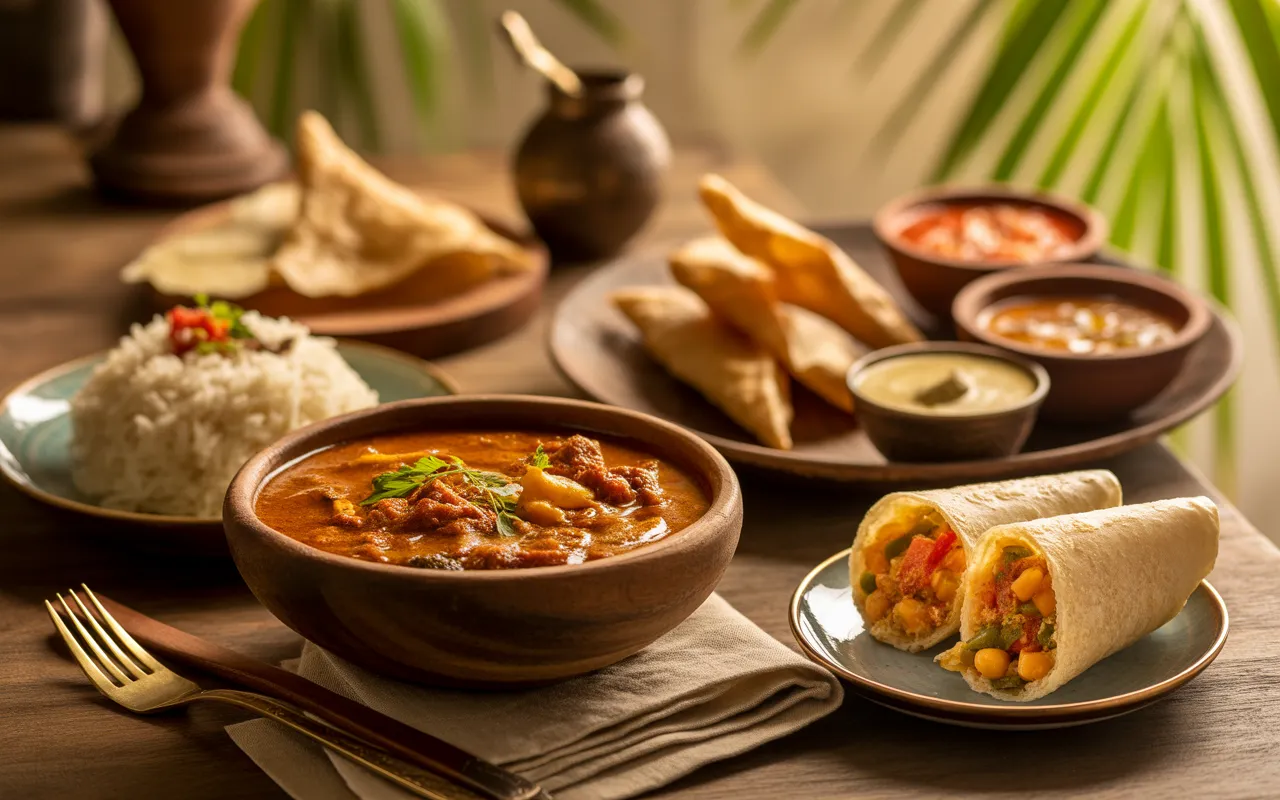
Mauritius lives to the rhythm of its Indian, Creole, Sino-Mauritian, and Muslim influences: this is precisely what makes the cuisine so varied (dholl puri, farata/roti, dumplings, fried noodles, rougaille, vindaye, chili cakes…). And if you're looking for an authentic experience, you're not alone: tourist arrivals have increased from 1,295,410 in 2023 à 1,382,177 in 2024 (official data). Source: Statistics Mauritius (Tourism, Year 2024).
Understanding Mauritian food (to order without making a mistake)
Must-try foods to try at least once
- Dholl puri : thin pancake filled with split peas, served with curry, pickles, satini (often vegetarian).
- Farata / roti : thicker, often rolled and filled (vegetables, chicken, fish…).
- Meatballs : “dumplings” (often in broth) with various fillings.
- Fried noodles / Boiled noodles : stir-fried noodles or in soup, very popular as a snack.
- Rougaille : tomato-spice sauce (often with sausages, fish, chicken…).
- Vindaye : spicy preparation (often fish), with mustard/turmeric/vinegar.
- Chili pepper cakes : spicy doughnuts (perfect at the market).
- Alouda : a very well-known sweetened milk drink in Port-Louis (be careful if you are sensitive to lactose).
Local tip: If you want "like home", look for the words “manzé lacaz” (home-cooked) and “table d'hôtes”. You'll have less "staging" and more taste.
The best "truly local" spots: street food & markets
1) Port Louis Central Market (a must-see at least once)
If you had to choose just one place to understand Mauritian street food, it would be the Central Market From Port-Louis: atmosphere, smells of spices, quick snacks, juice, fruit… and a rapid turnover of stalls (often a good sign).
- Why we go there: dholl puri, chili cakes, various snacks + immersion.
- Good reference point: the market was renovated in 2004 (Information often repeated in travel guides). Source: ArrivalGuides (Central Market, Port Louis).
2) Alouda Pillay (Port Louis): the iconic sweet treat
For alouda, a well-known reference is Alouda Pillay, located in the Central Market, in Port Louis. The official website indicates a presence “since 1930”"as well as the address at the market (Farquhar Street). Source: Alouda Pillay official website.
- To order: a classic alouda (and ask for light ice cream/syrup if you prefer less sweet).
- Good to know: It is a milk-based drink; if you are intolerant, seek advice before buying.
3) Flacq Market (Flacq Centre): the large market in the East
To the East, the Flacq Market is often cited as one of the largest open-air markets. Several reviews and guides recommend going when it's at its busiest (often Wednesday and Sunday). Source: TripAdvisor (Flacq Market).
- Why we go there: fruits/vegetables, spices, and especially snack stands (samosas, doughnuts, etc.).
- Practical tip: Arrive early: heat + crowds + some stalls sell out quickly.
4) Mahébourg Monday Market: Southern atmosphere & quick snacks
THE Mahébourg market is an excellent option if you are in the Southeast. It is particularly lively on Monday (and “double” in size according to travel guides). Source: Lonely Planet (Monday Market, Mahébourg).
- To taste on site: chili cakes, dhal puri/dholl puri, samosas.
- Atmosphere : very “local life”, ideal if you want photos and a real moment of Mauritian life (not a backdrop).
Key addresses: snacks and restaurants for Mauritian food (by area)
Port Louis: meatballs & "snack" cuisine“
Jim Snack (Port Louis) is regularly cited for its meatballs and its Sino-Mauritian snack-style cuisine. Directories and navigation services list the place at Bourbon Street in Port-Louis, with a telephone number (useful for checking opening hours before you travel). Source: Waze (Jim Snack).
- To ask: Assortment of meatballs + a version in broth if available.
- When to go: preferably on weekdays, before the lunchtime rush (if possible).
Rose Hill / Beau Bassin: dholl puri “institution”
Dewa Dholl Puri (Rose Hill / Beau Bassin) is one of the names that often comes up when talking about dholl puri. Public listings indicate an address at 48 Rue Léoville The man (Beau Bassin–Rose Hill). Source: Wanderlog (Dewa Dholl Puri).
- To ask: dholl puri with accompaniments (curry, pickles, satini).
- Advice : Arrive early: some vendors sell out on popular products, especially on busy days.
Moka (central part of the island): a true Creole guesthouse
For a structured (but authentic) “manzé lac” experience, Creole Stopover Moka is a very well-known address. The official website clearly describes the concept (lunch, reservations required) and the typical dishes (rougaille, cari, vindaye…). Source: Escale Créole (official website).
- Why we go there: A complete Creole meal, served just like at home, in a garden.
- Good budget guideline: an aerial guide indicates a menu “from 650 MUR”"(to be considered as a rough guide, prices vary). Source: En-Vols Guide (Escale Créole).
Midlands: Kot Marie-Michelle (wood-fired kitchen)
If you are looking for a very “old-fashioned Mauritius” experience, Kot Marie-Michelle (Midlands) is often mentioned for its authentic cuisine, especially the cooking over a wood fire and the traditional work with spices. Source: Le Mauricien (article on Kot Marie-Michèlle).
- Go there for: the “dinner at a local’s home / table d’hôtes” experience, more so than for a “restaurant” menu.
- Advice : Plan ahead (booking): this type of venue often operates on a limited number of guests.
Flic en Flac: Mauritian cuisine easily accessible (convenient after the beach)
The Mauritian Pot (Flic en Flac) is a frequently cited address by travelers for eating "local" food on the West Coast. The TripAdvisor listing specifically mentions its location on Royal Road, Flic en Flac and a telephone number, useful for confirming the times. Source: TripAdvisor (La Marmite Mauricienne).
- To ask: a typical dish (rougaille, vindaye, mine, or a curry) rather than an “international” choice.
- Advice : If you are coming in a group, book in advance or arrive early: some rooms fill up quickly.
Flic en Flac: Roti / Farata to take away
For a quick bite, Roti Aka Vinoda (often mentioned in Flic en Flac) is known for its convenient rotis/faratas to take away. There is an online presence and reviews via travel platforms (useful for checking the location on the day). Source: TripAdvisor (Roti Aka Vinoda – photo/review).
- To ask: roast (vegetarian version if you want something light) or chicken if you want something more substantial.
- Best use: quick lunch, picnic, or "post-beach" meal.
Trou d'Eau Douce (East): Seafood & local cuisine
If you are heading towards Île aux Cerfs, At Tino's Trou d'Eau Douce is a well-known address (especially for seafood). The listing indicates the location on Royal Road and contact information. Source: TripAdvisor (Chez Tino).
- To ask: Fish, prawns, octopus (depending on availability), Creole dishes.
- Advice : favor seafood specialties (logical for the location, and often more “signature”).
Grand Baie (North): Rougaille & popular Creole cuisine
Creole Rougaille Grand Baie is a highly recommended address for Creole cuisine, specializing in seafood and rougaille. The listing indicates the Sunset Boulevard and the phone number. Source: TripAdvisor (La Rougaille Créole).
- To ask: a rougaille (depending on the day) or a “Creole” seafood dish.
- Advice : A good option if you want a "sit-down" restaurant while staying true to the Mauritian spirit.
Summary table: what to eat, where to go, and what to ask for
| Speciality | Where to taste it (key address) | How to order (simple) | Encrypted reference (when available) |
|---|---|---|---|
| Dholl puri | Dewa Dholl Puri (Beau Bassin–Rose Hill) | “A dholl puri with pickles and satini” | Listings mention “very affordable” prices and benchmarks that vary depending on the period. Source (address/info): Wanderlog. |
| Meatballs | Jim Snack (Port Louis) | “Assortment of meatballs + broth” | — |
| Manzé lacaz (guest table) | Creole Stopover (Moka) | Book a lunch, tasting menu | Menu listed as “from 650 MUR” in a guide (to be verified on site). Source: In-Flight Guide. |
| Alouda | Alouda Pillay (Central Market, Port Louis) | “A classic alouda” | Brand present “since 1930”. Source: official website. |
| Market & street food | Mahébourg Monday Market | Snacks in small portions (chili cakes, dhal puri…) | The market “doubles” on Mondays (guide marker). Source: Lonely Planet. |
Practical tips for eating well in Mauritius (without any unpleasant surprises)
Hygiene & choice of stalls: the simple rule
- Follow the lines : where things move quickly, the products stay fresher.
- Opt for the “minute” option.” : hot fried food, roasts prepared in front of you, steaming hot broths.
- Keep cash : markets and snack bars often operate on a cash basis.
- Spices : ask for “not too spicy” if you are not used to it (Mauritian chili can be surprising).
Vegetarian, vegan, halal: it's often simpler than you think.
Mauritian cuisine naturally offers many meat-free options (dholl puri, numerous pickles, leafy greens, noodles/vegetables, etc.). For specific dietary requirements (halal, allergies), the safest option is to ask the question at the stand/restaurant and avoid the “mystery” sauces if you are sensitive.
Settling in well in Mauritius when you love eating local food
You discover the island through its markets, then you realize that you want to live there? It's common: Mauritian food quickly becomes a daily reference point (quick lunch at the snack bar, shopping at the bazaar, table d'hôtes on the weekend...).
To prepare for your move (neighborhoods, schools, banks, insurance, etc.), you can also consult the resources of Expat Mauritius: Living in Mauritius: turnkey expatriation and real estate and the expatriation guides.
FAQ – Mauritian Food: Frequently Asked Questions
Where can I eat “authentic” Mauritian food without going to a hotel restaurant?
The easiest way is to head to the markets (Port Louis, Flacq, Mahébourg) and well-known snack bars. The Central Market in Port Louis is an excellent starting point: you can sample several specialties in small portions and observe the true local rhythm. Then, complement this with a table d'hôtes (for example, at Moka) for a complete Creole meal, often served in several courses. Ideally, you should mix it up: market (snacks) + table d'hôtes (meals) + a sit-down Creole restaurant from time to time.
What is the best time to go to the Central Market in Port Louis?
Aim for the morning, especially if you want to avoid the heat and enjoy the well-stocked stalls. In Port Louis, things get busy quickly, and some snacks sell out fast. If you're looking for street food, arriving before the midday rush makes the experience more pleasant (less waiting, more choice). Also, consider parking: many visitors prefer to park and then walk. Finally, carry some cash: it makes everything easier at the market.
Which Mauritian dishes are the easiest to make if you don't like chili peppers too much?
Start with mild or customizable options: dholl puri (ask for a little chili sauce), farata/roti with vegetables, noodles (especially the boiled versions), and some mild rougailles. At the market, take a small portion and gradually try different dishes. A good strategy is to ask for the sauce/chili on the side, when possible. And if you want a more structured experience, a table d'hôtes (a traditional French restaurant) is often simpler: they can explain what you're eating and adjust the dish accordingly.
Where can you taste real “manzé lacaz” in Mauritius?
The "table d'hôtes" (host's table) is the closest thing to a Mauritian "family meal": dishes served in several courses (rice, grains/lentils, curry/rougaille, vegetables, chutneys). Places like Escale Créole in Moka are known for offering this type of experience by reservation, in a simple, local setting. Other "table d'hôtes" exist on the island (especially towards the center). The appeal: you discover traditional recipes, often cooked more slowly, and a genuine approach to everyday cooking.
And now ?
If you started by searching where to eat Mauritian food, Chances are you're also imagining your daily life here: neighborhoods, commutes, schools, administrative procedures, and even your favorite food spots. For a smooth transition to Mauritius (visas/permits, real estate, settling in, and support), you can explore Expat Mauritius on the page Living in Mauritius: turnkey expatriation and real estate and browse the expatriation guides.