The best Mauritian cuisine is found where Mauritians actually eat.
If you are looking Where to eat Mauritian specialties in Mauritius, Opt for a simple and ultra-effective combination: the markets (for street food), snacks/tobacco (for "gajak" snacks) and some local addresses clearly identified by city. In this guide, you will find specific places (Port Louis, Mahébourg, Rose Hill, Curepipe…), must-try foods, and practical advice for eating well, even on your first visit.
And if you come to Mauritius to settle (or invest), you will also find useful resources on Expat Mauritius to understand life on the island, the procedures and practical aspects.
Mauritian cuisine in 2 minutes: what you'll taste (and why it's unique)
Mauritian gastronomy is a cultural mix : Indian influences (dholl puri, farata, curries), Chinese influences (dumplings, noodles, upside-down bowl), Creole influences (rougaille, vindaye), and European influences. This blending is linked to the island's migratory history, notably the arrival of contract workers in the 19th century (a major part of Port Louis's history, visible in the’Aapravasi Ghat). To put things in context: Aapravasi Ghat is a UNESCO site associated with the arrival of hundreds of thousands of contract workers between 1834 and 1920 (nearly half a million). Source: UNESCO.
On the ground, you will quickly hear a few key words:
- Gajak : small savory snacks (chili cakes, samosas, meatballs…).
- Rougaille : spicy tomato sauce (often with thyme, garlic, chili).
- Satini : chutney/condiment (coriander, coconut, tomato, etc.).
- Mines : noodles (boiled or fried).
Good to know: in 2024, Mauritius hosted 1,382,177 tourists (compared to 1,295,410 in 2023), which also explains the diversity of offerings between local street food and more “experience” restaurants. Source: Statistics Mauritius (year 2024).
The best places to eat Mauritian food (without making a mistake)
1) Markets: the best “authenticity/choice ratio”
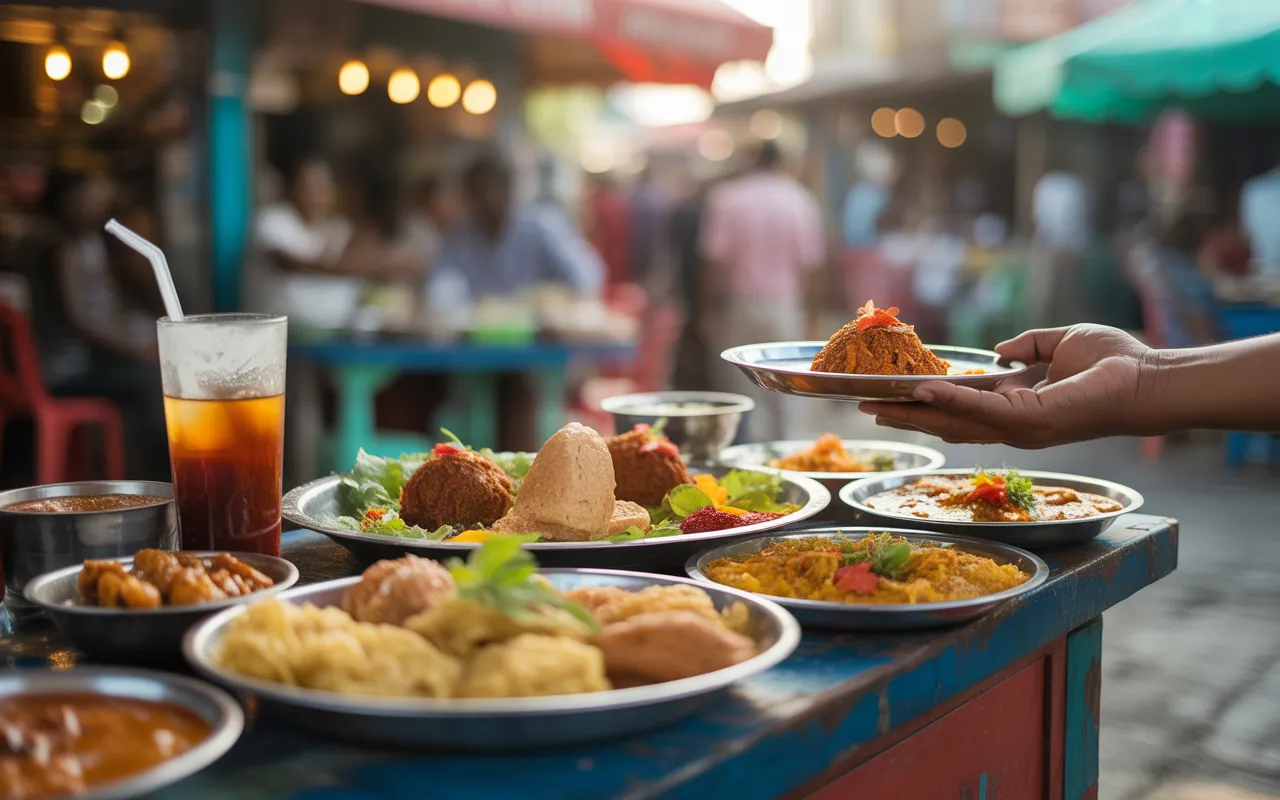
To sample as many Mauritian specialties as possible in a short amount of time, the markets are unbeatable. You will find dholl puri, samosas, chili cakes, cane juice, noodles, alouda… often prepared right before your eyes.
- Port Louis Central Market Ideal for enjoying street food, spices, and local products. You'll easily find dholl puri, samosas, chili cakes, and cold drinks. To plan your visit (opening hours and organization), you can consult a practical guide like ArrivalGuides – Central Market Port Louis.
- Mahébourg Market Known for its atmosphere and "gajak" stalls, with a major peak in activity on Mondays (large market). A good starting point for experiencing the local atmosphere and street food. Wanderlog – Mahebourg Market.
Local tip At the market, trust the queue. In Mauritius, the best deal is often the simplest one. the queue of regulars.
2) Snack bars, tobacconists and counters: perfect for eating “like every day”
When we talk about everyday Mauritian cuisine, we think of small places where you can eat quickly, well, and locally. Two formats often come up:
- The snack (counter, takeaway, sometimes a few tables).
- “Tobacco” (in the Mauritian sense: small neighborhood shop where you can also have a snack).
Here are a few easy options if you want to try it without too much searching:
- Taba-J (“street food” concept) A selection of classic dishes (dholl puri/rotis, dumplings, noodles, chili cakes, alouda). Convenient for a first taste, especially if you're looking for a simple option. Source: Attitude Hotels – Taba-J.
- 42 Market Street (Bagatelle) : a very “lively” place where you can find products and street food under one roof, often recommended to capture the spirit of the times in terms of food. Source: Condé Nast Traveler (local guide).
- Tabazy Moris (Bagatelle / Phoenix) : a showcase of Mauritian products and delicacies, convenient if you want to buy/bring back specialties. Source: Ascencia Malls – Tabazy Moris.
3) City “spots”: where to go according to your itinerary
- Port Louis Central Market + nearby alleys (street food), and a detour through Chinatown for Sino-Mauritian influences (dumplings, noodles, upside-down bowl).
- Rose Hill / Beau Bassin : very good sector for the dholl puri (often cited iconic address: Dewa & Sons). Source: The Guardian (reporting by dholl puri).
- Curepipe : ideal city to try savory snacks and “tea time” (farata, chili cakes, boiled noodles) in local style.
- Mahébourg : perfect for combining market + seafront, and tasting alouda / gajak in a more “southern” atmosphere.
Mauritian specialties you absolutely must try (and where to find them easily)
Here is a clear list of classics, with concrete ideas of "where" so as not to go around in circles.
- Dholl puri Try them at the market (Port Louis) or in towns known for their vendors (Rose Hill). The Guardian notably highlights the importance of Dewa & Sons in dholl puri culture. Source: The Guardian.
- Roti / farata : present in most snacks, often more “substantial” than dholl puri.
- Chili cakes (gato pima) The iconic gajak, made from blended split peas, herbs and chili. A local recipe published in 2024 confirms the key ingredients (split peas, cumin, coriander, garlic, green onion, chili). Source: Le Mauricien (February 25, 2024).
- Samosas : easy to find in markets and snack bars, perfect for starting out “soft” in terms of chili.
- Dumplings (Mauritian dim sum) : rather in Port Louis (Chinatown and surrounding areas) or in the food courts.
- Boiled noodles / Fried noodles : for a quick option, often customizable (egg, chicken, vegetables).
- Upside-down bowl A classic Chinese-Mauritian dish, very common in restaurants/cafés (often in Port Louis). For a simple description of the dish (rice + stir-fried vegetables + egg, served "upside down"), see: Restaurants.mu – Top Mauritian dishes.
- Mauritian biryani : a local version of biryani (often with potatoes, fried onions, herbs). A chain known for its "biryani" specialty is Star Deg Briani (multiple outlets). Source: My Guide Mauritius – Star Deg Briani.
- Rougaille : to try as a daily special in a Mauritian restaurant (fish, sausage, chicken…), depending on availability.
- Vindaye : tangy/spicy preparation (often fish), very distinctive and addictive.
- Alouda : sweetened milk drink with basil seeds and agar-agar, perfect after chili peppers.
- Neapolitan : very popular biscuit/pastry (often found in bakeries/tea rooms).
Practical guide: what specialty to eat, where to go, and when to go
| Speciality | Where to easily taste it | Best time | “Local” council” |
|---|---|---|---|
| Dholl puri | Port Louis Central Market; Rose Hill (reputable addresses) | Morning (before noon) | Choose the stand with the longest queue |
| Chili cakes | Markets (Port Louis, Mahébourg); snacks | At any time (ideally warm) | Ask if it comes out "just fried"“ |
| Meatballs | Port Louis (Chinatown area); food courts | Noon | Try several varieties (fish, shrimp, veg) |
| Mines (boiled/fried) | Snacks in town; markets | Midday / late afternoon | Add an egg for a more complete version |
| Briani | Specialty restaurants and takeaways (Port Louis and elsewhere) | Midday (best turnover) | Check the chili level before ordering |
| Alouda | Port Louis (Central Market) | After a spicy dish | Highly appreciated as a “refreshing” drink” |
“You can't go to Bazar Port Louis without drinking an Alouda Pillay” — Alouda Pillay
For a “legendary” option at the Central Market, Alouda Pillay indicates being present on site (and claims a history that goes back to 1930), with an address in Port-Louis. Source: Alouda Pillay official website.
Practical tips for eating well (and enjoying yourself) in Mauritius
- Aim for the morning : in the markets, the stalls are more active, it is less hot, and the turnover is better.
- Ask about the chili level : “not too spicy”"(not too spicy) can save your lunch, especially at the beginning.
- Keep cash : many street food stalls operate on a cash basis, especially in markets.
- Try “a little bit of everything” : take 2-3 different gajacks rather than one big dish, this is the best discovery strategy.
- Vegetarian options : dholl puri, vegetable farata, vegetable noodles, chili cakes… Mauritius is generally very friendly to vegetarians (but confirm the presence of egg/milk if needed).
- Variable hours Even if some guides list opening hours, check before you go (public holidays, weather, events). For example, some guides list the Central Market as opening early in the morning, but opening hours can vary from stall to stall. Reference: ArrivalGuides.
FAQ – Mauritian specialties: your most frequently asked questions
Where can you eat a good dholl puri in Mauritius if you don't know the island?
The easiest way is to start with a large market, especially the Port Louis Central Market, because you'll find several vendors in the same place. Then, if you go through the central platform, Rose Hill is often cited for its dholl puri spots, and travel media have already highlighted local establishments (like Dewa & Sons). In any case, choose a stall with a fast turnover, order "not too spicy" to start, and save room to also try chili cakes and satini.
What are the best markets to try Mauritian street food?
Two reliable options often come up: Port Louis (Central Market) and Mahébourg (market and gajak stalls). In Port Louis, you can easily enjoy dholl puri, samosas, chili cakes, and drinks like alouda. In Mahébourg, the atmosphere is more "southern," and Monday is generally the busiest day, with more stalls. For a first visit, plan your trip (schedule, access) and arrive early: you'll better enjoy the cooler temperatures and the wider selection.
Which Mauritian specialties are vegetarian (and easy to find)?
You have some very good options: dholl puri (often served with vegetable curries and condiments), farata/roti vegetables, chili cakes (split peas, herbs, spices), samosas vegetables, and mines (Noodles) with vegetables. At the markets, simply ask for "veg" or "vegetables," and specify if you're avoiding eggs. If in doubt, choose stalls that cook to order: it's easier to adapt.
Where to drink a "well-known" alouda in Port Louis?
If you want a widely cited reference, Alouda Pillay communicates about its presence at Port Louis Central Market (address indicated on its website) and on a story that goes back to 1930. Alouda is a sweet, milky drink with basil seeds and agar-agar: ideal after a spicy meal or as a refreshing break while visiting the capital. Once there, check the daily opening hours and avoid peak times if you're in a hurry.
What specialties should you try if you like "not too spicy" food?
Start with classics that are generally gentler: upside-down bowl (often less spicy), boiled mines, meatballs, and some dholl puri If you explicitly request a less spicy version, you can adjust the temperature. Conversely, condiments (chili paste, pickles) can be very hot: order them separately at first. The best strategy is to taste gradually, keep a drink like alouda handy, and learn to identify what's spicy… before the first bite.
And now ?
Tasting Mauritian specialties is often the first step towards true immersion… and sometimes the desire to stay. If you are preparing to relocate (family, business project, investment), you can explore resources and practical advice via the expatriation guides from Expat Mauritius. The team assists individuals and entrepreneurs with their procedures (installation, projects, etc.) and can be contacted by phone, WhatsApp, email or online form.