
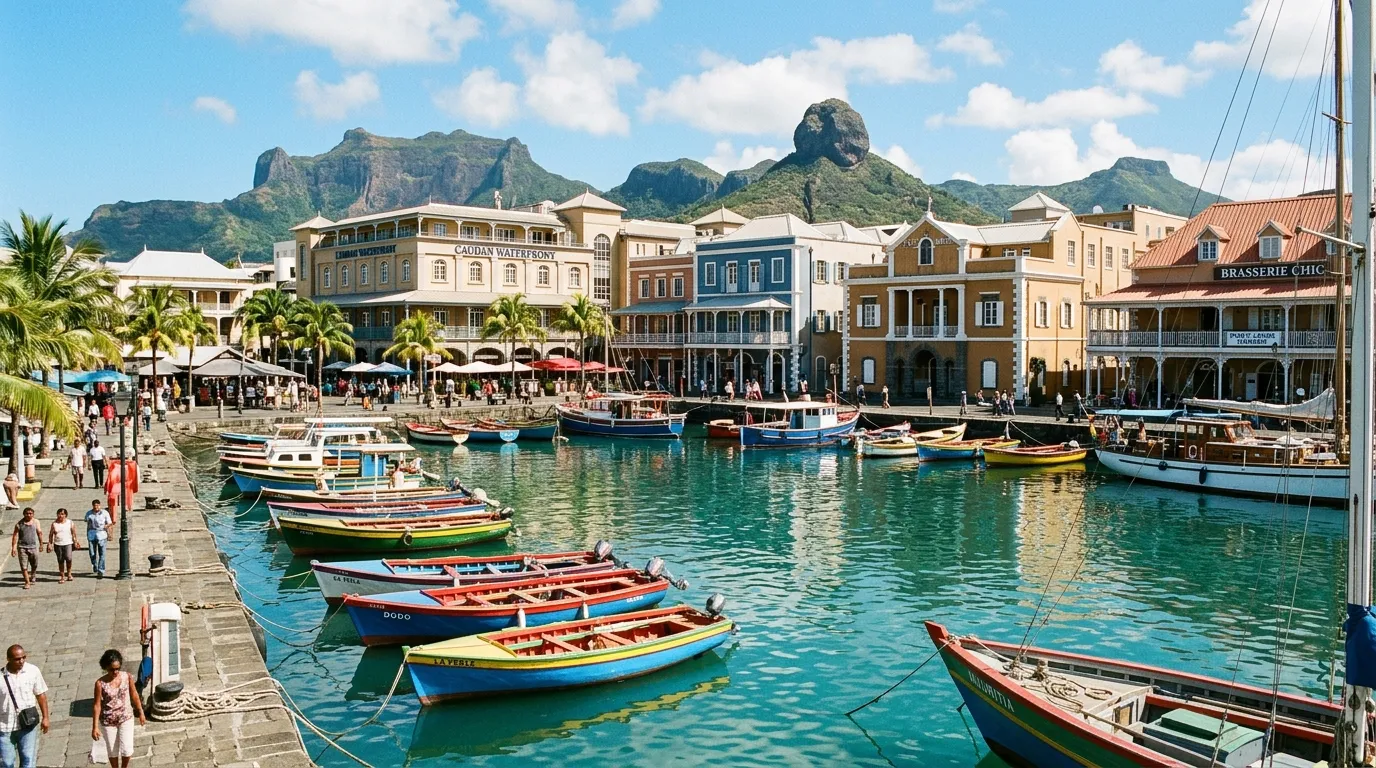
Port-Louis can be visited, tasted and looked at.
The Mauritian capital concentrates a historic port, a lively market and multicultural neighborhoods within a few streets, as recalled Britannica. In practice, this means that you can see a lot of things without leaving the city centre.
If you only have half a day, you can already build a very rich visit around three highlights: history with the Aapravasi Ghat, the local atmosphere with the central market, then a more modern break at the seafront.
Why Port Louis is worth a visit
What makes the capital so interesting is its compact mix of memory and everyday life. The UNESCO profile of Port Louis describes a city where cultural heritage, creative industries and historic spaces play a major role, and highlights the presence of 92 national heritage sites as well as 40 sites of heritage value.
Port Louis is therefore not just a place to pass through. It is a place where the history of Mauritius can be read in its streets, its facades, its markets, its places of worship, and its cultural spaces. The visit takes on its full meaning when one moves from one site to another on foot, observing the city rather than simply passing through it.
What to see and do in Port Louis
Aapravasi Ghat: Understanding the History of Mauritius
Located on the edge of Trou Fanfaron, in the heart of Port Louis, Aapravasi Ghat is a major UNESCO World Heritage Site for understanding the island's history. The former immigration depot recalls the arrival of hundreds of thousands of indentured laborers between 1834 and 1920, a foundational chapter in modern Mauritian society. It's an essential visit if you want to give meaning to your time in the capital. The official UNESCO website It provides the historical and heritage context.
The central market: colours, smells and street food
The central market is one of the best gateways to experiencing the city's rhythm. The official Mauritius Tourism brochure locates this century-old site on Queen Street, halfway between the bus stations, and highlights its lively atmosphere, fruit and vegetable stalls, spices, and traditional food products. The official Mauritian tourism brochure presents it as an essential stop for discovering the scents and flavors of Port Louis. (mymauritius.travel)
Caudan Waterfront and Blue Penny Museum: the cultural seafront
The Caudan Waterfront combines promenade, boutiques, restaurants, and culture in a setting overlooking the harbor. Its official website highlights it as a meeting place for shopping, gastronomy, and cultural activities, notably including the Blue Penny Museum and the Caudan Arts Centre. The Blue Penny Museum is entirely dedicated to Mauritius and its history, with prestigious collections including the famous Post Office stamps. The official website of the Caudan Waterfront And the one from the Blue Penny Museum give a good idea of what you'll find there.
The Citadel, or Fort Adelaide
To gain a broader perspective, the Citadel is a very logical stop on any visit to Port Louis. The official tourist brochure describes it as a stone fortress overlooking the city and the port, built in the 19th century for military purposes, offering a view that is well worth the detour. Even without spending much time there, the panorama of the city center helps to understand the geography of the capital. (mymauritius.travel)
Chinatown, the Company and the historic streets of the center
Port Louis is more than just its monuments. UNESCO highlights Chinatown as one of the city's most significant cultural assets, alongside the Company Garden, which is presented as a vibrant cultural and musical space. Strolling through this area, one quickly passes from a shopping street to a garden, then to a heritage building or a temple, making the walk particularly pleasant.
The Jummah Mosque: religious and architectural heritage
Within the urban fabric of Port Louis, the Jummah Mosque is worth a visit for its spiritual and heritage significance. Official Mauritian tourist information lists it among the iconic sites of old Port Louis, making it a natural landmark during a tour of the historic center. It perfectly illustrates the blend of influences that has shaped the capital. (mymauritius.travel)
The must-sees at a glance
If you have limited time, this table helps you prioritize the most useful steps based on your visitor profile.
| Place | Why go there? | Recommended time | To be combined with |
|---|---|---|---|
| Aapravasi Ghat | To understand the memory of indentured servitude and the historical role of the capital. | 45 to 60 min | The central market. |
| Central Market | To experience the local atmosphere, spices, and street food. (mymauritius.travel) | 45 to 90 min | Aapravasi Ghat and Caudan Waterfront. |
| Caudan Waterfront | For a break between shopping, dining and culture. | 1 to 2 hours | Blue Penny Museum. |
| Blue Penny Museum | For a more nuanced understanding of Mauritian history and collections. | 45 to 75 min | The Caudan Waterfront. |
| Citadel / Fort Adelaide | To enjoy a view of the city and the port. (mymauritius.travel) | 30 to 45 min | The city center. |
| Chinatown and Company Garden | To complete the visit with a multicultural and vibrant neighborhood. | 1 to 2 hours | Jummah Mosque. |
How to organize your visit to Port Louis
For a first visit, the smoothest itinerary is to start early in the historic center, continue to the market, and then finish at the seafront. This approach avoids detours and allows you to move from historical sites to more contemporary atmospheres in just a few streets. (mymauritius.travel)
- Start with the Aapravasi Ghat to set the historical context of the capital.
- Then walk through the central market to enjoy the colours, aromas and local food stalls. (mymauritius.travel)
- Take a break at the Caudan Waterfront, then pop into the Blue Penny Museum if you like history and collections.
- Finish with a visit to the Citadel or a stroll through Chinatown, depending on your energy level. (mymauritius.travel)
Practical tips for enjoying Port Louis
- Arrive early if you want to visit the market in good conditions, as the atmosphere is more pleasant before the peak hours. (mymauritius.travel)
- Group visits close to each other, as the city center lends itself well to a compact itinerary. (mymauritius.travel)
- Bring comfortable shoes, as the best way to discover Port-Louis is often on foot.
- If you enjoy cultural visits, set aside time for the Aapravasi Ghat and Blue Penny Museum duo.
- If you prefer a more leisurely stroll, focus on the market, the waterfront, and a historic district like Chinatown. (mymauritius.travel)
Frequently Asked Questions about Port Louis
What to see and do in Port Louis, the capital of Mauritius?
For a first visit, focus on four key areas: Aapravasi Ghat for its historical significance, the Central Market for a local atmosphere, Caudan Waterfront and the Blue Penny Museum for a more relaxed break, and then the Citadel or Chinatown if you have more time. This combination provides a well-balanced overview of the city, encompassing history, cuisine, shopping, and heritage. Port Louis has the advantage of offering many attractions within walking distance or a very short walk.
Which museums should I visit in Port Louis to learn more about local history?
The Blue Penny Museum is the best starting point if you want to connect Mauritian history, art, and heritage. For a more memorial approach, Aapravasi Ghat remains a must-see, as it recounts the arrival of indentured laborers and the building of modern Mauritian society. If you still have time, the Natural History Museum nicely complements the visit with another facet of the island's heritage. Together, these places offer a deeper understanding of Port Louis than a simple urban stroll.
Where is the Port Louis Bazaar and what is there to do nearby?
The Port Louis Bazaar is located in the heart of the city center, on Queen Street, in a very convenient area for exploring on foot. The official tourist brochure places it halfway between the bus stations, making it easily accessible. Nearby, you can combine the market with visits to Aapravasi Ghat, the Caudan Waterfront, the Blue Penny Museum, or even Chinatown if you want to extend your walk. It's one of the best areas in the capital for experiencing both a lively, bustling atmosphere and a more historical one. (mymauritius.travel)
What are the must-see attractions in Port Louis for a half-day trip?
For a half-day trip, the most efficient route remains Aapravasi Ghat, the Central Market, and the Caudan Waterfront, with a possible detour to the Blue Penny Museum if you're moving quickly. If your priority is the view, replace the last stop with the Citadel. If you enjoy urban walking, add Chinatown and the Company's Garden. The idea isn't to do everything, but to choose a theme: history, food, or a stroll along the waterfront.
How to organize a visit to Port-Louis: suggested itinerary and practical advice?
Start early, especially if you want to enjoy the market in good conditions. Then move on to the closest places, as Port Louis is best explored by minimizing backtracking. A good plan is to start with the historical sites, take a break at the market, and then finish at the waterfront. If you like museums, set aside time for the Blue Penny Museum; if you prefer views, head up to the Citadel. (mymauritius.travel)
And now ?
If your visit to Port Louis is part of a larger project in Mauritius, you can continue reading with Expat Mauritius practical guides, then return to the reception desk at Expat Mauritius to discover the support offered. To check who operates the site, see the page for legal notices is also available.