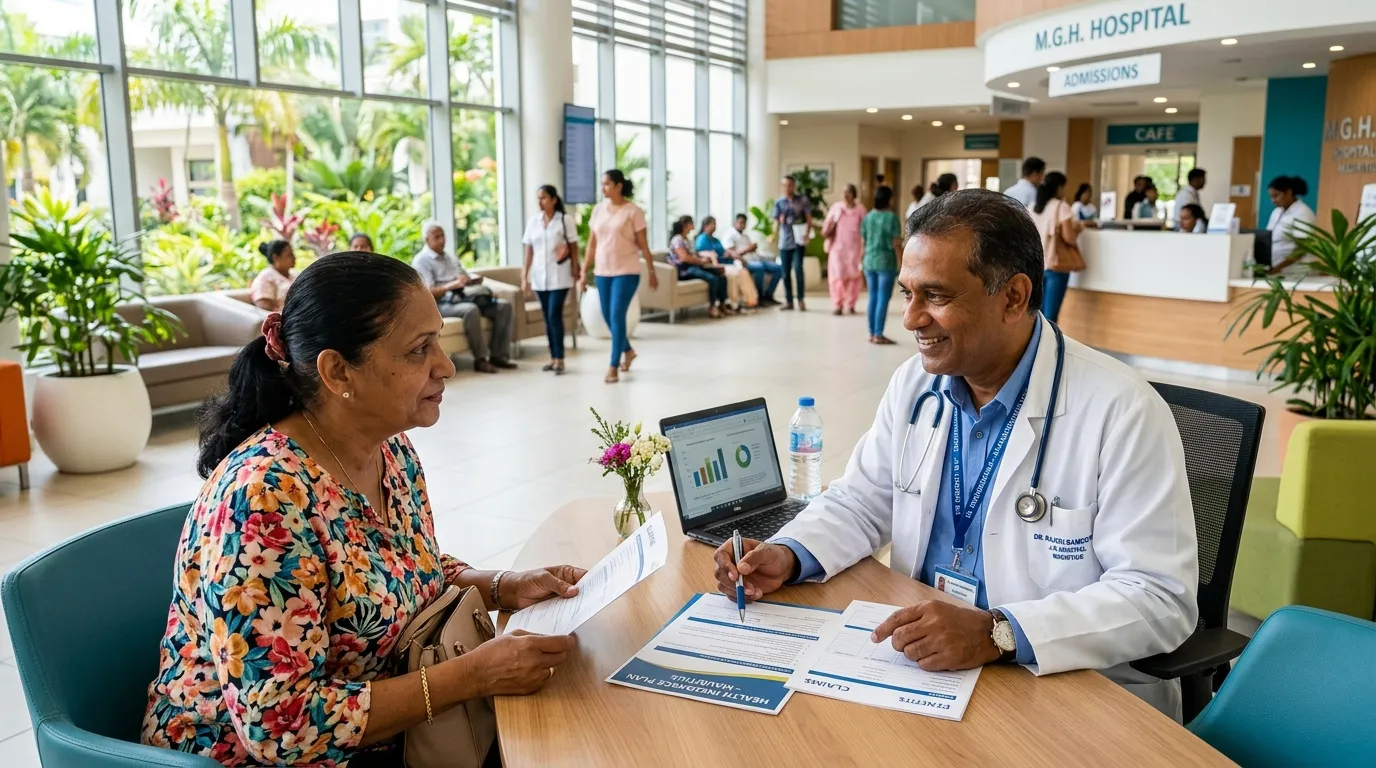
In Mauritius, the healthcare system rests on three pillars. audience, THE private and the’health insurance They complement each other to cover everyday care, more specialized procedures, and the financial risk associated with medical expenses.health.govmu.org)
The issue is also financial. The WHO 2023 report on health financing in Mauritius indicates that service coverage has plateaued and that households facing catastrophic out-of-pocket expenses have increased. In other words, living in Mauritius is not just about knowing where to get medical care: it's also about knowing how to protect yourself from out-of-pocket costs. (who.int)
How does the healthcare system work in Mauritius?
The Ministry of Health and Welfare describes a public system designed for universal health coverage. Its institutional website indicates that approximately 731% of the population uses the public system without direct costs at the point of service. The official presentation of the Mauritian Ministry of Health It also shows that the public mission is to improve access, equity and quality.
The public sector: the foundation of the system
- The public network includes 114 Community Health Centres, 19 Area Health Centres, 6 Mediclinics, 2 Community Hospitals, 2 District Hospitals, 5 Regional Hospitals and 6 specialist hospitals.
- Regional hospitals manage emergencies via the SAMU (Emergency Medical Service) and accident and emergency services, while more than 23 specialties are offered by appointment. The official page of public hospital services details this organization.
- The public remains primarily suited to essential care, chronic follow-ups and urgent procedures, because it serves as the foundation of the national system.
In practice, the Mauritian public sector is a real asset for everyday needs. However, it does not always replace the private sector when a quick appointment, a specific practitioner, or greater comfort become priorities.
The private sector: more flexibility, but a higher cost
The private sector complements this base and absorbs a significant share of total expenditure. National health accounts indicate that in 2019 private spending represented 53.81 trillion rupees of total health expenditure, including 13.7 billion rupees in direct payments from households. Mauritius' 2020 National Health Accounts They also point out that the rise in prices of private services and pharmaceutical products is fueling the out-of-pocket expenses.
Private healthcare becomes particularly useful when speed, appointment flexibility, or choice of practitioner are more important than price. Without adequate coverage, consultations, examinations, and hospitalizations can quickly become a significant strain on the family budget.
The role of health insurance
Private health insurance helps reduce the financial burden of private healthcare and secure your budget. NIC's FAQ explains that it can cover hospitalization, outpatient care, maternity, dental, vision, and certain disaster coverages, depending on the policy chosen. It also specifies that treatment unavailable in Mauritius may sometimes be covered abroad, outside the United States and Canada, within the limits of the contract. NIC Mauritius health FAQ details the pre-authorization and the procedures for coverage.
Quickly compare public, private, and health insurance
| Option | Strengths | Boundaries | Typical use |
|---|---|---|---|
| Audience | Wide access and low or no direct cost for many procedures. | Sometimes a longer journey. | Basic care, emergencies, chronic diseases. |
| Private | More flexibility and choice. | Higher cost. | Rapid consultations, examinations, scheduled procedures. |
| Health insurance | Protects the budget and secures private healthcare. | Ceilings, deductibles, exclusions and deficiencies. | Expatriates, families, employees, seniors. |
This table summarizes the characteristics highlighted by the Mauritian Ministry, public hospital services, national health accounts, the WHO 2023 report and the insurance FAQ cited above.
How much does healthcare cost in Mauritius?
The best publicly available official benchmark is the 2020 National Health Accounts, based on the 2019 fiscal year. It estimates total health expenditure at 30.7 billion Mauritian rupees, or 6.161 trillion GDP. The government financed 46.21 trillion of this expenditure, and the private sector 53.81 trillion, including 13.7 billion rupees in direct household payments. The 2020 Mauritian National Health Accounts also highlight that private healthcare and drug prices contribute to out-of-pocket expenses.
The WHO 2023 report confirms that these figures should be interpreted as a practical signal: coverage of services has plateaued, and the number of households facing catastrophic out-of-pocket expenses has increased. For expatriates, this means that a sound healthcare budget must include the private healthcare scenario, not just the normal functioning of the public system. (who.int)
Official financial benchmarks
| Indicator | Value | Year |
|---|---|---|
| Total health expenditure | 30.7 billion Rs | 2019 |
| State-funded portion | 46,2% | 2019 |
| Privately funded portion | 53,8% | 2019 |
| Direct payments from households | 13.7 billion Rs | 2019 |
| Health expenditure as a percentage of GDP | 6,16% | 2019 |
These figures come from the national health accounts published by the Mauritian Ministry, based on 2019.
Which health insurance should you choose when moving to a new place?
For an expatriate, private health insurance should be chosen as a tool for financial protection. It's not just about "having a card," but about bridging the gap between what public and private insurance offer. The right coverage depends primarily on your age, family situation, medical history, and how often you visit the healthcare system.
Before signing, be sure to check five simple points: the annual limit, the deductible, outpatient coverage, exclusions, and the list of covered facilities. This is where the difference lies between a policy that looks good on paper and one that's truly useful in everyday life.
- The annual limit determines how far the company will support you when the bill becomes high.
- Hospitalization and outpatient care must be clearly covered if you consult frequently or if you have children.
- The pre-authorization This is important because some private treatments need to be validated before the treatment.
- Pre-existing conditions and the waiting periods must be read before signing.
- Coverage abroad can make a difference if treatment is not available in Mauritius.
These criteria align with the logic described in the NIC FAQ, which details hospital care, outpatient care, coverage and exclusions.
If you are aiming for a long stay such as a Premium Visa, the rule becomes as much administrative as medical: the Official Premium Visa FAQ It requires sufficient travel and health insurance, as well as proof of funds and a plan of stay. The visa is valid for one year and is renewable.
FAQ
How does the healthcare system in Mauritius operate between the public and private sectors?
The Mauritian healthcare system is based on a broad public foundation, including health centers, regional hospitals, and specialized facilities, complemented by a private sector that provides services such as faster consultations, greater choice of practitioner, and certain scheduled procedures. The Ministry states that the public system is designed for universal health coverage and that the majority of the population uses it without direct costs at the point of service. The private sector, however, represents a larger share of total healthcare expenditure and often requires insurance to remain financially secure.
Is healthcare in the public sector in Mauritius free?
Yes, for many healthcare services, the public system is presented as free in Mauritius. The Ministry indicates that approximately 731% of the population uses the public network without direct cost at the point of service, and national accounts confirm that public services are free in the country. However, one must be cautious with the word "free": as soon as medications, tests, private consultations, or specific circumstances are added, out-of-pocket expenses may reappear. For an expatriate, the public system is therefore a solid foundation, but not a guarantee of zero out-of-pocket costs in all cases.
Should expatriates in Mauritius take out private health insurance?
For some statuses, yes. The clearest case is the Premium Visa, whose official FAQ requires sufficient travel and health insurance. For other applications, you should check the requirements on a case-by-case basis, but in all scenarios, private insurance remains highly recommended if you plan to use private services, protect your budget, and avoid unpleasant surprises. The NIC FAQ also points out that coverage depends on the chosen policy, with hospitalization, outpatient, and sometimes international coverage options available.
What are the advantages and limitations of the private healthcare system in Mauritius for residents?
The private sector primarily offers flexibility: direct access, choice of practitioner, and a more comfortable healthcare journey. Its main drawback is cost, as national accounts show that it represents the largest share of total healthcare expenditure, and a significant portion of the bill is still paid directly by households. For a resident, private healthcare is therefore an excellent complement to public services, but rarely an economical solution without comprehensive insurance.
Does health insurance cover treatments abroad if necessary from Mauritius?
Yes, some policies do cover this. NIC's FAQ states that if the required treatment is not available in Mauritius, hospital care abroad may be covered, excluding the United States and Canada, subject to the terms of the policy. It is therefore essential to check the countries covered, coverage limits, exclusions, and the prior authorization procedure. This is an important point if you have a complex medical history, children, or if you wish to be protected in the event of a specialized procedure unavailable locally.
And now ?
If you are preparing for your departure, start by the Expat Mauritius homepage, Then browse the Practical guides for expatriates to combine health, budget and installation, then keep the website legal notices within easy reach.