Getting medical care in Mauritius is simple. The country combines a vast public network, fast private clinics, and a centralized emergency system, which significantly changes how you access healthcare when you settle on the island.health.govmu.org)
If you are also preparing your installation, our practical guides for expatriates can help you anticipate insurance, housing and useful procedures even before the first medical appointment.
Understanding the Mauritian healthcare system
The Ministry of Health and Welfare reports that approximately 73% of the population uses the public healthcare system for their needs, at no direct cost to the user. The public network includes 114 Community Health Centres, 19 Area Health Centres, 6 mediclinics, 2 community hospitals, 2 district hospitals, 5 regional hospitals, and 6 specialized hospitals. The Ministry also reported 3,803 beds at the end of 2021, providing an indication of the system's scale. (health.govmu.org)
Public services remain free for users. (health.govmu.org)
In practice, the public sector handles basic needs, emergencies, and most specialties, while the private sector primarily offers speed, flexibility, and greater comfort. The ministry also specifies that some patients not admitted to public hospitals can be referred to partner private clinics for a fee, demonstrating a complementary rather than opposing system. (health.govmu.org)
To find out who edits this content, the legal notices are available. And if you also coordinate your procedures in English with an insurer or a doctor, the English version of the accompaniment can serve as a supplement.
Public hospitals you should know
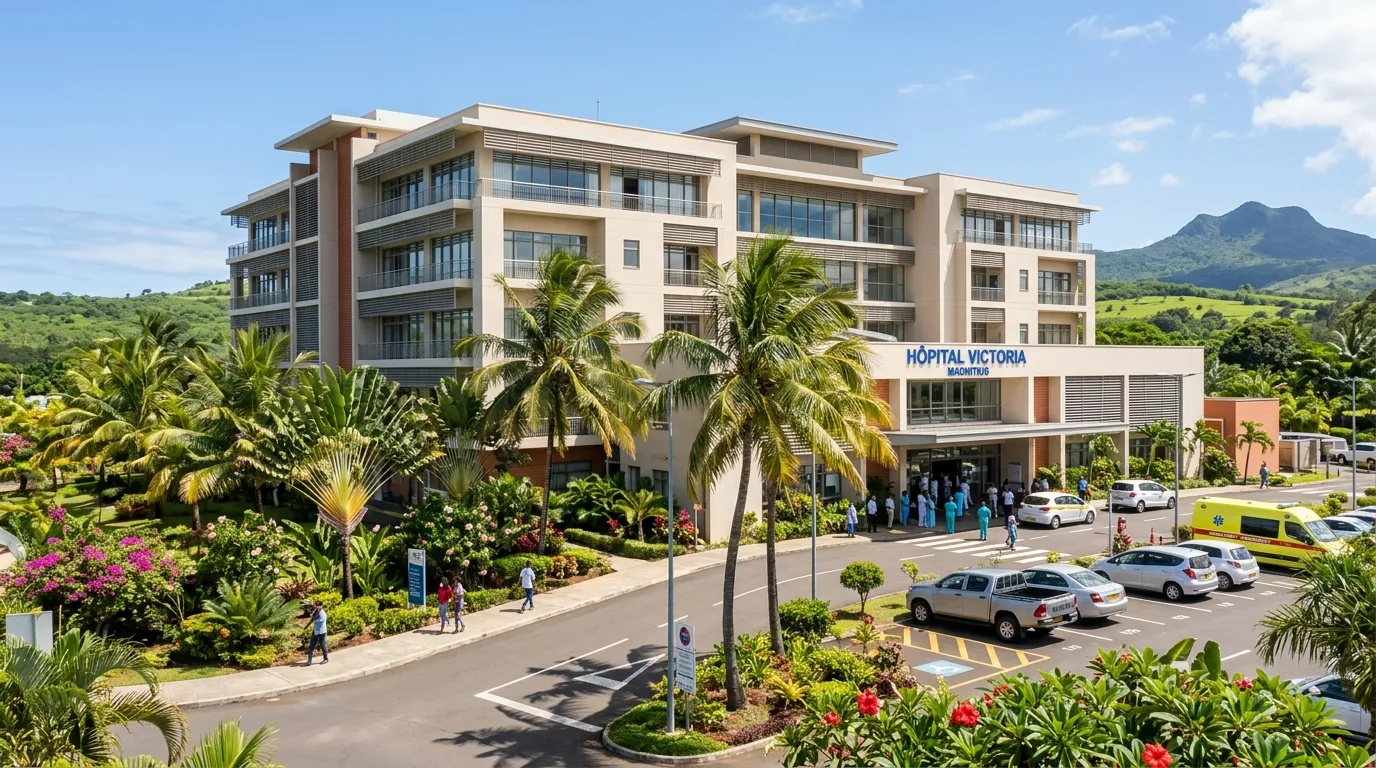
On the map, the government list of hospitals Dr. A. Gaffoor Jeetoo in Port Louis, Sir Seewoosagur Ramgoolam National Hospital in the north, Flacq Hospital in the east, Jawaharlal Nehru Hospital in the south, Victoria Hospital in the central-west, and Queen Elizabeth Hospital in Rodrigues are particularly noteworthy. (govmu.org)
The same portal notes that these regional hospitals rely on specialized structures in ophthalmology, psychiatry, respiratory diseases, ENT, cardiology, and oncology, while emergencies are handled by the SAMU (Emergency Medical Service) and hospital reception services. (govmu.org)
Quick reference points by type of establishment
| Type of establishment | Examples in Mauritius | Key points to remember |
|---|---|---|
| Public hospital | Dr A. Gaffoor Jeetoo, SSR National Hospital, Flacq Hospital, Jawaharlall Nehru Hospital, Victoria Hospital, Queen Elizabeth Hospital | The system is based on free healthcare for users and provides emergency and specialist care. (govmu.org) |
| Private clinic | C-Care Darné, C-Care Wellkin and other private structures of the group | Faster access, but private care can be expensive and is billed on a case-by-case basis.govmu.org) |
| Local healthcare | Community Health Centers, Area Health Centers and mediclinics | The public frontline network is extensive and designed for local access. (health.govmu.org) |
| Centralized emergency services | Police, emergency medical services and fire department | The official channel centralizes up-to-date contacts.govmu.org) |
In practice, many expatriates combine a private doctor for speed and a public doctor for more serious or unexpected procedures. This is often the most flexible solution in Mauritius. (health.govmu.org)
Private clinics and specialized care
In the private sector, the C-Care group presents Darné as one of its most renowned historical clinics, and C-Care Wellkin as its largest and most modern private hospital; it also mentions consultation centers in Grand Baie and Tamarin. (c-care.com)
The government portal also reminds us that private clinics and practices can quickly become expensive, hence the importance of having solid insurance and a clear quote before any admission. (govmu.org)
The setting is not left to chance: the Public oversight of private institutions This includes obtaining a health license.health.govmu.org)
Emergency situations: the right reflexes to adopt
The ministry reminds us, via public hospital services, that emergencies are handled by the SAMU (Emergency Medical Service) and hospital reception services. In the event of a crisis, the official government emergency page centralizes contact information for the police, ambulance service, and fire department. (health.govmu.org)
- Go to the nearest emergency room if the situation is serious.
- Notify your insurer as soon as possible if the procedure is likely to be billed privately.
- Keep a copy of your tests, prescriptions and medical history.
- Before you leave, check which establishment is closest to your neighborhood.
Costs, insurance and reimbursement
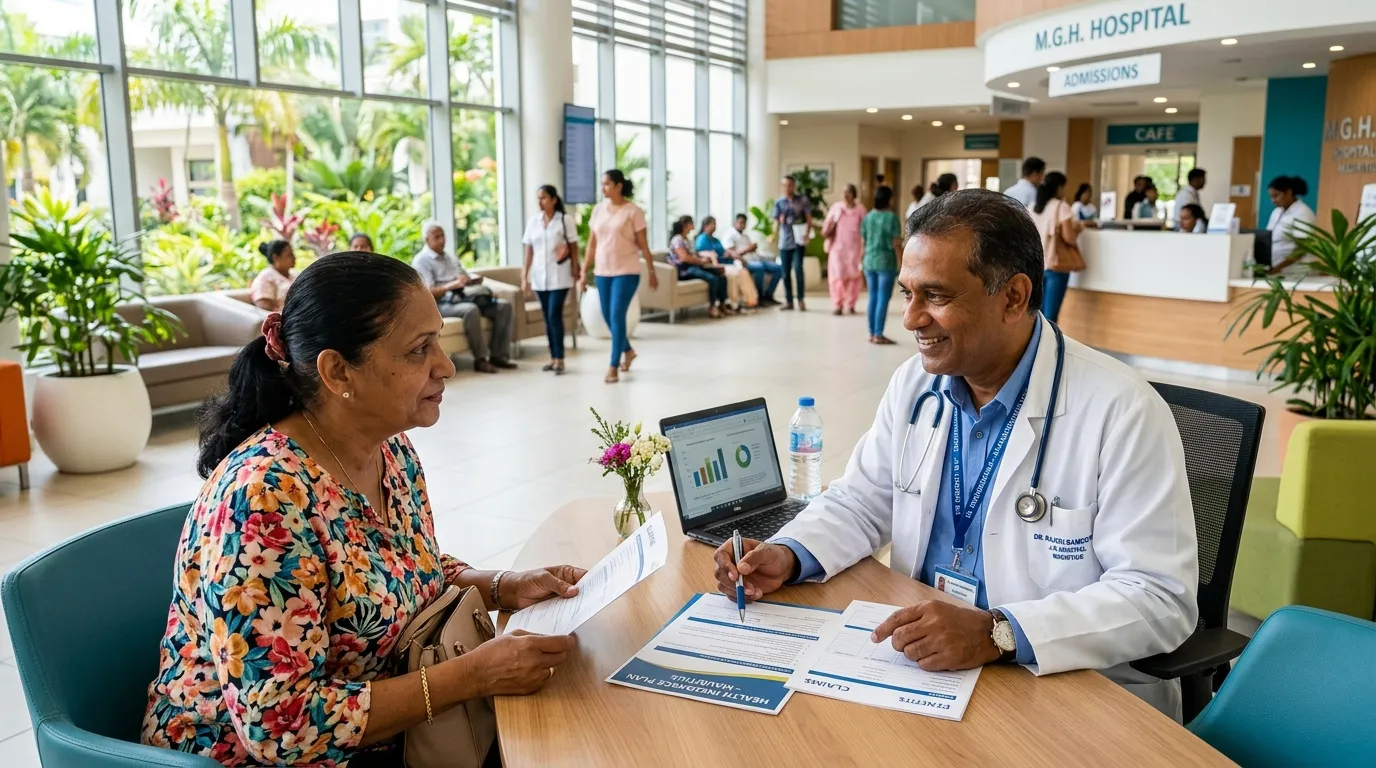
At C-Care, the billing process often begins with a cost estimate, followed by a deposit upon admission; if insurance covers hospitalization, a pre-authorization request is sent beforehand.c-care.com)
The final cost depends on the specialist, the tests, the room, and the length of stay. The best approach is therefore to request a written quote, check the coverage limits of your policy, and read the exclusions before any surgery or hospitalization. (c-care.com)
C-Care also specifies that any remaining balance can be refunded after discharge according to its internal procedures. This confirms that it is best to read the facility's and insurer's procedures before booking a room. (c-care.com)
How to choose between public and private depending on your situation
The best choice depends primarily on the urgency, budget, and type of follow-up care needed. For a serious or unexpected problem, the public system remains the most logical point of entry; for a scheduled appointment, a private clinic may offer more comfort and less waiting time; for routine follow-up, local health centers are often sufficient. (health.govmu.org)
- Choose the audience for an emergency, a complex procedure, or essential care.
- Choose private for a faster appointment or a targeted specialist.
- Always ask for a quote before a non-urgent admission.
- Check your insurance coverage before any costly intervention.
Frequently Asked Questions about Hospitals and Clinics in Mauritius
Which public hospitals and private clinics should be prioritized in Mauritius?
The public hospitals to prioritize are Dr. A. Gaffoor Jeetoo in Port Louis, SSR National Hospital in the north, Flacq Hospital in the east, Jawaharlal Nehru Hospital in the south, Victoria Hospital in the central-west, and Queen Elizabeth Hospital in Rodrigues. In the private sector, C-Care Darné and C-Care Wellkin are the best-known options. For an expatriate, it's most useful to know both a large, nearby public hospital and a reliable private clinic to save time depending on the situation. (govmu.org)
How does the healthcare system in Mauritius operate between the public and private sectors?
The public sector covers the core of the healthcare system: routine care, emergencies, specialists, and several local centers. The private sector often offers faster, more comfortable, and more available appointments, but is billed on a case-by-case basis. In practice, the two systems complement each other: the ministry even explains that some patients are referred to the private sector when the public system cannot accommodate them. (health.govmu.org)
How to access emergency services in Mauritius without wasting time?
I'm not posting them here because emergency numbers need to be kept up-to-date and shouldn't be confined to a single article. The safest option is to save the official government emergency page and follow the instructions provided by the police, ambulance service, and fire department. In a serious situation, go to the nearest emergency room if you are already near a public hospital or a private clinic equipped for emergency care. (govmu.org)
What are the typical costs of private clinics in Mauritius and how does insurance cover them?
Private clinics do not publish a single price that applies to all cases. At C-Care, the process involves a quote, a deposit upon admission, and, if your insurance covers hospitalization, pre-authorization before treatment begins. The final amount depends on the specialist, the tests, the room, and the length of stay. Always ask for a written estimate and check your policy's coverage limits before undergoing a costly procedure. (c-care.com)
Are public healthcare services free for residents and how does reimbursement work?
Yes, public healthcare remains free of charge for the user, according to the Ministry, but reimbursement is not the same as in the private sector. For a clinic, everything depends on your contract, the facility's network, and the billing method. Some operate on a pre-authorization basis, while others reimburse after the fact. The best approach is therefore to check your coverage before your appointment and keep all billing documents. (health.govmu.org)
And now ?
If you are preparing for your arrival, start by support for expatriation to Mauritius to frame the essential steps, then keep this guide handy to quickly compare public, private and emergency services.